
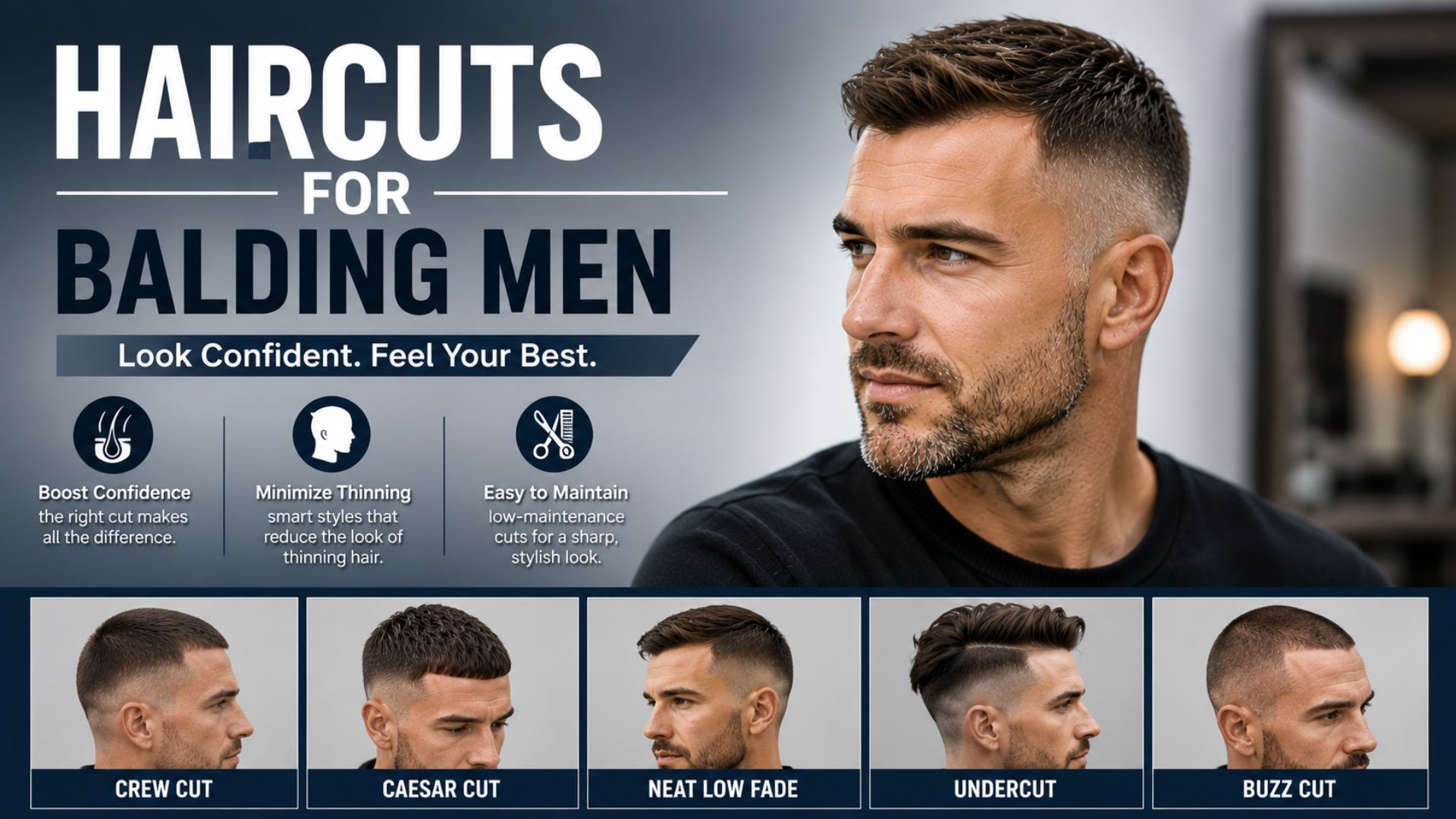
Losing hair does not mean losing your style. The right haircuts for balding men can hide thinning spots, add a fuller appearance, and boost your confidence at the barbershop and beyond. This guide walks through the top cuts for a receding hairline, a thinning crown, or patchy hair loss, plus tips on how to talk to your barber about the look you want.
What Does Balding on Top Mean?
Balding on top means hair on the crown starts to thin, usually because of male pattern baldness. Hair follicles shrink due to DHT sensitivity, which slows regrowth and increases scalp visibility. Early signs include a receding hairline, a widening part, or a widow’s peak that becomes more noticeable over time. This pattern is known as androgenetic alopecia, and it remains one of the most common forms of hair loss in men.
Some men notice thinning temples first, while others develop bald spots on the balding crown or patchy hair loss elsewhere. Knowing your hairline pattern helps you and your barber pick a cut that works with your hair type and face shape instead of against them. Treatments such as minoxidil, finasteride, or a hair transplant can slow or reverse hair loss over time, but a smart haircut is the fastest way to camouflage thinning areas and create a fuller appearance right now.
Top Haircuts for Balding Men to Try Now
The cuts below suit different stages of hair loss, from a mildly receding hairline to a fully bald cut. Pick the style that fits your hair density, your face shape, and how much coverage you actually want. These balding hairstyles for men range from tight buzzed looks to longer, textured styles, so there is an option no matter how much hair you have left to work with.
Fade Cut
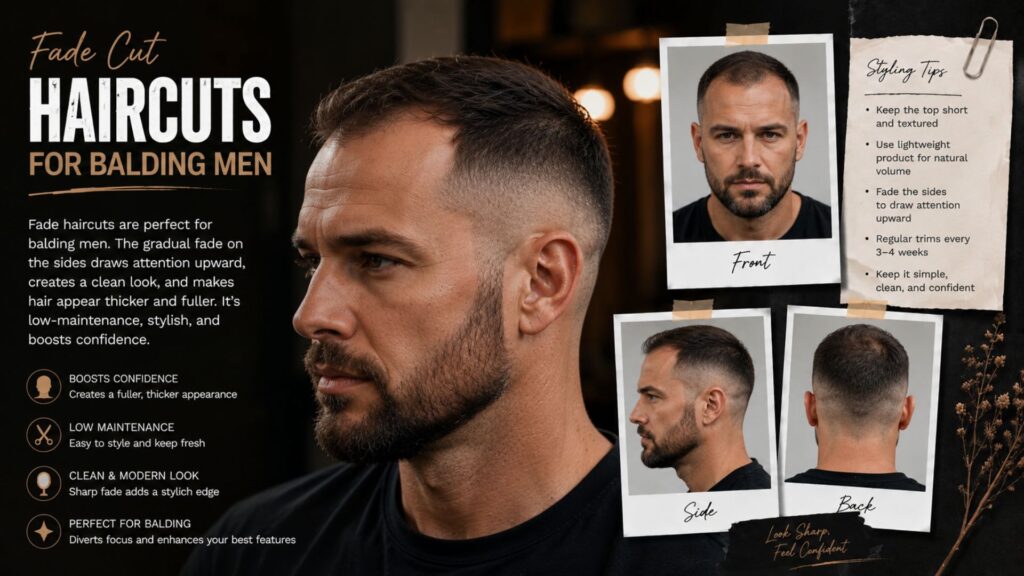
A fade haircut blends the sides and back smoothly into the skin, drawing attention to the fuller hair left on top. Low fade, mid fade, and high fade variations let you control how much length stays near the hairline, and a gradual taper with a blended fade keeps the transition looking natural. This style works well for a receding hairline because it reduces contrast between thinning and fuller areas. Ask your barber for a skin fade if you want the cleanest possible blend.
Crew Cut
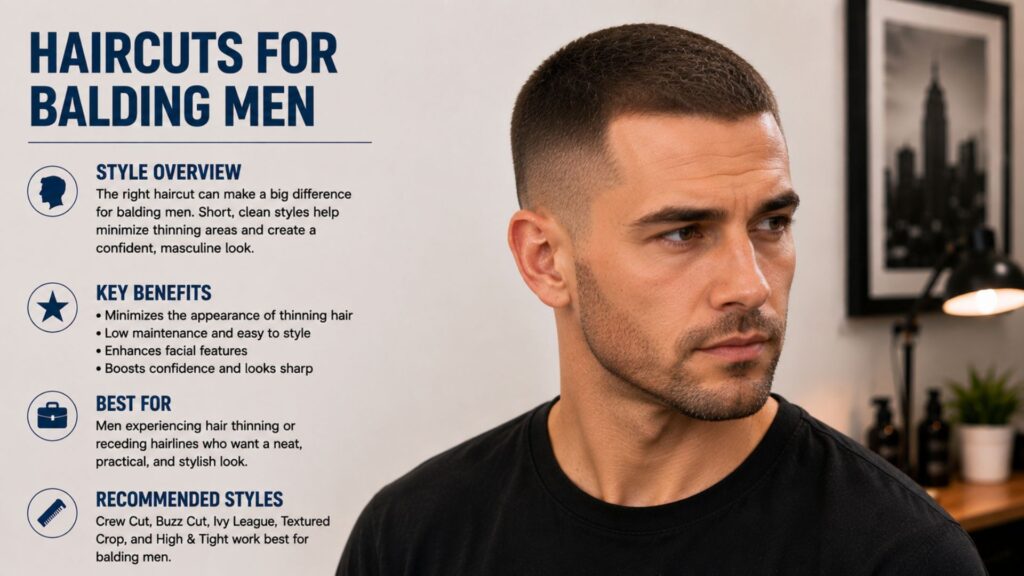
The crew cut keeps hair short on top and even shorter on the sides, which makes thinning spots far less noticeable. A tapered fade at the back and sides blends into a short top with light textured layers for a clean, low-maintenance shape. Blow-dry for lift on the top section, then add a small amount of texture clay for a natural, matte finish. This cut restyles easily at any length, which makes it a favorite for men managing a thinning crown.
Ivy League
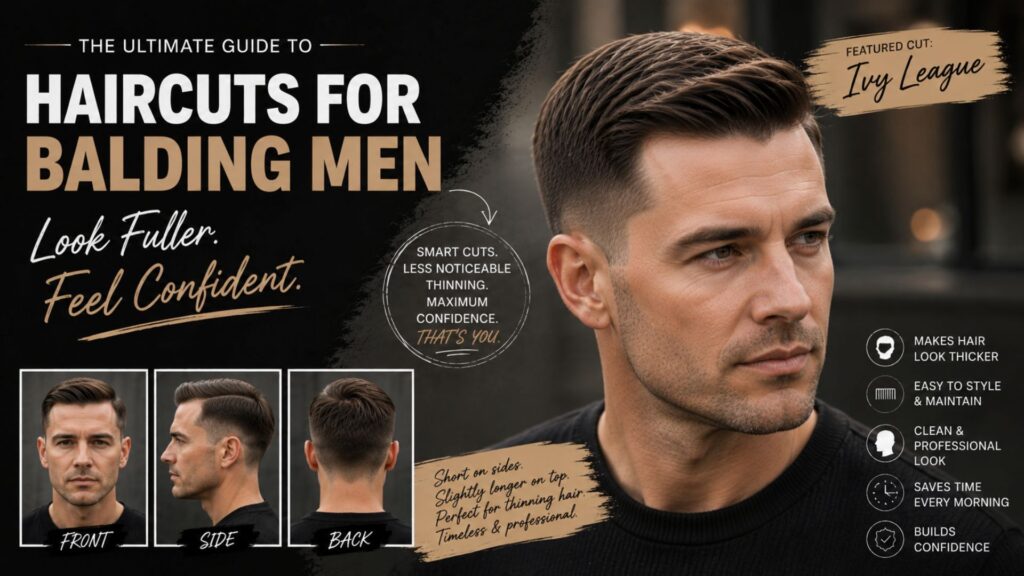
The Ivy League haircut pairs short sides with a slightly longer top that adds soft height and volume. The extra length on top blends neatly with thinning areas, creating a fuller appearance without much daily effort. Blow-dry the front upward and finish with molding paste for texture and light hold. It also suits men with frontal balding, since the length up top can be styled forward to soften the hairline.
Messy Side Part
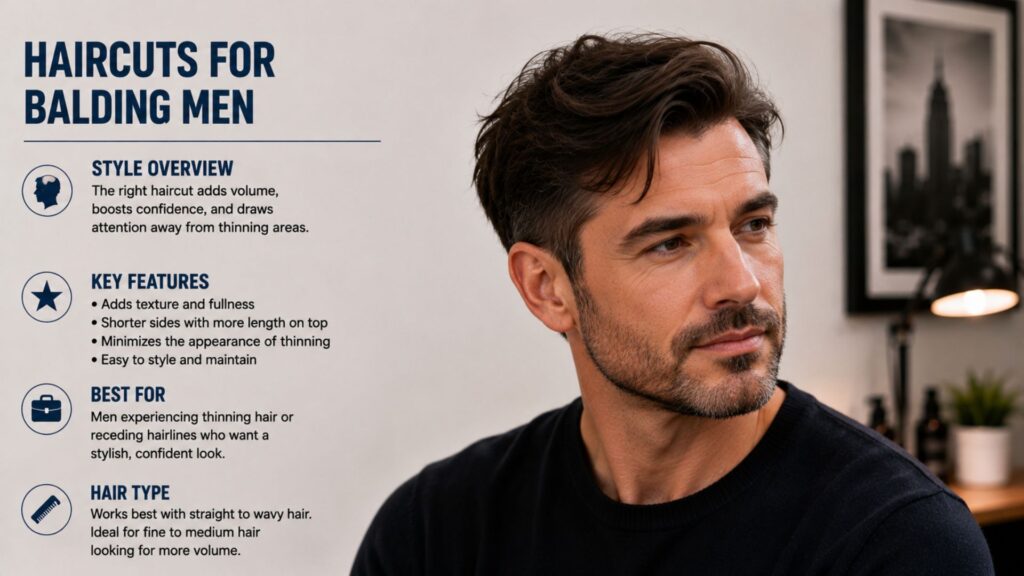
A messy side part uses a deep part line to guide the eye and add volume across the crown. Keep one side slightly longer so it can be combed over thinning areas for extra coverage, similar to a classic comb-over but with more texture. A texturizing cream or light hair gel adds movement without weighing the hair down. This style works especially well for men who want a youthful, low-key look that still hides a widening part.
Spiky Skin Fade
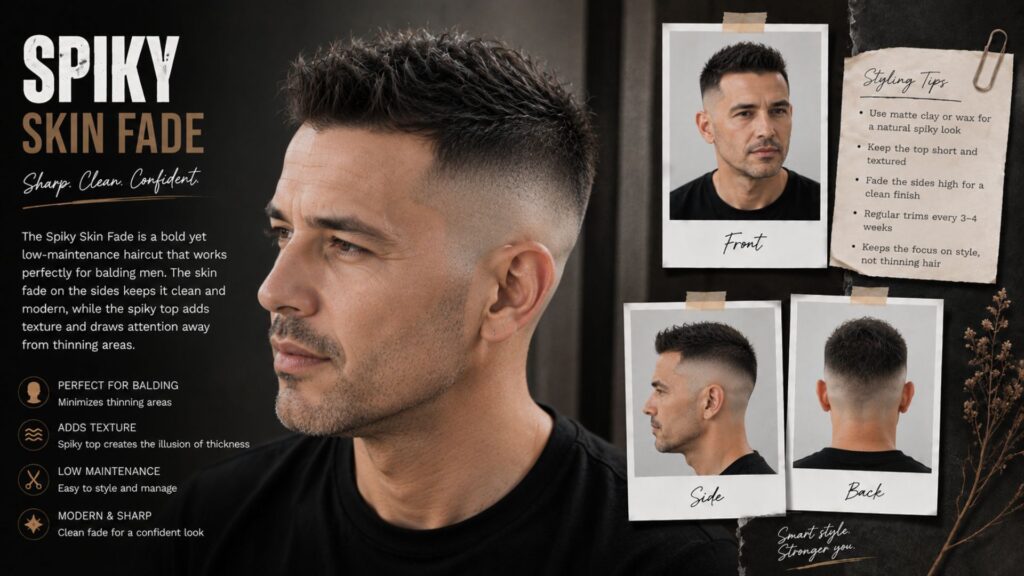
A spiky haircut adds height and texture, pulling attention away from thinning spots on the crown. Pair the spikes with a skin fade on the sides for a sharp, modern contrast. Blow-dry the top upward, then use texture powder or a light hair gel to shape individual spikes. This look works especially well for younger men in the early stages of hair loss.
Sculpted Slick Back
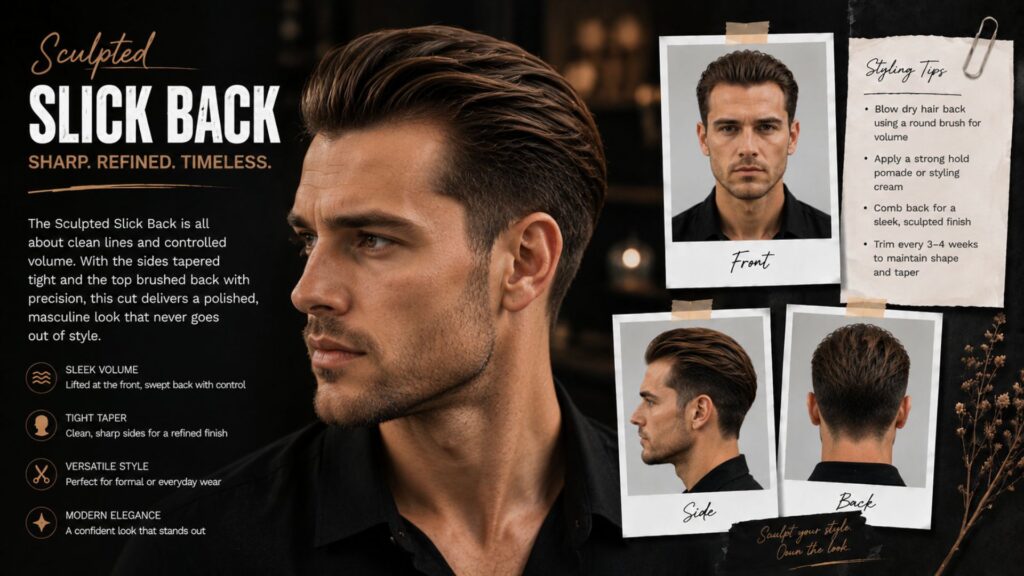
A slicked back style uses length on top combed straight back with pomade or a strong-hold hair gel, giving the illusion of thicker, fuller hair. A pompadour or quiff haircut adds a similar effect if you want more height at the front. This style will not hide a receding hairline completely, but it does draw focus away from the most obvious thinning areas. It has stayed a barbershop favorite for decades because it looks polished with very little daily fuss.
Low Cut
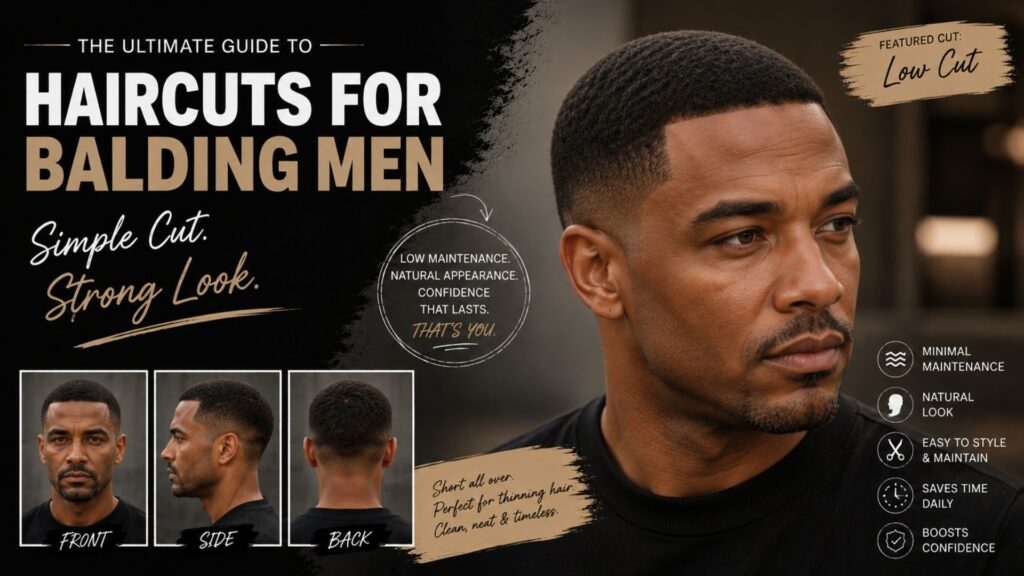
A low cut trims every layer of hair to a uniform, short length for a neat and classy finish. The even length removes contrast between fuller and thinning sections, which is one of the simplest ways to camouflage thinning areas. It is also one of the most low-maintenance haircuts on this list, since there is little length to style each morning. Ask your barber for a low cut if you want something classic that never really goes out of style.
French Crop
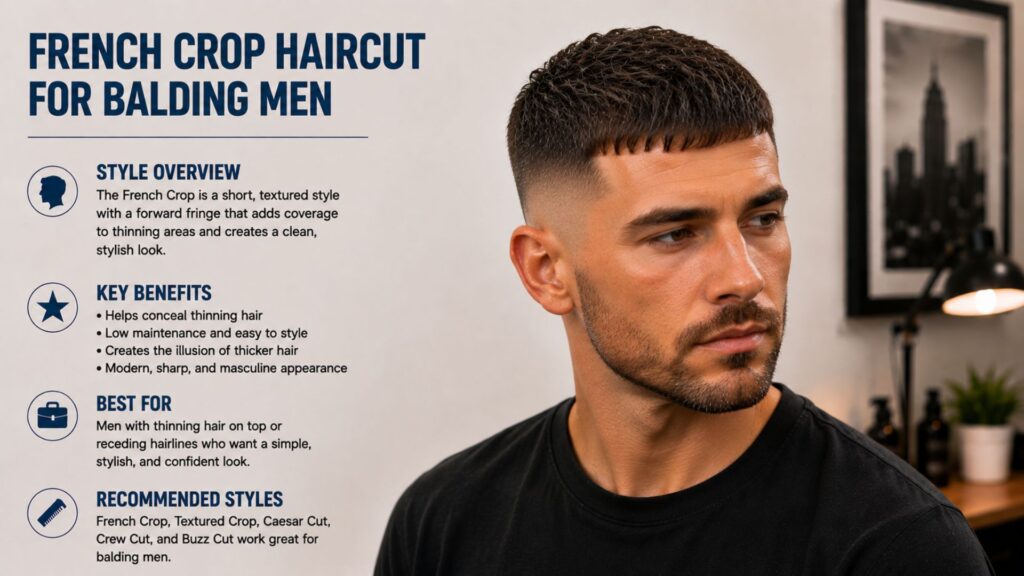
The French crop combines a short, straight fringe with tight sides for a clean, modern shape. The fringe helps cover the front hairline while the closely clipped sides keep the whole look sharp. Blow-dry the fringe forward, then use a lightweight styling cream so the texture stays natural rather than stiff. This cut suits men who want frontal coverage without much length on top.
Caesar Cut
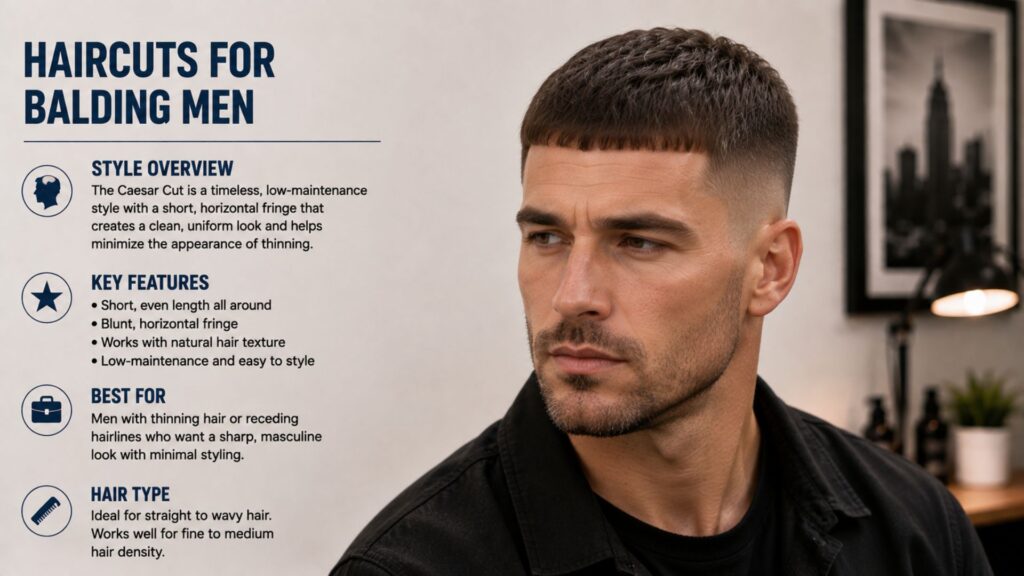
The Caesar cut features a short, even top with a straight, horizontal fringe that helps soften a receding hairline. Popularized by figures like Julius Caesar and later George Clooney, the style still reads as timeless today. After a quick blow-dry, shape the top with your fingers and finish with a small amount of molding paste. Keep in mind that the short fringe needs regular trims to stay sharp.
Bald Cut
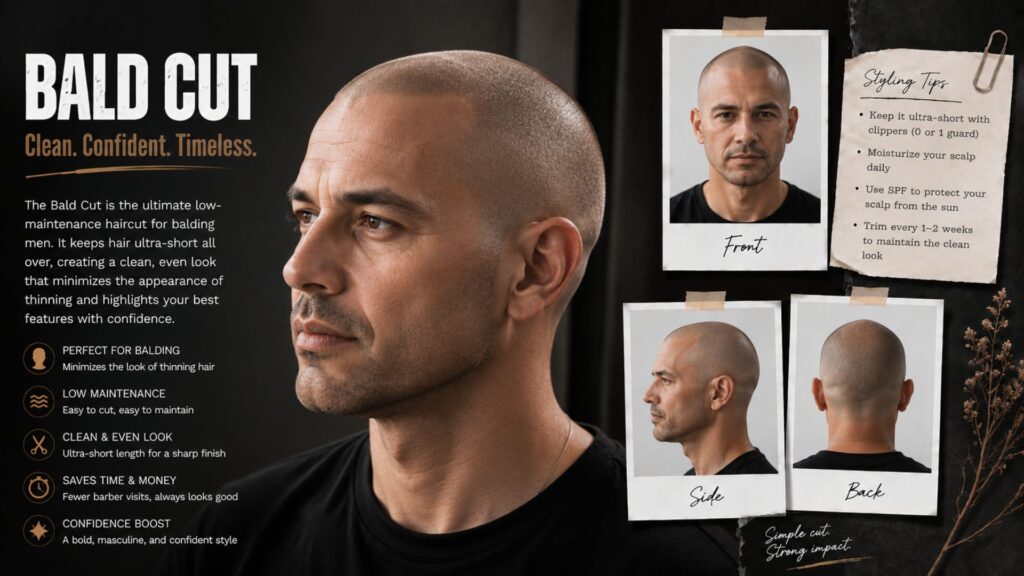
Going fully bald is one of the cleanest solutions for advanced hair loss, and it removes the daily task of styling thinning strands altogether. A smooth, shaved scalp reads as confident and deliberate rather than as an attempt to hide anything. Pairing the bald cut with a well-groomed beard or light stubble adds facial structure and balance. This is often the easiest haircut for balding men to maintain long term, since there is no hairline left to manage.
High and Tight Cut
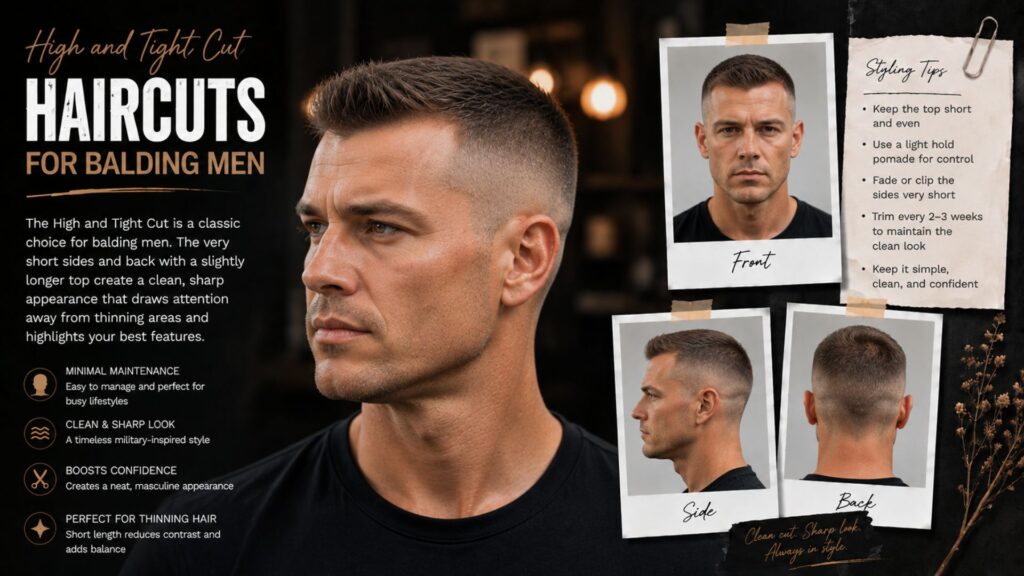
The high and tight haircut shaves the sides and back down close to the skin while leaving a slightly longer strip on top. This sharp contrast draws the eye upward and creates the appearance of fuller hair at the crown. It is a military-inspired style, close to a regulation cut, that also works well with coarse or afro-textured hair. Blow-dry the top for a bit of lift, then use a light molding paste so the strip does not look flat.
Buzz Cut
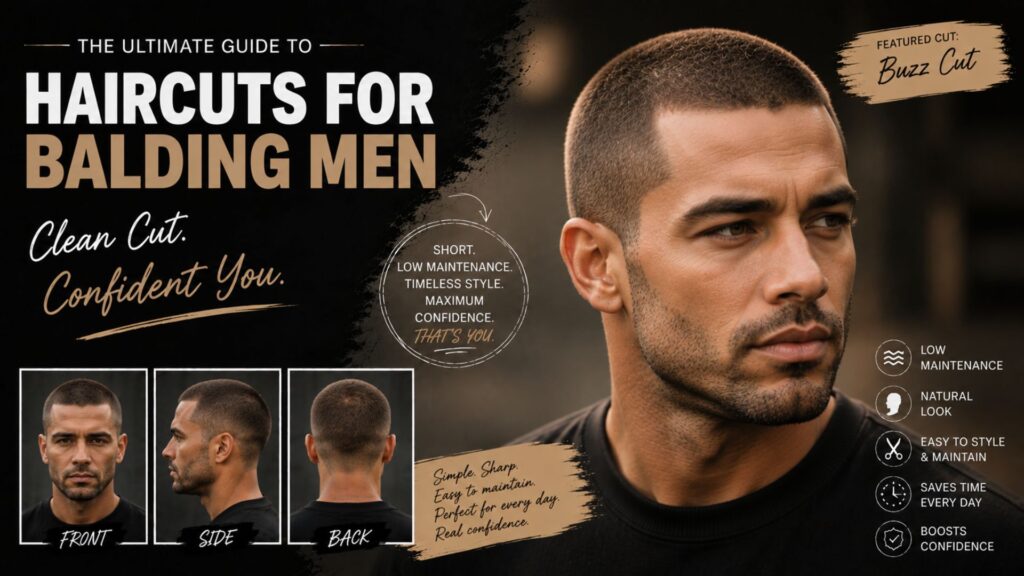
The buzz cut trims hair to a short, uniform length using clipper guards, which evens out the contrast between thinning and fuller areas. It is one of the easiest haircuts for balding men to maintain, since it needs almost no daily styling. Frequent trims also help remove split ends and reduce buildup around hair follicles. Start with a longer guard and go shorter over time if you want room to adjust the look.
Layered Undercut Combover
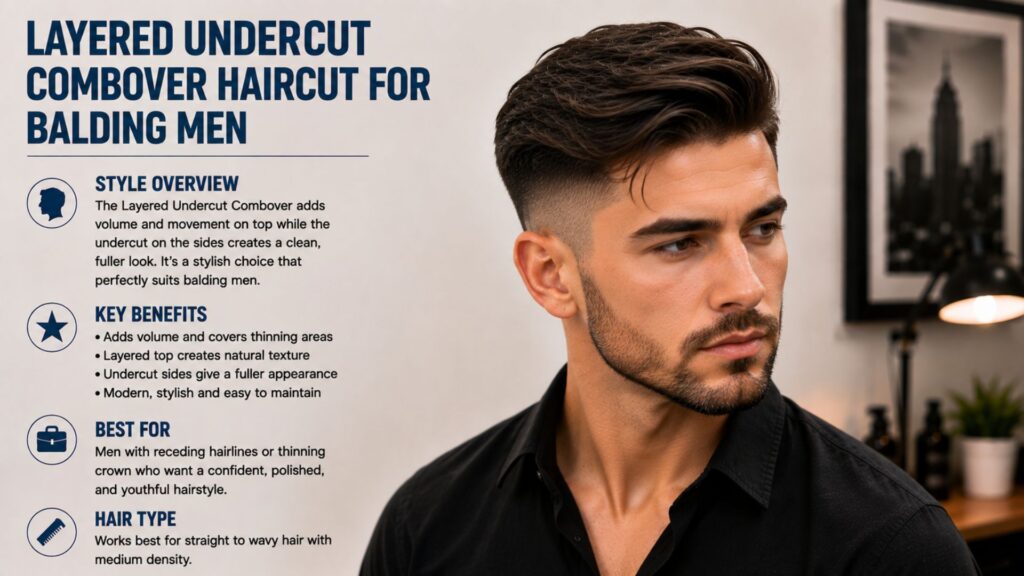
This style pairs an undercut with longer, layered hair on top that gets combed over to one side. The subtle layers add movement, which keeps the combover from looking flat or see-through. It works best on hair that still has decent density, since a very thin combover can expose more scalp than it hides. Finish with a light styling cream to keep the layers separated and natural.
Neat Low Skin Fade
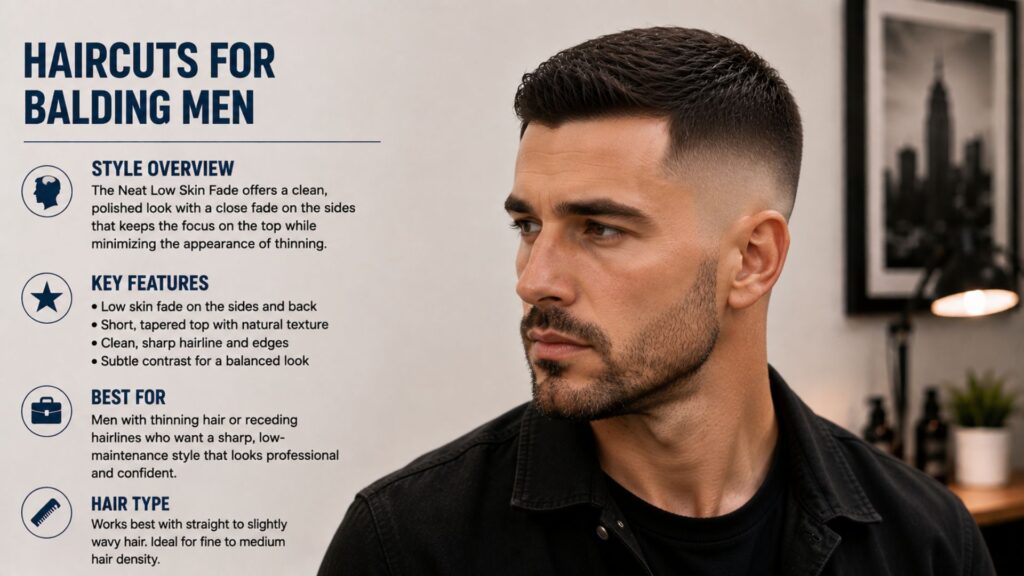
A low skin fade keeps the fade close to the ears rather than high on the head, which suits men who prefer a more subtle transition. The short, tidy top pairs well with a low-maintenance daily routine, since there is very little length to manage. This cut is a solid choice for men who want something simple and fuss-free rather than a statement style. Keep it moisturized and trimmed regularly to keep the shape looking sharp.
Business Cut
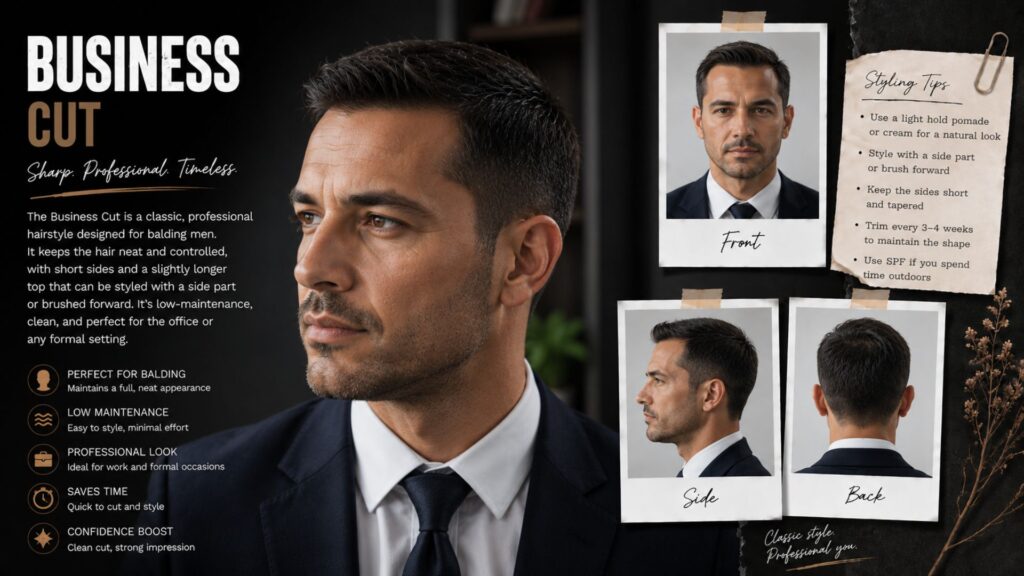
The business cut keeps the sides short and clean while the top stays a bit longer, brushed smoothly back or to one side. The added height on top makes the hairline look fuller without sacrificing a professional appearance. Light texture through the top adds natural movement, while the fade underneath keeps everything sharp. Blow-dry upward, then finish with a lightweight styling cream for a controlled look that lasts through a full workday.
Faux Hawk
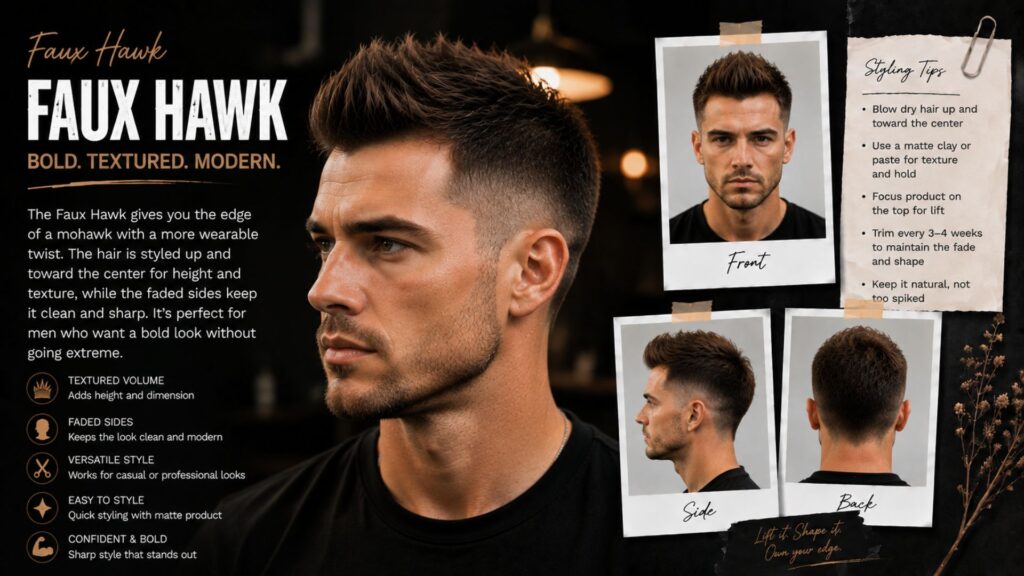
The faux hawk fades the sides close to the skin while pushing the center section up into textured spikes. The fuller strip down the middle draws attention away from thinning areas on the sides and crown. Blow-dry the center straight up while pinching sections with your fingers, then apply texture clay to hold the shape. This bold style suits men who want something a little more daring than a standard fade.
Short Curly Cut
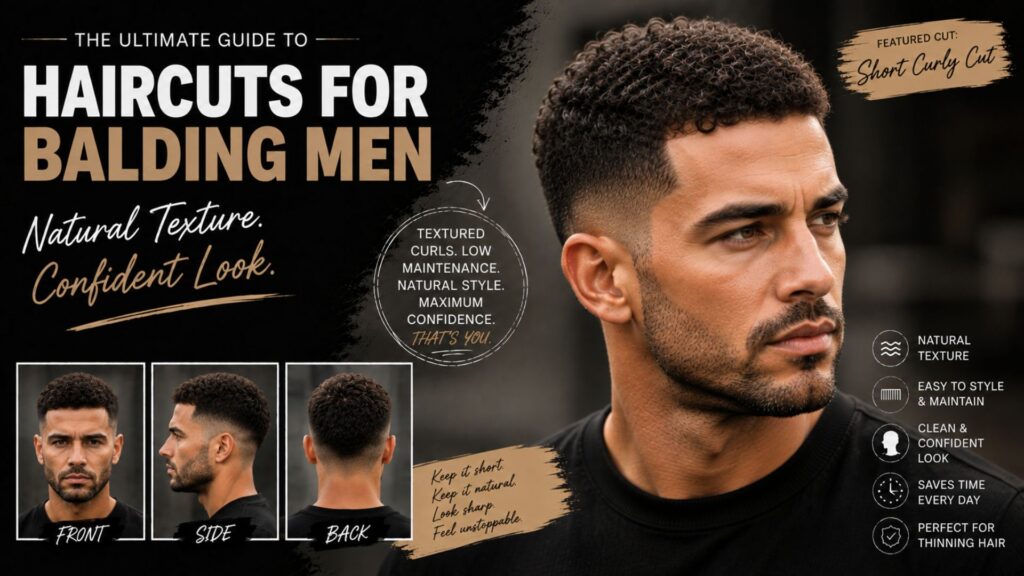
A short curly cut trims the hair close while letting natural curls add texture and soft volume on top. The curls create the illusion of density, which helps reduce attention on thinning areas underneath. After a quick blow-dry, use styling cream to define the curls without weighing them down. This is a great low-effort option for men who already have naturally curly or wavy hair.
Butch Cut
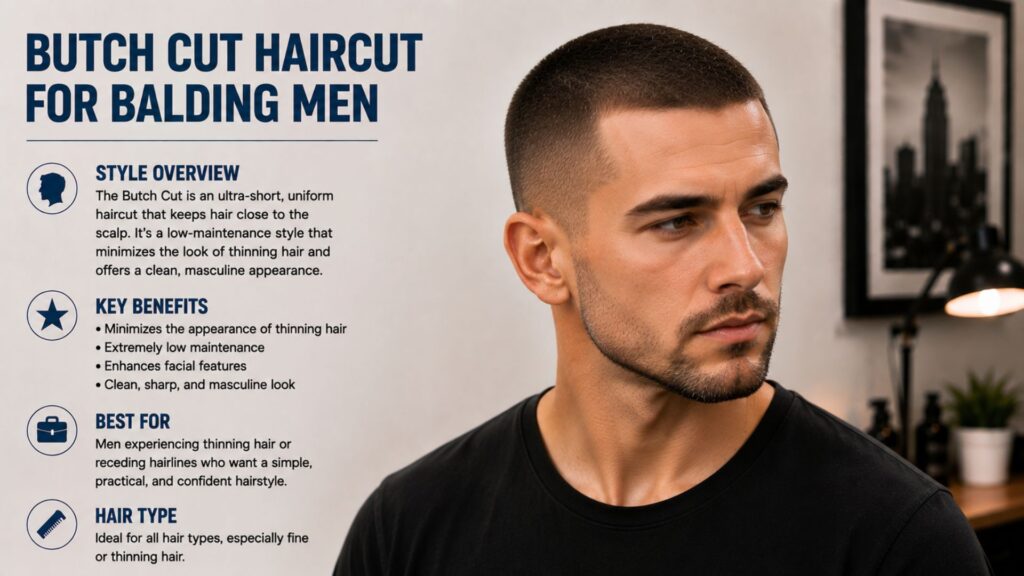
The butch cut trims hair to one uniform length all over, which hides the loss of volume that comes with thinning hair. You can ask for a butch cut with a shaved line or with neat, natural edges around the hairline. This is one of the more versatile haircuts for balding men, since the even length suits almost any face shape. It also needs very little product or daily styling once it is cut.
Undercut
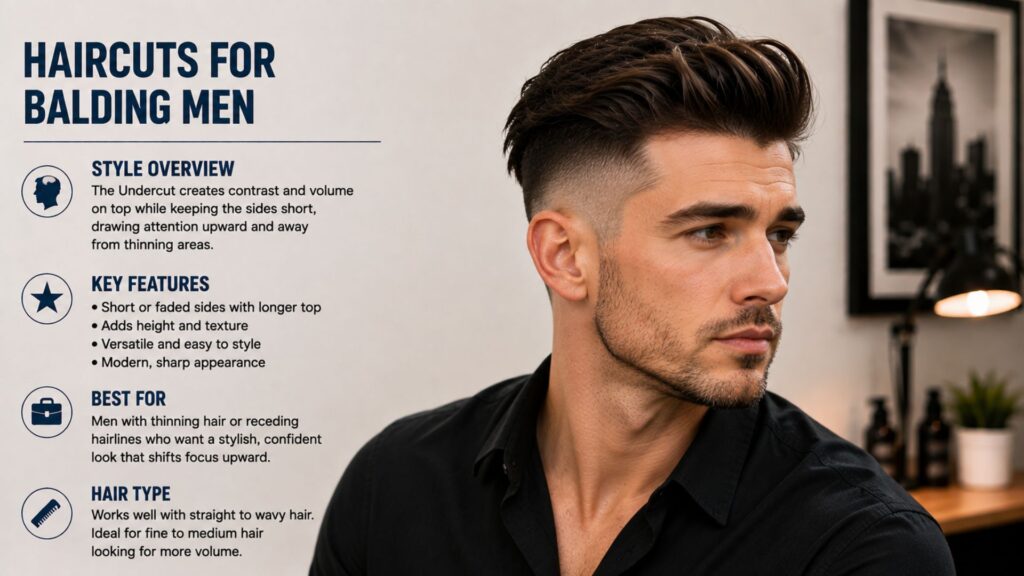
The undercut leaves plenty of length on top while the back and sides are clipped very close, which covers thinning spots and adds volume where it counts. A Viking undercut takes this further with a bolder, disconnected contrast between the long top and short sides. You can slick the longer hair straight back, brush it to one side, or tie it into a top knot if it is long enough. This style works particularly well for men who still have solid hair density on the crown.
Shaved
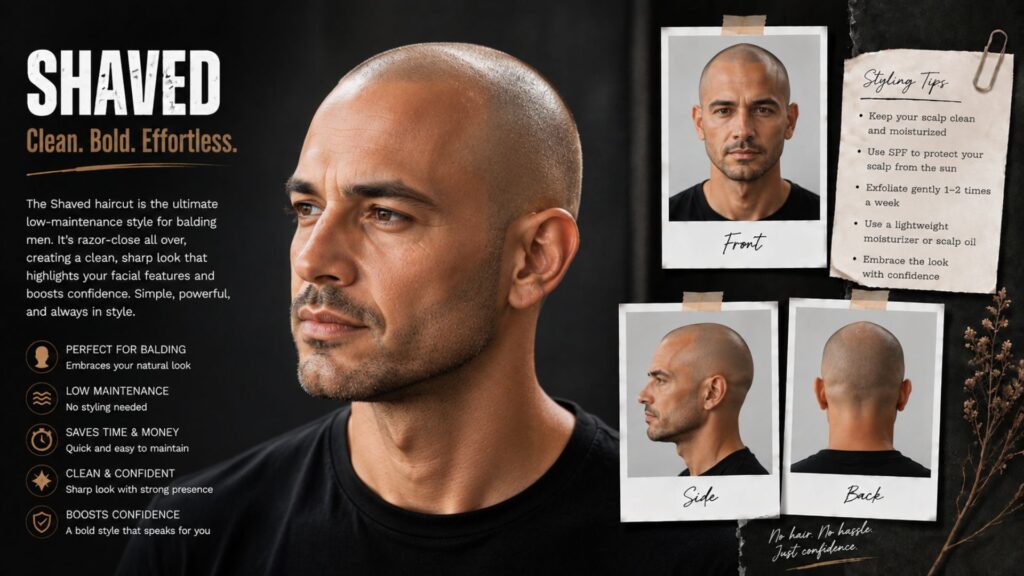
A fully shaved head uses clippers or a razor to bring the scalp down to a smooth, even finish, which is the most direct way to deal with advanced hair loss. Choosing between a bald, skin, or shallow shave depends on how close to the scalp you want to go. This look pairs naturally with a well-groomed beard for balance and definition. Ask your barber for maintenance tips, since a shaved head still needs regular upkeep to stay clean and even.
Extra-Short Mohawk
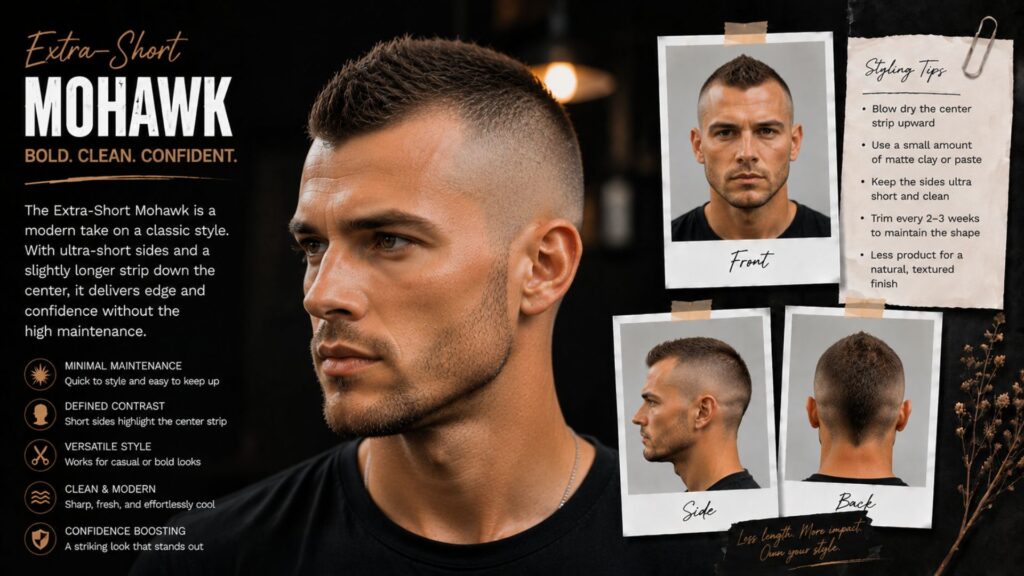
An extra-short mohawk shaves the sides down while leaving a slim strip of fuller hair down the center, unlike a flat top or a curtain cut that spreads length across the whole crown. Keeping the strip short rather than tall makes the style easier to wear day to day while still drawing focus to the fullest part of your hair. A little texture clay or hair gel is enough to hold the shape in place. This cut suits men who want a slightly edgier take on a classic short haircut.
High Fade with Beard
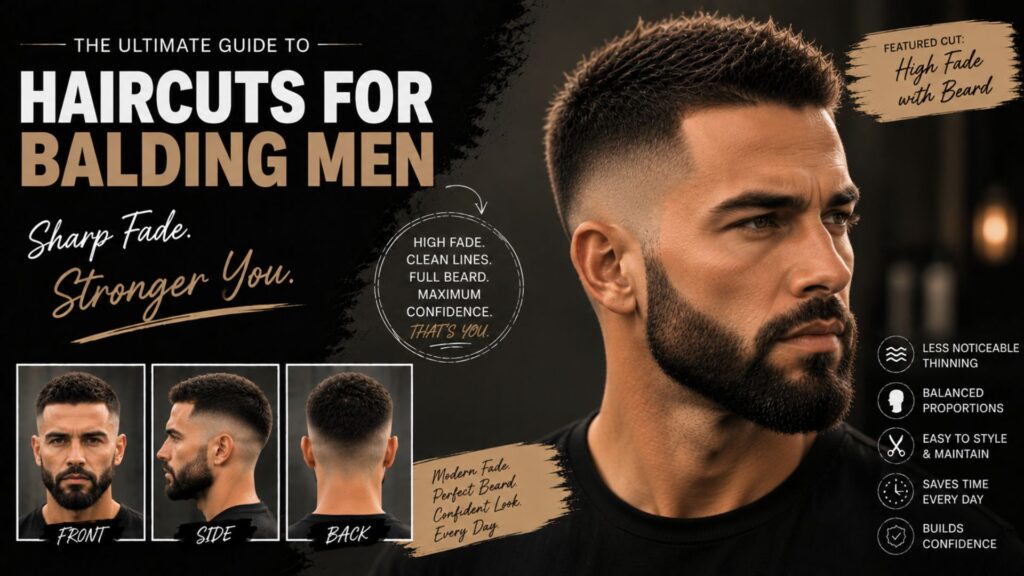
A high fade starts tapering near the temples or forehead, creating a striking contrast with the fuller hair left on top. This facial hair pairing shifts attention from the scalp to the jawline, which balances the whole look. This combination works especially well for angular face shapes, since the fade draws the eye upward and the beard adds structure below. Keep both the fade and the beard trimmed on a regular schedule for the cleanest result.
Textured Forward-Brushed Cut
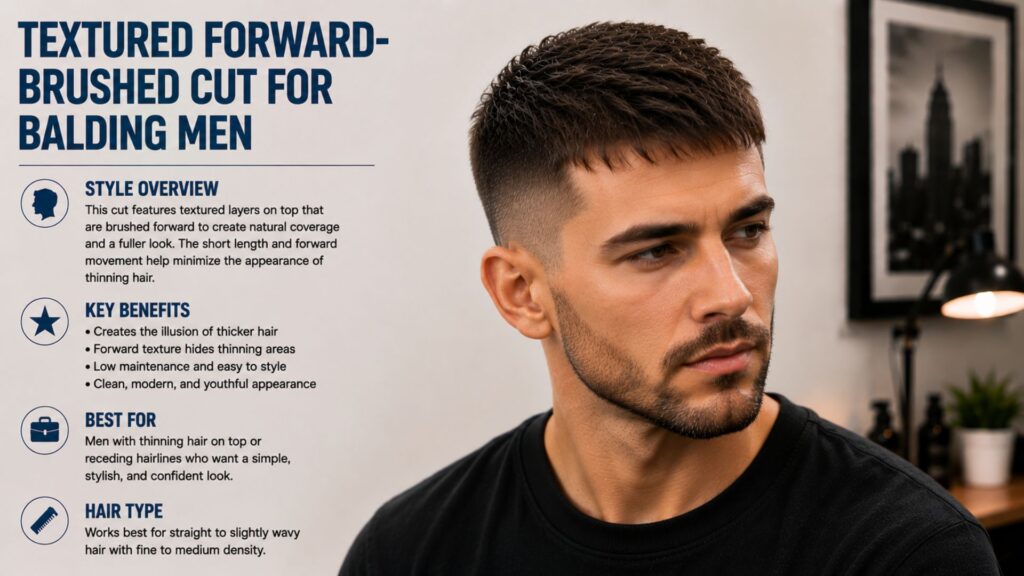
This style brushes the front section of hair forward to cover thinning areas near the hairline, similar to a short scissor cut with movement built in. Uneven layers and choppy layers on top add natural movement and make the hair look denser than it is. Work a small amount of matte styling products through damp hair with your fingers, then tousle for extra texture. Pairing it with a full beard adds a rugged, masculine balance to the overall look.
Does Short Hair Stop Hair Loss?
Short hair does not stop hair loss, but it does make thinning look less obvious. Keeping a haircut short and trimming it often helps remove split ends and buildup around hair follicles, both of which are linked to the causes of male pattern baldness. Shorter styles also require fewer styling products, which reduces buildup on the scalp and keeps thinning areas from looking greasy or flat.
A short cut is often the easiest choice for men with a thinning crown or a receding hairline, since shorter length naturally creates a fuller appearance. It is also lower maintenance, since there is less hair to manage with heat tools or heavy products. If you are unsure which haircuts for balding men suit your hair type, a quick barber consultation can help you find the right length and coverage for your situation.
A simple care routine supports whatever cut you choose. Use a clarifying shampoo and a hydrating conditioner to keep the scalp clean and the remaining hair healthy, and finish styling with lightweight matte products such as hair wax, hairspray, sea salt spray, or a hydrating argan oil rather than anything heavy or greasy. A hair thickening spray can also add fullness on days you want extra volume, and a gentle scalp massage now and then supports healthy hair follicles.
Conclusion
Hair loss does not have to mean giving up on style. From a sharp fade or a classic crew cut to a fully bald look with a well-groomed beard, there are haircuts for balding men to match every stage of thinning, every hair type, and every face shape.
The right cut, paired with lightweight products and a barber who takes the time to understand your hairline, can camouflage thinning areas and keep you looking confident at every barbershop visit. Talk to your barber, try one of the styles above, and let your haircut work with your hair loss instead of against it.
FAQs About Haircuts for Balding Men
What is the best haircut for a receding hairline?
A fade haircut, a Caesar cut, or a textured French crop are among the best choices for a receding hairline. Each of these styles keeps the front short and blended, which softens the hairline instead of drawing attention to it.
Working with a barber who understands your hair type and face shape makes a real difference here. A quick barber consultation before your next cut can help you pick the exact length and fade that suits your hairline pattern.
Do buzz cuts look better on balding men?
Yes, a buzz cut is one of the most reliable haircuts for balding men because the uniform length evens out the contrast between thinning and fuller areas. It also keeps hair follicles and the scalp cleaner, since there is little length left to trap oil or product buildup.
It is especially useful for men with a thinning crown or advanced patchy hair loss, since there is barely any length left to expose gaps in coverage.
Can a haircut alone hide bald spots?
A haircut can camouflage thinning areas and bald spots, but it will not hide advanced hair loss completely. Short, textured cuts and well-placed fades do the best job of reducing scalp visibility without looking forced.
For more significant hair loss, some men also look into treatments like minoxidil, finasteride, or a hair transplant alongside a flattering haircut for a fuller, longer-term result.
How short should I cut my hair if I’m balding?
As a general rule, shorter is better for balding men, since short hair reduces the contrast between thinning and fuller areas and adds natural lift. A low-maintenance haircut such as a buzz cut, crew cut, or short fade usually gives the fullest, cleanest look.
If you are not ready to go very short, a slightly longer style like an Ivy League or a textured crop with soft volume can still create a fuller appearance while easing you into the change.
Should balding men avoid certain hairstyles?
Yes, balding men should generally avoid long, heavy, or slicked-down styles that expose the scalp instead of covering it. Thin combovers, long unstructured hair, and styles that rely on a single strip of hair to cover a wide area tend to look thinner rather than fuller.
Instead, lean on cuts with texture, movement, and a well-blended fade, and keep a simple grooming routine with a scalp massage and lightweight products to support healthy hair follicles and lasting confidence.
