
Intro
A beard fade is what happens when your beard stops ending in a hard line and starts blending. The hair gets gradually shorter as it moves up the cheek toward the sideburns and down toward the neckline, so the beard melts into the skin instead of stopping abruptly. Done well, it looks clean without looking sculpted to death. Done badly, it looks like two different beards glued together.
That blend is why the beard fade has become one of the most requested barber services of 2026. It works with short beards and long ones, with sharp line-ups and with softer natural cheek lines, and it fixes the most common problem men have with beards: a beard that looks heavy at the bottom and messy at the edges. A fade gives the beard a shape. The shape is what makes it look intentional.
This guide covers 13 beard fade styles, how to ask your barber for each one, how to maintain the fade at home between visits, and the honest limits — including what a fade can and cannot do for a patchy beard. Every style below is written so you can show it to your barber and get the same result twice.
Key Takeaways
- A beard fade blends short hair at the sideburns and cheek line into a fuller beard below — it is a gradient, not a hard line.
- Low fades are the safest first fade; high fades are the boldest and need the most upkeep.
- The Italian beard fade is about sculpted shape and clean lines with no harsh top edge, not about length alone.
- Most fades need a touch-up every 3 to 5 days to stay sharp; the full beard underneath needs a trim every 2 to 3 weeks.
- A fade can make a patchy beard look denser, but it cannot create hair where there is none.
What Is a Beard Fade?
A beard fade is a gradual change in beard length. At the top, near the sideburns and the upper cheek, the hair is cut very short — sometimes down to skin. As you move down toward the jaw and chin, the hair gets steadily longer. The transition should be smooth enough that you cannot point to the exact spot where short becomes long.
That is the difference between a beard fade and a regular beard trim. A regular trim sets one length. A fade sets several lengths and blends between them. It is the same idea as a haircut fade, applied to the beard, and it works best when the haircut fade and the beard fade meet cleanly at the sideburn. If your haircut fades into skin but your beard starts at full length, there is a visible step. A good barber connects the two so the side of your head reads as one continuous blend.
A beard fade is also different from a full beard with a shaped edge. A shaped edge gives you a clean outline. A fade gives you a clean outline plus a gradient inside it. The gradient is what makes the jaw look sharper and the cheek look cleaner, even when the beard itself is several weeks old.
Who suits a beard fade?
Most men who can grow at least a short beard can wear a fade. It suits men who want their beard to look neat at work without shaving it off, men whose cheek hair grows unevenly and need the top tidied, and men who already have a faded haircut and want the beard to match. It is less useful if your beard is only two or three days of stubble all over — there is not enough length to create a visible gradient — and it needs more care if your beard grows in very different directions on each cheek, because the blend has to be adjusted side by side.
13 Beard Fade Styles
1. Classic Low Beard Fade
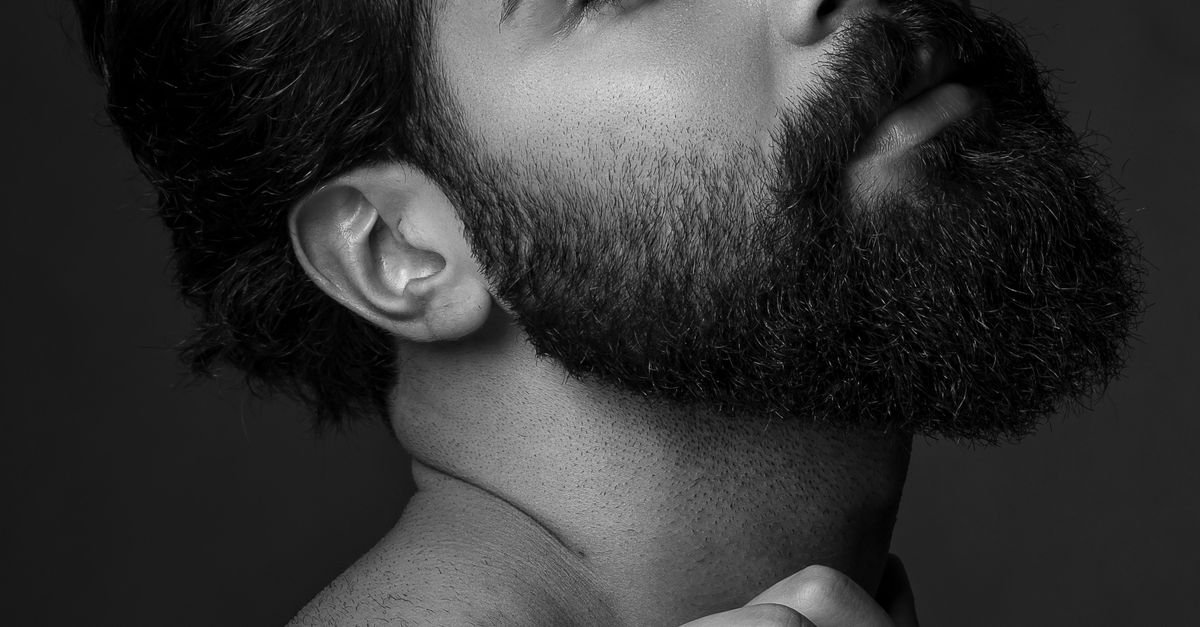
The low fade keeps most of the beard at full length and only fades the top inch or so near the sideburns. The blend starts low, close to the jawline, so the change is subtle. This is the best first fade if you have never had one before, because it keeps the beard looking full while cleaning up the edges. Ask your barber to keep the cheek line natural and fade only the sideburn area. It suits almost every face shape and every workplace, and it is the easiest fade to maintain at home because the blended zone is small.
2. Mid Beard Fade

The mid fade starts higher, around the middle of the cheek, and gives a clearer gradient than the low fade. You can see the blend, but it still looks natural rather than dramatic. This is the version most barbers recommend when a man says he wants a fade but does not want it to be the first thing people notice. It sharpens the jaw without thinning the beard too much. It works well with medium-length beards and with taper haircuts, where the haircut fade and the beard fade meet at roughly the same height.
3. High Beard Fade

The high fade starts close to the cheekbone and drops quickly into a fuller beard below. The contrast is strong, so the jaw and chin look more defined and the cheek looks almost bare at the top. This is a bold choice and it suits men with strong jawlines and dense beards, because the fade needs enough hair below it to balance the bare skin above. It needs the most upkeep — the high blend grows out visibly within a few days — and it is less forgiving if your cheek hair is patchy, because the fade exposes the upper cheek.
4. Italian Beard Fade

The Italian beard fade is less about how high the fade starts and more about the shape. The beard is sculpted into a clean, defined silhouette with careful lines around the cheeks and jaw, but without a harsh horizontal line across the top. The top edge is softened so the beard looks shaped rather than stamped on. The length is usually medium — long enough to show shape, short enough to stay neat. This is the style to show your barber if you want a beard that looks groomed in photos and in person, rather than simply short on top and long below. Ask for a sculpted shape with a softened top edge, not a hard line.
5. Beard Fade + Taper Haircut
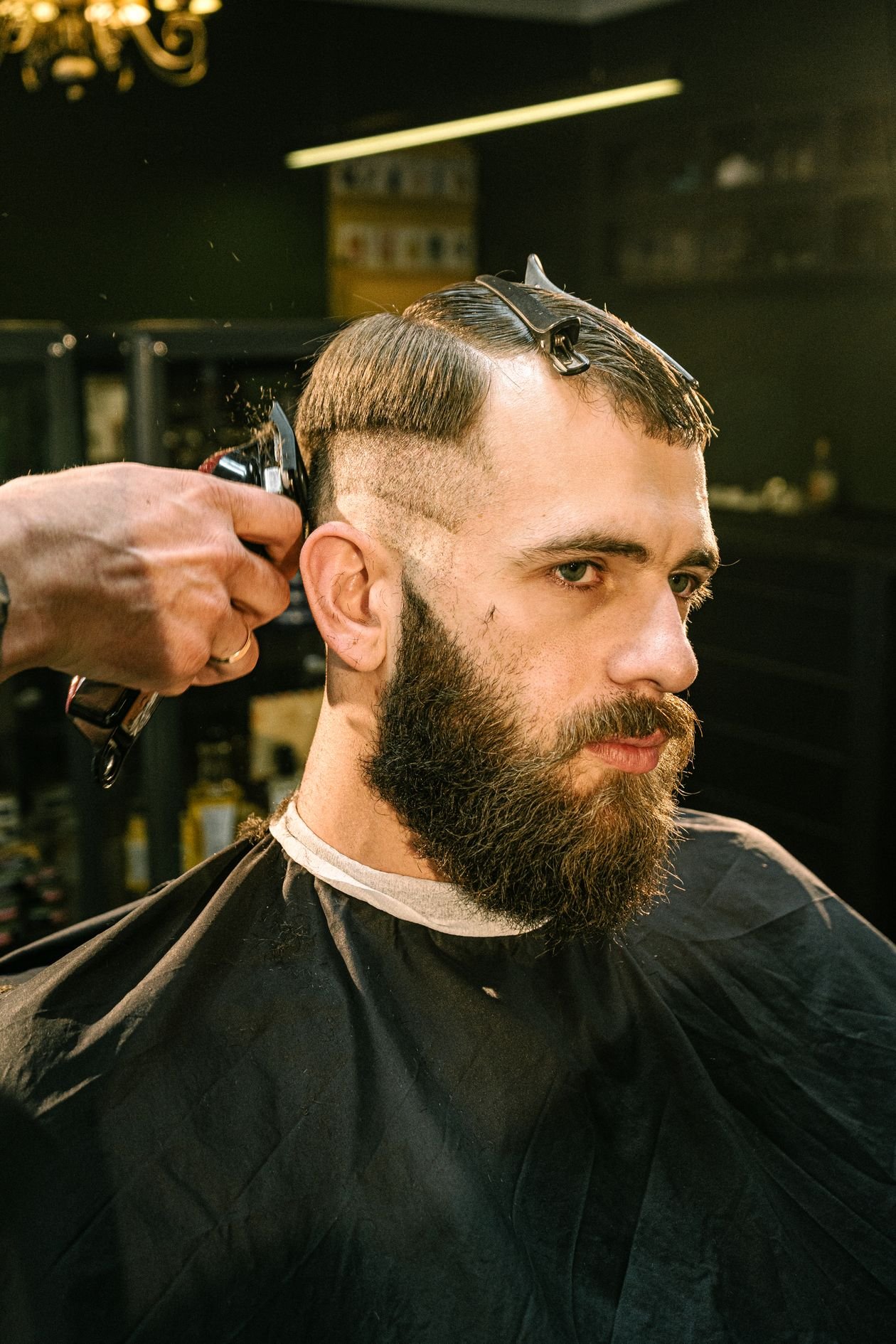
This is the combination most men actually want when they ask for a beard fade. The haircut tapers gradually from longer on top to shorter at the sides and neckline, and the beard fade picks up where the haircut leaves off. The sideburn becomes the meeting point. When both fades are done at the same length and the same pace, the whole side of the head looks like one blend. Tell your barber you want the taper and the beard fade connected, and agree on where the sideburn blend starts so the two do not fight each other.
6. Beard Fade + Skin Fade Haircut
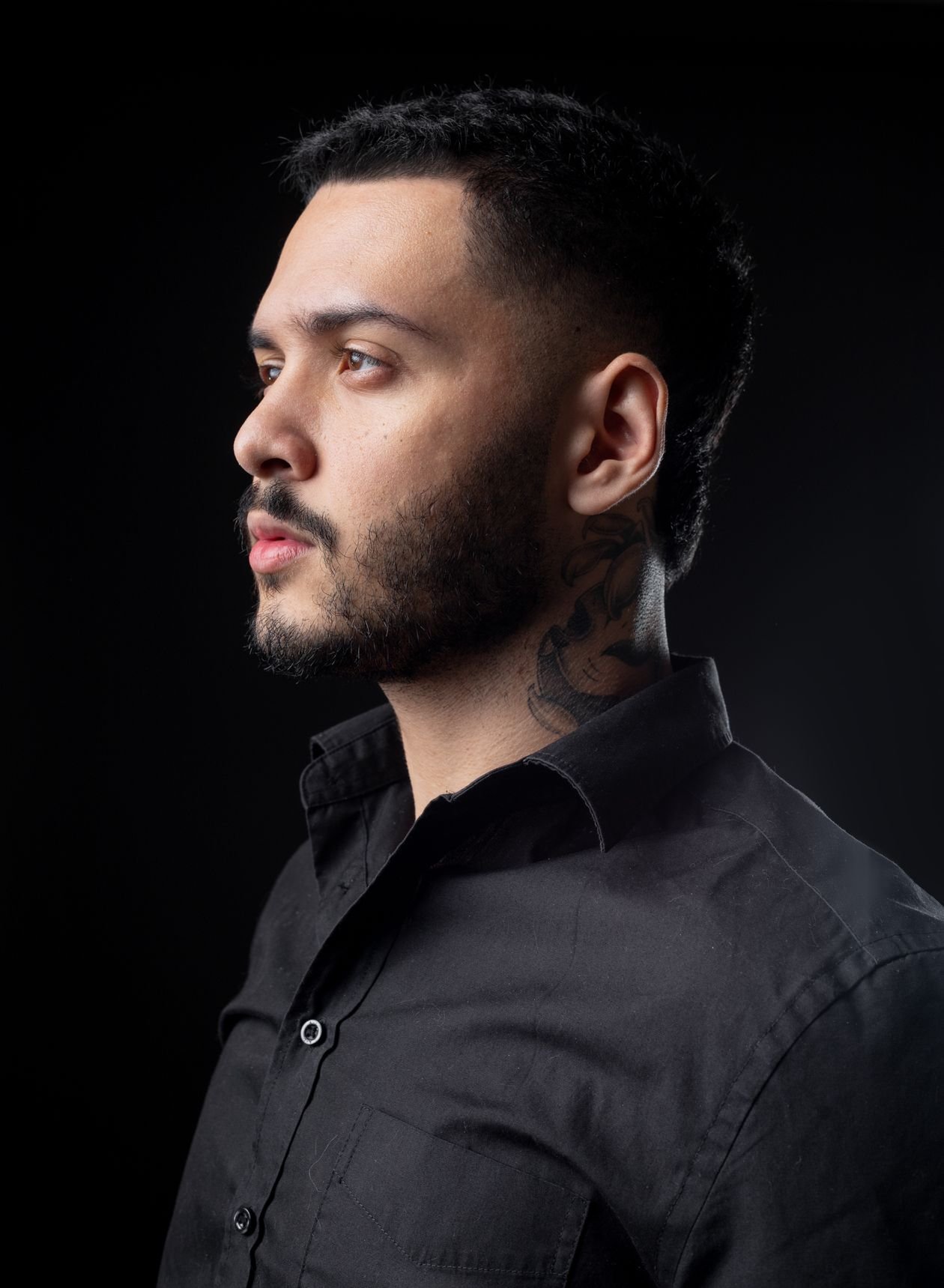
The skin fade version is the sharpest pairing. The haircut goes down to skin at the sides, and the beard fade starts from that bare skin and builds into the beard. The contrast is high, so the beard looks deliberately shaped and the haircut looks fresh for longer. It suits men who already wear a skin fade and want the beard to match its precision. The trade-off is maintenance: a skin fade grows out fast, and the beard fade next to it will look uneven if you leave it more than a few days. Book the two together, or learn to tidy the top edge of the beard between visits.
7. Short Boxed Beard Fade

The short boxed beard is the corporate-friendly version. The beard is kept short and trimmed into a neat box shape — straight cheek lines, a defined jaw, a clean neckline — and the fade softens the upper cheeks so the box does not look blocky. This is the best fade for offices, formal events, and men who want a beard without the rugged look. It needs regular edging to keep the box shape, but the fade itself is small and easy to refresh. If your workplace has a grooming code, this is the fade to bring to the conversation.
8. Full Beard Fade

A full beard fade keeps serious length through the chin and jaw and only fades the upper cheeks and sideburns. The result is a beard that still reads as big and full from the front, but looks clean from the side. This is the right choice if you have spent months growing your beard and do not want to lose length. The fade does the tidying without the cutting. Ask your barber to leave the chin and jaw untouched and fade only the cheeks. The key detail is the neckline: a full beard with a faded cheek but a messy neckline still looks unfinished.
9. Stubble Fade

The stubble fade is the shortest version. The whole beard is only a few days of growth, and the fade takes the upper cheeks down to almost nothing so the stubble looks like a deliberate style rather than a missed shave. This suits men who cannot grow a long beard, men who want the lowest-maintenance option, and men testing whether a beard suits them. It needs the most frequent touch-ups — stubble grows visibly every day — but each touch-up is quick because there is so little length to manage. Use a trimmer with guards rather than a razor for the blend, so the gradient stays smooth.
10. Beard Fade + Mustache Focus
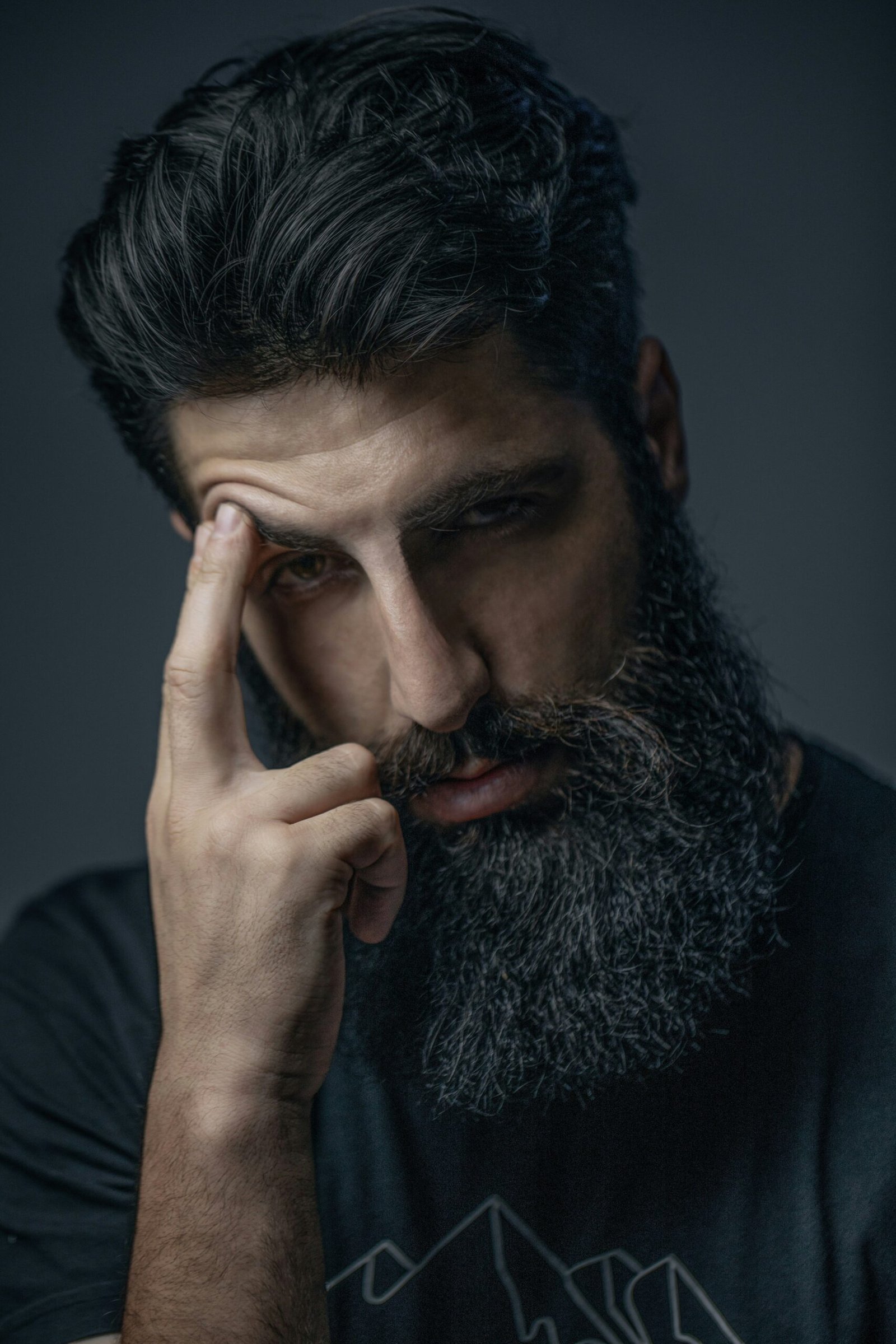
In this style the beard fades as normal, but the mustache is kept fuller and more defined than the rest of the beard. The contrast makes the mustache the focal point. A chevron mustache gives a bold, classic look. A handlebar mustache gives a more styled, vintage feel. Either way, the mustache needs its own care — a small amount of wax, a comb, and a trim along the lip line so it does not hang over the mouth. Tell your barber that the mustache is the feature and the beard is the frame, so the fade should not thin the mustache area.
11. Beard Fade for Patchy Beards

A fade can help a patchy beard look denser, but it cannot create hair where there is none. The trick is to fade the patchiest areas — usually the upper cheeks — down to skin or very short, so the eye is drawn to the denser areas below rather than to the gaps above. Keeping the beard shorter overall also helps, because long hair next to a bare patch makes the patch more obvious. What a fade cannot do is fill a fully bare cheek. If your cheeks are mostly bare and your jaw is dense, a low fade that keeps the jaw full and clears the cheeks will look better than trying to grow the cheeks long. Be honest with your barber about where the gaps are, and let the fade work around them rather than against them.
12. Beard Fade for Curly / Coily Beards

Curly and coily beards fade differently because the curl adds volume and the hair does not lie flat. The fade needs to be cut with the curl in mind — usually with clippers and a comb rather than guards alone — so the blend follows the natural shape instead of cutting straight through it. The top of the fade should be softened more than on straight hair, because a hard line on curly hair grows out unevenly. Moisture matters more here too: a dry curly beard looks wider and less defined, so beard oil and a brush help the fade read cleanly. If your barber is not used to curly beards, ask whether they cut curly hair regularly before booking the fade.
13. Beard Fade + Line-Up / Sharp Cheek Line

The line-up version adds a razor-sharp cheek line on top of the fade. The cheek line is edged with a razor or trimmer so it looks crisp, while the fade below it softens the transition into the beard. This is the most precise version and the one that photographs best, but it is also the hardest to keep. A sharp line grows out in two or three days, and a blurry line-up looks worse than no line-up at all. This style suits men who are willing to edge the line at home between barber visits, or who visit the barber weekly. If you want the look without the weekly commitment, ask for a softer cheek line instead of a razor line — it stays tidy for longer.
How to Ask Your Barber
Walk in with three pieces of information and the appointment gets much easier. First, name the fade height: low, mid, or high. Second, name the pairing: taper, skin fade, or no haircut fade at all. Third, name the shape: natural cheek line, boxed, or sharp line-up. Then show a photo of a man with a similar beard density and face shape to yours, not just a photo of the haircut you like. The photo tells the barber what the finished blend should look like on a real face.
Use this wording as a starting point: “I want a beard fade — low [or mid / high] — with the cheek faded into the sideburns, and I want to keep the length on the chin. Can we keep the cheek line natural [or boxed / sharp]?” Then let the barber adjust for your growth pattern. A good barber will check both cheeks, because most men grow hair slightly differently on each side, and will tell you if the fade you asked for needs a small change to suit your beard.
Two details are worth agreeing on before the clippers start. The cheek line: where it sits, and whether it is curved or straight. And the neckline: the usual rule is about one finger above the Adam’s apple, with the beard fading into the neck rather than stopping in a hard line. Getting those two lines right matters more than the exact guard number, because they are what people see from the front and the side.
How to Maintain a Beard Fade
A beard fade is not a cut-and-forget style. The fade itself needs attention every 3 to 5 days, because the short hair at the top grows out fastest and the blend is the first thing to look messy. You do not need a full barber visit each time — a trimmer with guards, a mirror, and ten minutes is enough to tidy the top edge and keep the gradient smooth. The full beard underneath needs a proper trim every 2 to 3 weeks to keep the shape and remove split ends.
Wash the beard 2 to 3 times a week, not every day. Daily washing strips the natural oils and makes the beard look dry and wiry. Use a beard wash or a gentle cleanser, not a harsh shampoo, and follow with beard oil every day. Oil keeps the hair soft, makes the fade look cleaner, and reduces itch as the short hair grows back. Brush or comb the beard downward after oiling so the hair lies in the same direction the fade was cut.
Fading at home vs. barber
A barber gives a cleaner blend, especially for the first fade, for curly beards, and for high fades where the gradient is steep. At home, you can maintain a fade you already have, but building one from scratch is harder because you cannot see the back of your jaw and you cannot easily judge the blend on both sides. If you do fade at home, work in good light, use guards one step longer than you think you need, and blend upward in small passes rather than trying to cut the whole gradient in one go. You can always take more off. You cannot put it back. For most men, the practical routine is a barber fade every 2 to 3 weeks with a light home tidy in between.
Beard Fade vs Full Beard
| Beard Fade | Full Beard (no fade) | |
|---|---|---|
| Look | Blended, shaped, clean at the edges | Fuller, more natural, heavier at the edges |
| Upkeep | Touch-up every 3–5 days | Trim every 2–3 weeks |
| Best for | Men who want a neat, defined beard | Men who want maximum fullness |
| Office-friendly | Yes, especially low fade and boxed fade | Yes, if the edges are kept tidy |
| Patchy cheeks | Hides gaps by fading them out | Gaps more visible if cheeks are left long |
Neither is better in general. The fade is better if you want shape and definition. The full beard is better if you want length and simplicity. Many men move between the two — a full beard in winter, a fade in summer, or a fade for events and a fuller beard in between.
FAQ
How long should I grow my beard before getting a fade?
About 2 to 3 weeks of growth is enough for a visible fade. That gives the barber enough length to create a gradient without cutting the beard down to stubble. If your beard is shorter than that, a stubble fade is still possible, but the gradient will be subtle.
How often do I need to fade my beard?
The fade itself needs a touch-up every 3 to 5 days to stay sharp. The full beard underneath needs a trim every 2 to 3 weeks. If you leave the fade for two weeks, it will still look like a beard, but the blend will have grown out and the edges will look soft.
Does a beard fade suit patchy beards?
It can help, because fading the patchiest areas down to short hair draws attention away from the gaps. It cannot fill bare skin. Keep the beard shorter overall and let the fade work around the patches rather than trying to grow over them.
Can I fade my beard at home?
You can maintain a fade at home with a trimmer and guards, but the first fade is best done by a barber. Home fading needs good light, patience, and a light hand — take off less than you think, blend in small passes, and check both sides in the mirror before finishing.
What guards should I use for a beard fade?
There is no single answer, because guard numbers depend on your beard length and density. As a starting point, many barbers use a longer guard on the full beard, a medium guard for the middle of the blend, and a short guard or no guard near the sideburns. Ask your barber which guards they used on your beard, and write them down so you can repeat the same fade at home.
Does a beard fade work with glasses?
Yes, but tell your barber if you wear glasses every day. The frames sit where the fade starts, and the barber can adjust the blend so it does not bunch up behind the frames or leave a gap where the frames sit.
Conclusion
A beard fade is a small change with a large effect. It does not change how much beard you have — it changes how the beard is shaped, and shape is what makes a beard look groomed rather than simply grown. Start with a low fade if you are new to it, move to a mid or high fade once you know how your beard grows, and keep the maintenance realistic. A fade you can maintain every few days will always look better than a sharper fade you leave for three weeks.
If you are booking your first fade, take this guide with you, show your barber the style that matches your beard, and agree on the cheek line and neckline before the cut starts. And if you are pairing the fade with a haircut, ask for the two fades to be connected at the sideburn — that single detail is what makes the whole head look like one haircut instead of two.
Related Reading

1 thought on “13 Beard Fade Styles for Men (Italian Fade Guide 2026)”