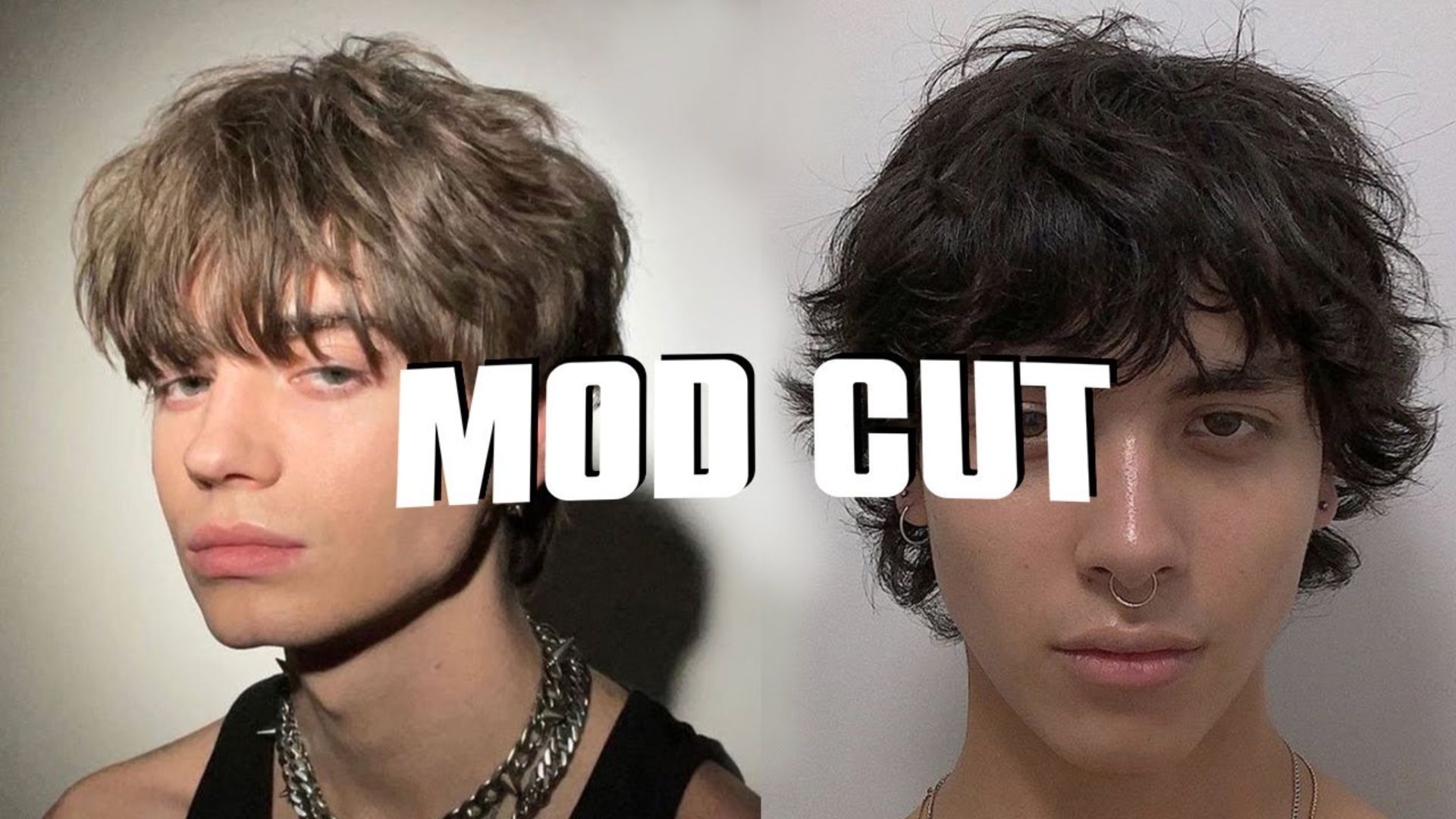
If you’ve ever stared at old photos of the Beatles mop top or Paul Weller hairstyle and thought, that’s exactly the kind of haircut I want, you’re not alone. There’s something about mod haircuts men have worn since the 1960s British hairstyle era that feels timeless, sharp, and effortlessly cool. Whether you’re drawn to the defined fringe, the rounded silhouette, or that natural movement that doesn’t look overdone, the mod cut has a way of just making sense on almost anyone.
In this guide, we’re going to walk you through everything, from the history of mod subculture hairstyle and its Carnaby Street style roots to modern variations like the textured mod cut, wavy mod cut, and even the mod cut with fade. You’ll learn how to style a mod cut, what to tell your barber, and which version works best for your hair type and face shape. If you’ve been looking for a scissor cut hairstyle that’s got real character, you’ve landed in the right place.
What Is A Mod Haircut?
A mod haircut is a scissor cut hairstyle deeply rooted in 1960s British youth culture, built on precise scissor work, clean structure, and a strong continental European style influence that borrowed heavily from Italian tailoring and French crop sensibilities. The original modernists, London’s working-class youth of the late 1950s and early 1960s, shaped this look as a direct rejection of the American rock-and-roll aesthetic, choosing instead a refined, intentional style that reflected their love of modern jazz, sharp clothing, and Carnaby Street culture.
The visual hallmarks of a mod cut are specific and non-negotiable. The most identifiable feature is a blunt fringe, sometimes called a defined fringe, that sits across the forehead with purpose. Beyond that, the cut features uniform scissor-cut sides, a rounded silhouette, textured layers through the crown, and pronounced sideburns that give the style its signature frame. The hair typically sits in the short to medium length range, long enough to move naturally but structured enough to read intentionally.
A buzz cut is short. A faded cut is graduated. A mod cut is short to medium length with intent, executed with shears rather than clippers, and that distinction matters more than most people realise.
The cut was popularised globally during the British Invasion hairstyle era of 1963 to 1967, when bands like The Beatles, The Kinks, The Who, and The Small Faces brought the mop top and its variations to the world stage. The mod subculture hairstyle then experienced a powerful revival in the late 1970s through the Jam haircut era, led by Paul Weller hairstyle, whose cropped, sharp-fringed look became the defining image of second-wave mod. The 1990s brought the Britpop haircut wave, with bands like Blur and Oasis introducing yet another generation to the look.
Today, the mod cut mixes retro credibility with modern versatility, making it one of the most consistently requested styles in barbershops around the world, particularly among artists, musicians, and anyone who wants a haircut with genuine cultural history behind it.
Popular Mod Haircuts for Men
Wavy Mod Cut
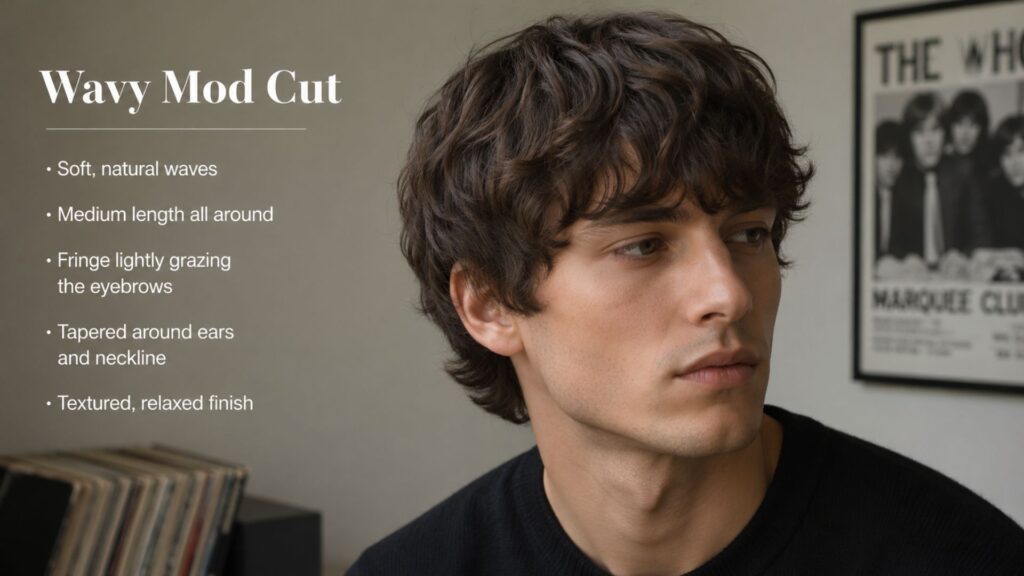
The wavy mod cut is one of the most naturally flattering versions of the style, designed specifically for men whose hair already has movement and texture built in. Natural waves are shaped into soft layers that sit neatly around the head, with the fringe blending into the top rather than sitting as a sharp blunt line. The sides and back keep a gentle rounded outline, cut with scissors to maintain the classic mod structure.
What makes this variation work so well is that the waves add natural movement without the cut ever looking messy or heavy. It is one of the most wearable mod haircuts for men with wavy hair because you are styling with your natural texture rather than fighting against it. Blow dry on a low setting, guide the hair with your fingers, and finish with a small amount of sea salt spray on damp hair to bring out the wave pattern before you style. The result is a relaxed, lived-in look that still reads polished and deliberate.
Choppy Mod Cut
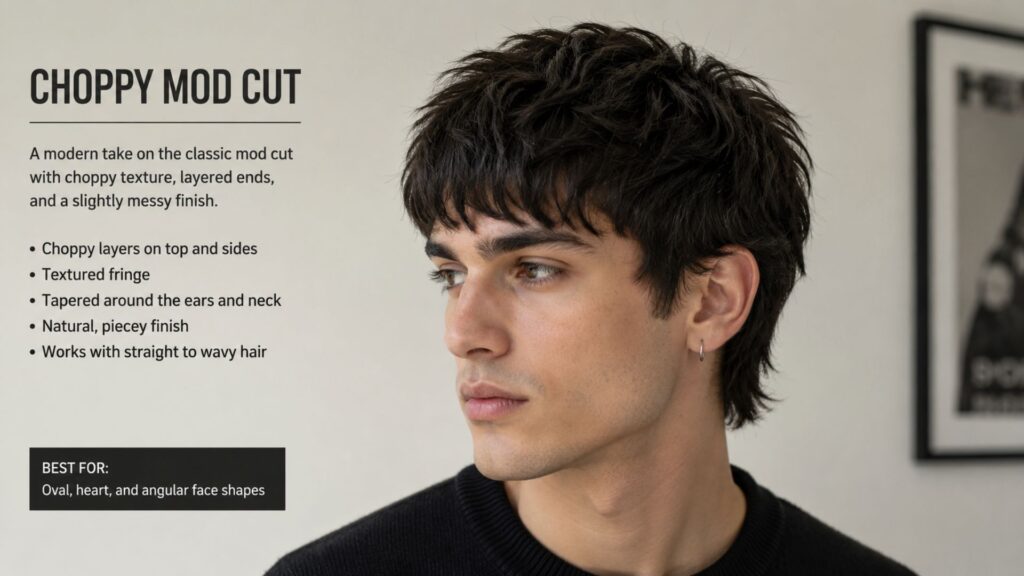
The choppy mod cut brings uneven layers and a soft fringe together to create a textured shape that feels casual and considered at the same time. The top is light and broken up, almost like a shaggy mod in its relaxed approach, while the sides and back stay slightly longer for balance. The choppy layers create natural movement without the cut ever tipping into messy territory.
This is the variation that Liam Gallagher and the Britpop haircut generation helped bring into the mainstream, and it still carries that same effortless edge today. The key to styling it correctly is to avoid overworking the hair. Blow dry gently and shape the layers with your fingers to keep the flow loose. Texture powder lifts the choppy pieces better than any paste or clay, giving each layer its own definition without weighing the hair down.
Modern Mod Cut
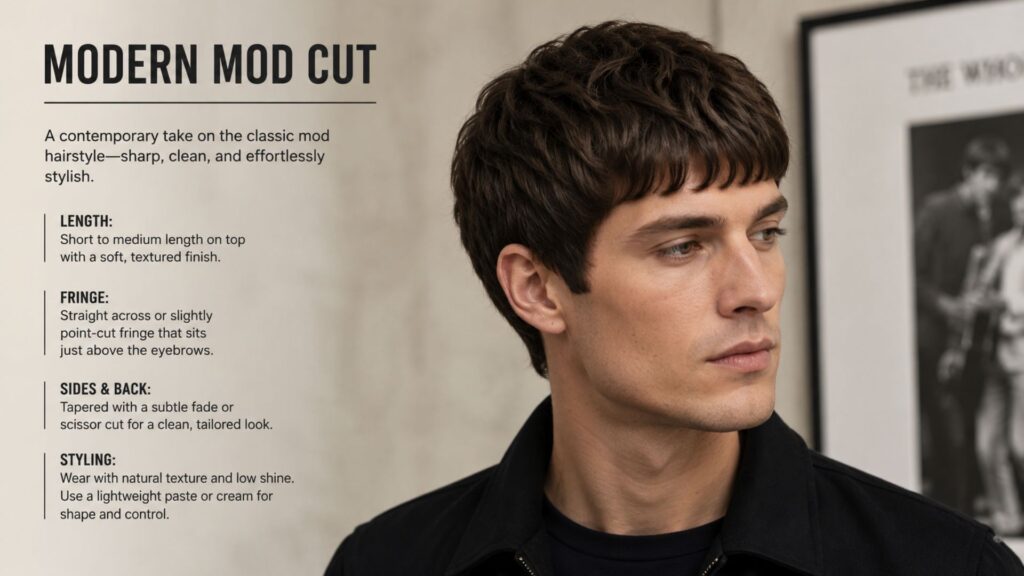
The modern mod cut updates the classic structure with short, clean edges and soft texture on top, creating a version of the style that works equally well in a creative office or on a weekend out. The fringe sits straight across the forehead in classic mod fashion, while the sides and back stay neat with scissor-cut precision. The hair feels light and easy to move, nothing heavy or flat.
This variation works particularly well for men with straight hair who want the mod cut for straight hair look without too much styling commitment. It is also one of the best mod haircuts for oval face and square face shapes because the clean proportions and defined fringe balance both equally well. Blow dry gently and guide the hair with your fingers to keep the shape natural. A small amount of molding paste or matte clay for mod cut adds light texture without stiffness.
Mod With Texture
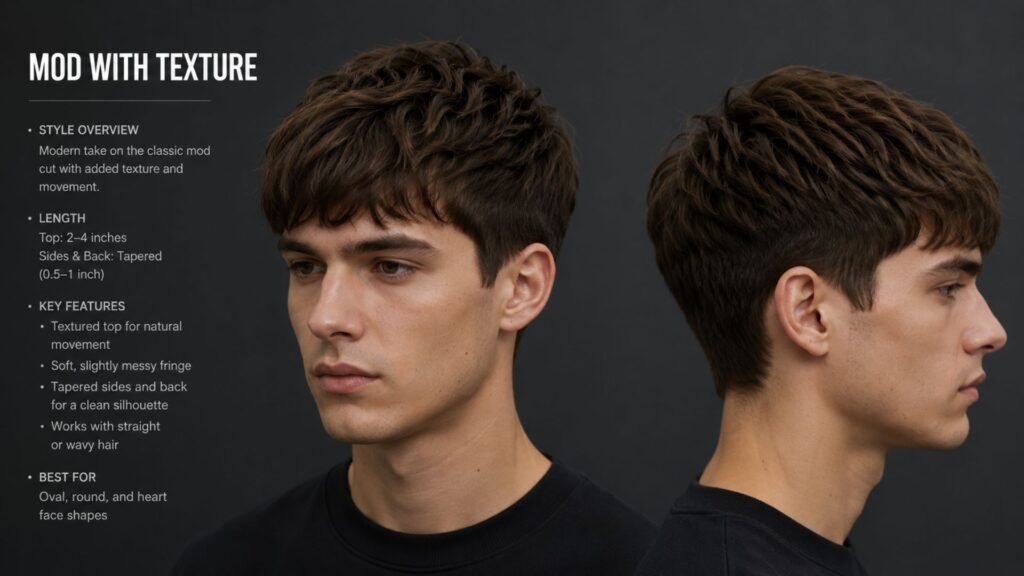
The textured mod cut is consistently one of the most requested variations in contemporary barbershops, and for good reason. It balances cultural reference with everyday wearability, using short, uneven layers to add depth and soft movement throughout the cut. The fringe sits lightly across the forehead, the sides and back stay neat for a rounded outline, and the overall shape reads intentional without feeling overdone.
This is the version that suits men with thick hair particularly well, as the choppy layers help manage volume and prevent the hair from sitting too heavy. It also works beautifully as a mod cut for curly hair when adapted properly, with the layers adjusted to work with the natural curl pattern rather than against it. Blow dry gently, separate the layers with your fingers, and warm a small amount of matte paste between your palms before applying so it spreads evenly rather than clumping.
Hippie Mod Cut
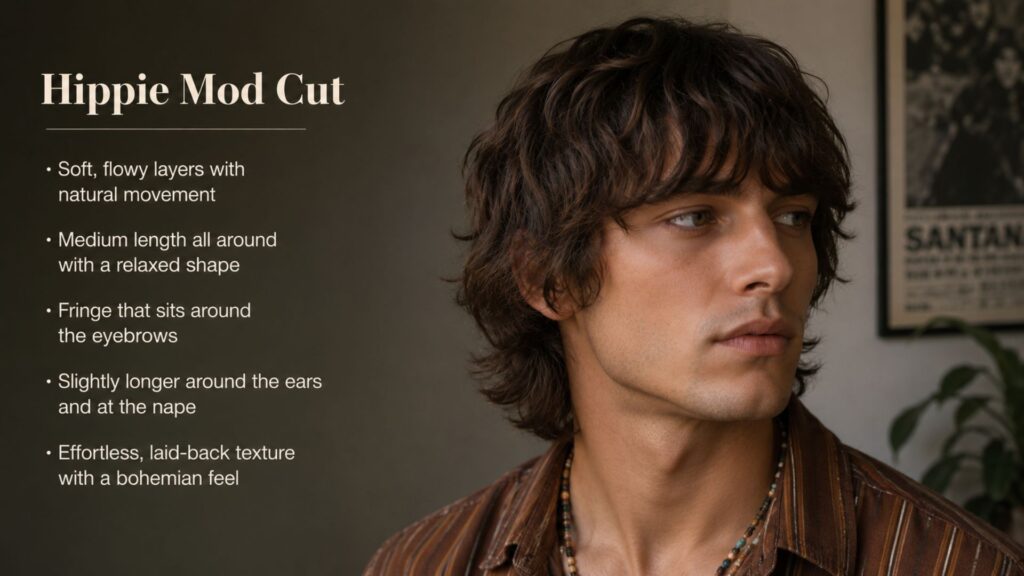
The hippie mod cut sits at the crossroads of the classic mod structure and the free-flowing texture of the late 1960s, when the mod subculture began blending into the broader counterculture movement. This variation works brilliantly for curly mod cut styles, using a point cutting technique rather than blunt scissor work to add definition to the top layers without flattening the natural curl pattern.
The result is a looser, more organic version of the mod that keeps the essential fringe and rounded silhouette but lets the hair breathe and move more freely. A long fringe that falls forward in loose waves or curls gives the hippie mod its signature relaxed personality, while the sides and back stay shaped enough to keep it from reading as simply overgrown. Use texturizing styling products and a diffuser on low heat to emphasise the movement and volume this variation naturally produces.
Stylish Long Mod
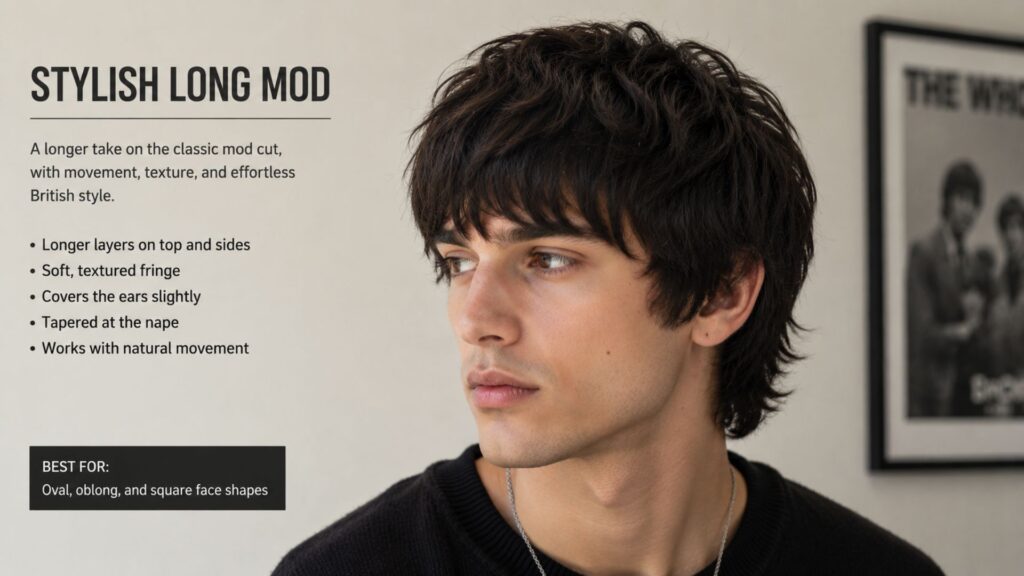
The stylish long mod is a flowing, attractive variation that pushes the length further than most classic interpretations while retaining all the defining mod elements. Thick waves flow over the forehead from the crown, and ample layers at the sides and back give the hair a lighthearted yet structured feel. The longer layers at the back gently reach the collar, framing the face and emphasising the overall shape.
For a well-executed long mod cut, avoid over-layering the top, as too much layering removes the volume that gives this variation its presence. Opt for a longer fringe that falls in a feathered or choppy style rather than a short blunt one, as longer hair needs a fringe with some movement built in. Blow dry gently and guide the hair with your fingers. Texture clay applied sparingly keeps the layers defined without making the style feel heavy or forced.
Textured Mod
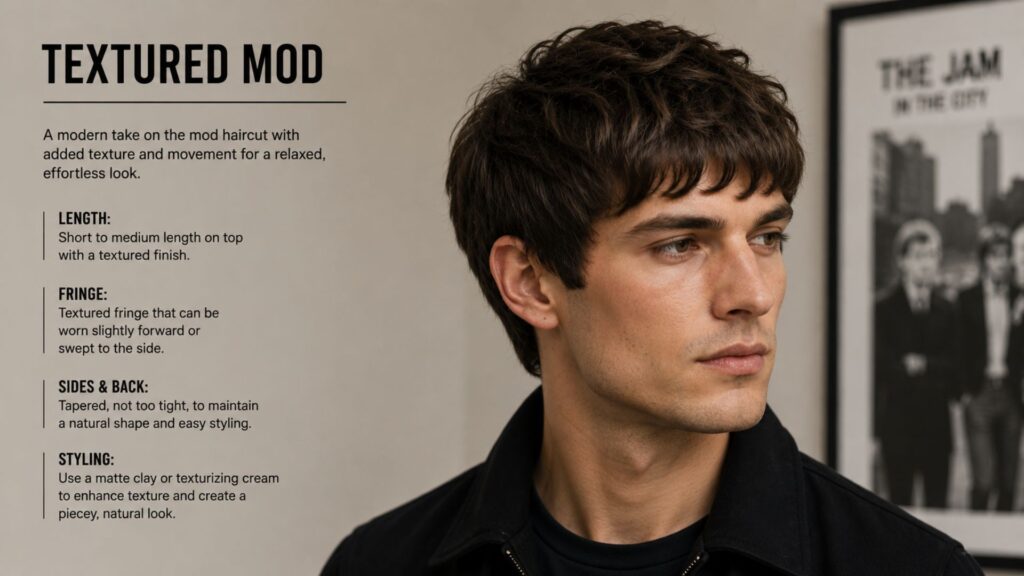
The textured mod closely relates to the textured mod cut but leans more deliberately into the contrast between a thick blunt fringe and short choppy layers flowing forward from the crown. It charms without trying too hard and gives men with unique personal style a head-turning look that still reads refined.
A matte texturizing pomade or molding paste hairstyle product is crucial to achieving the right finish here, as shine softens the sharp contrast the cut depends on. If you want to take it a step further, a few carefully placed highlights can amplify the choppy layer detail and add dimension to the fringe. This variation works well for men asking how to style a mod cut without spending too much time in front of the mirror each morning.
Classic 60s Mod Cut
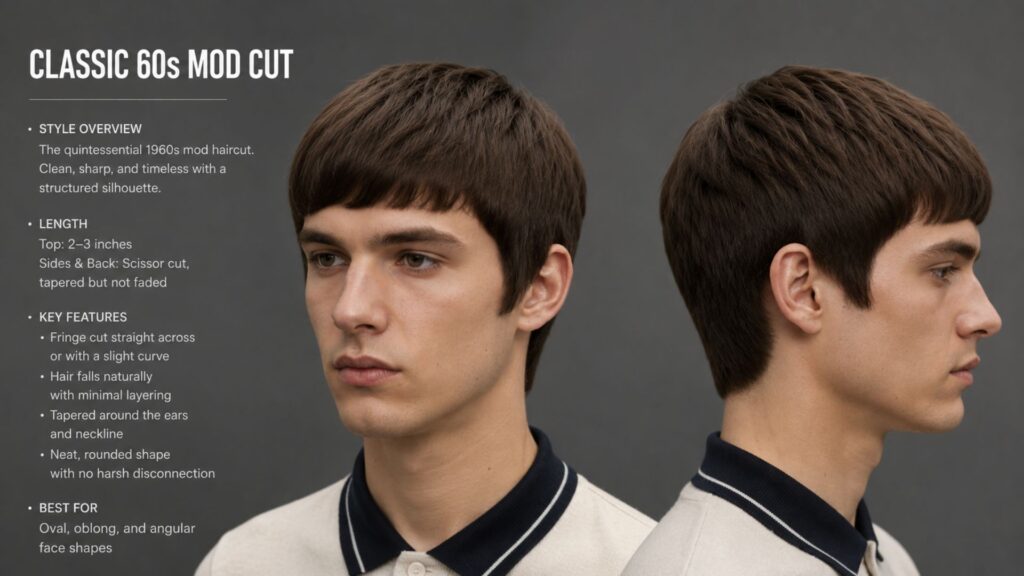
The classic 60s mod cut is where everything started. This is the haircut that defined London mod culture, appeared on Carnaby Street style icons, and was made globally famous by the British Invasion hairstyle movement. It features shorter hair at the back and sides, longer hair along the top, and a fringe that reaches the brow in a deliberate, structured line.
The collar-length hair at the nape, the shorter sections at the ear, and the tousled top combine to create height and dimension that feels both retro and surprisingly current. The sides are scissor-cut to a uniform length, not graduated, and the sideburns are allowed to develop enough presence to frame the face properly. This is the version to ask for when you want the authentic mod experience, not a modern adaptation. Try sweeping the fringe to each side or parting down the middle for a finish that references the original mod vs mullet debate that defined that era.
Messy Mod Cut
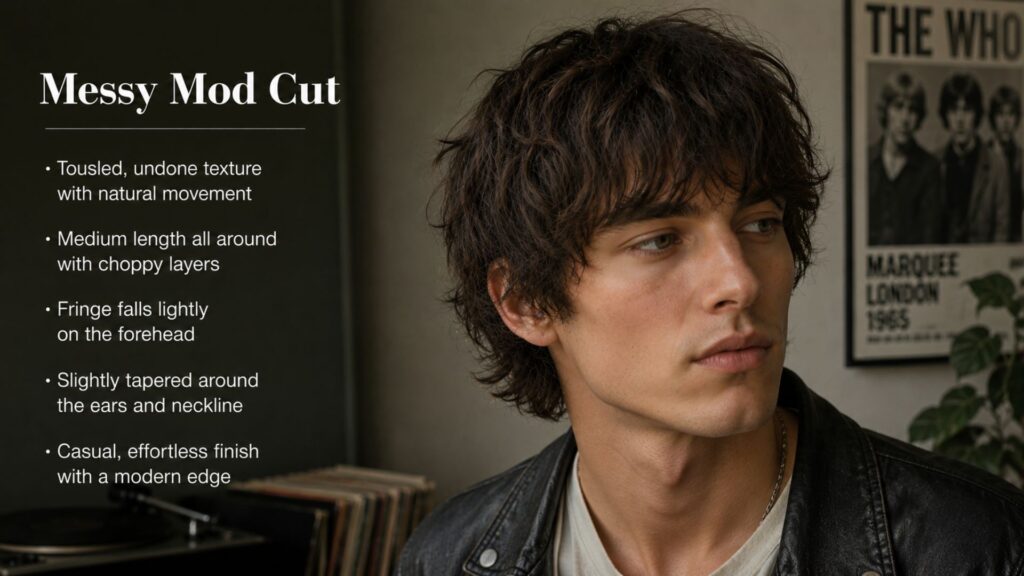
The messy mod cut is the variation that makes intentional look effortless. It keeps the hair loose with uneven layers that create a relaxed, lived-in shape without ever tipping into genuinely unkempt territory. The fringe falls forward in a soft, broken way rather than sitting as a sharp blunt line, while the sides and back stay light and slightly longer for balance.
This is a low-maintenance mod haircut option that suits men who want the cultural credibility of the style without a demanding daily routine. The less product you use, the better this version looks. A touch of molding paste hairstyle product is enough, applied sparingly through damp hair and then left alone as it air dries. The result is a messy mod that looks like you woke up with it, which was always the point.
Curly Mod
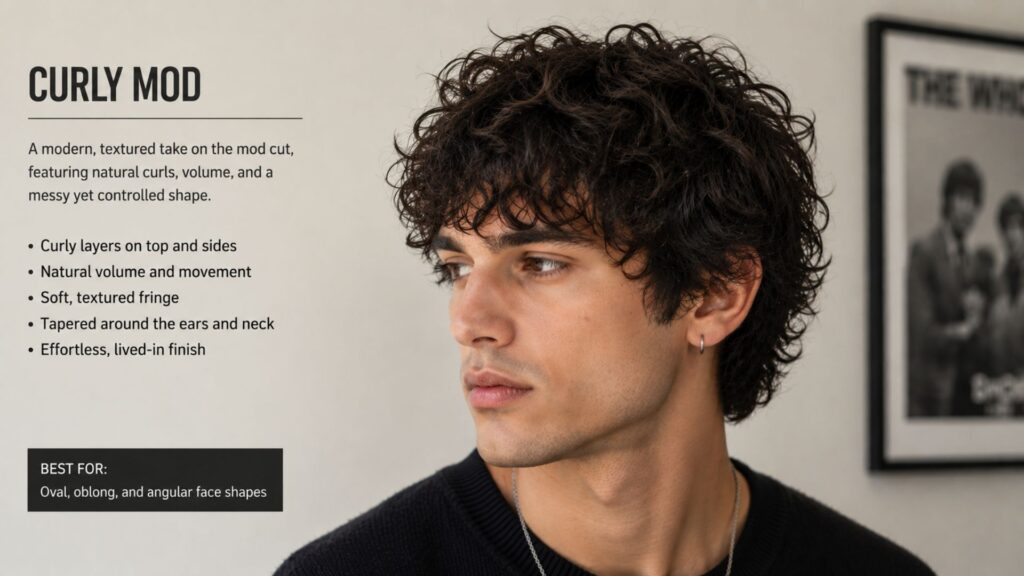
The curly mod cut makes the most of natural curls, adapting the classic mod structure to work with the hair’s existing texture rather than against it. Scissors work better than razors for curly mod cuts throughout, as razor work disrupts the curl pattern and creates unwanted frizz that straight hair versions never have to deal with. The long fringe falls forward in loose curls rather than a flat blunt line, giving the haircut a relaxed but deliberate personality.
The sides stay shaped to preserve the mod structure, while the overall silhouette is rounded and full in a way that straight hair versions cannot naturally achieve. This is one of the most attractive mod haircut for round face and oval face options available, as the volume and fringe work together to balance the proportions beautifully. Work curl cream through damp hair, let it air dry or diffuse on low heat, and skip the comb entirely. Fingers preserve the curl pattern far better.
Rocker Mod Cut
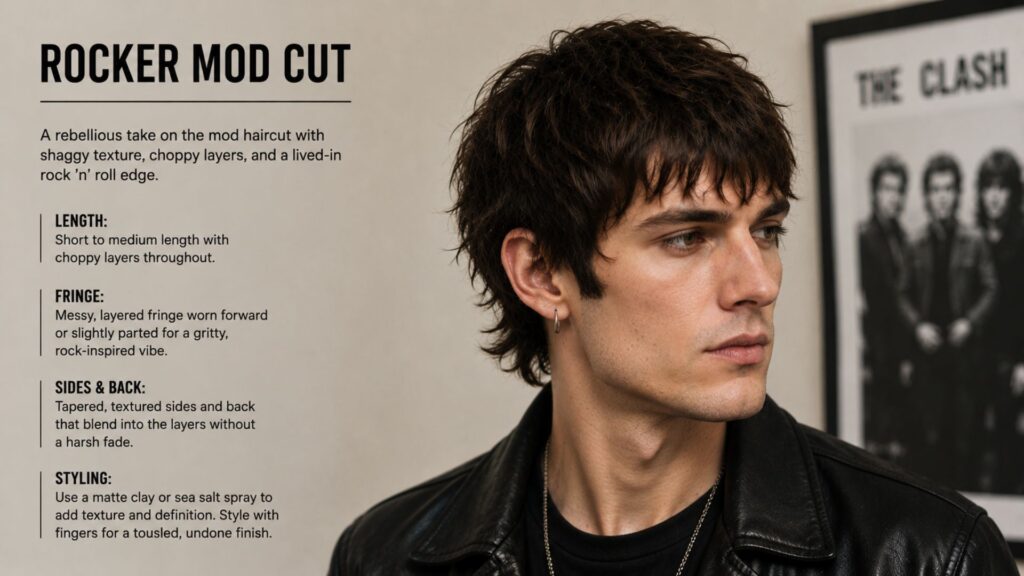
The rocker mod cut is shorter than most variations, featuring a chunky, almost spiky look along the top that pushes the style toward a more aggressive, rock-influenced edge. The fringe is wispy rather than thick, which is what separates it clearly from the classic mod fringe length approach. The longest sections of hair sit at the sides, just in front of the ears, with the sideburns doing significant visual work, while the back and nape stay short, drawing the eye upward.
This variation draws a direct line from the mod haircut history back to its musical roots, channeling the energy of bands like The Jam and the hard-edged end of the British Invasion. It suits most hair types, including fine or thinning hair, because the shorter overall length means the cut relies on shape and structure rather than volume. A strong hold clay worked through the top sections creates the spiky lifted texture this variation needs.
Mod Flow
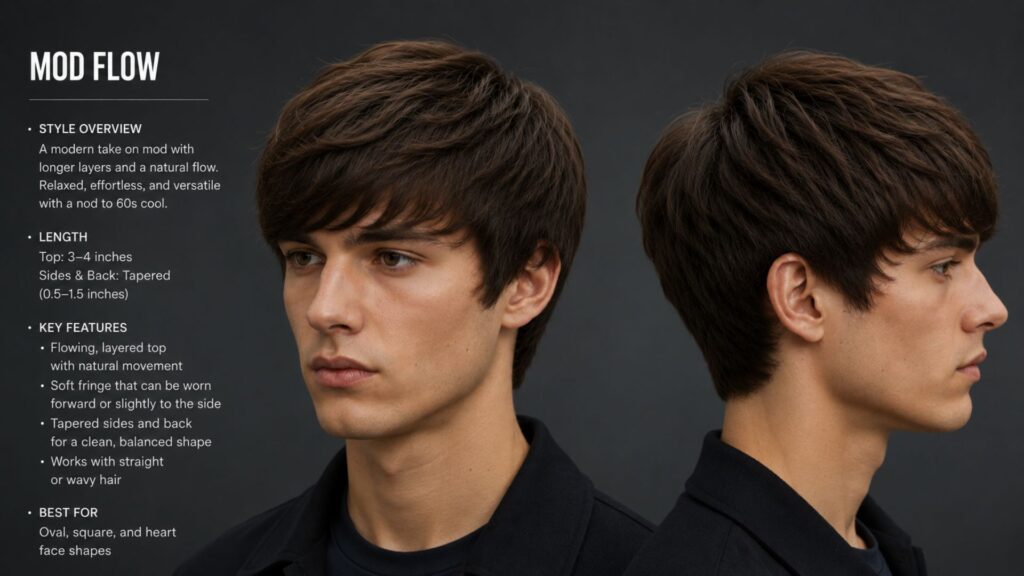
The mod flow keeps the hair at an ear-grazing length and sweeps it back and to the sides with natural texture leading the shape. Rather than a traditional blunt fringe, the mod flow lets the hair move freely and settle on its own as the day progresses, creating the kind of natural movement that takes real confidence to pull off. The top stays soft and full, while the sides and back hold a relaxed rounded outline.
This is one of the better options for men wondering about mod cut for thick hair, as the length and natural movement allow thick hair to express itself rather than being restrained. Push the hair back with your fingers while it dries, and finish with a light application of sea salt spray for mod to add just enough grip to keep the flow loose without locking it down. The styling philosophy here mirrors the mod haircut maintenance approach of less is more.
90s Mod Cut
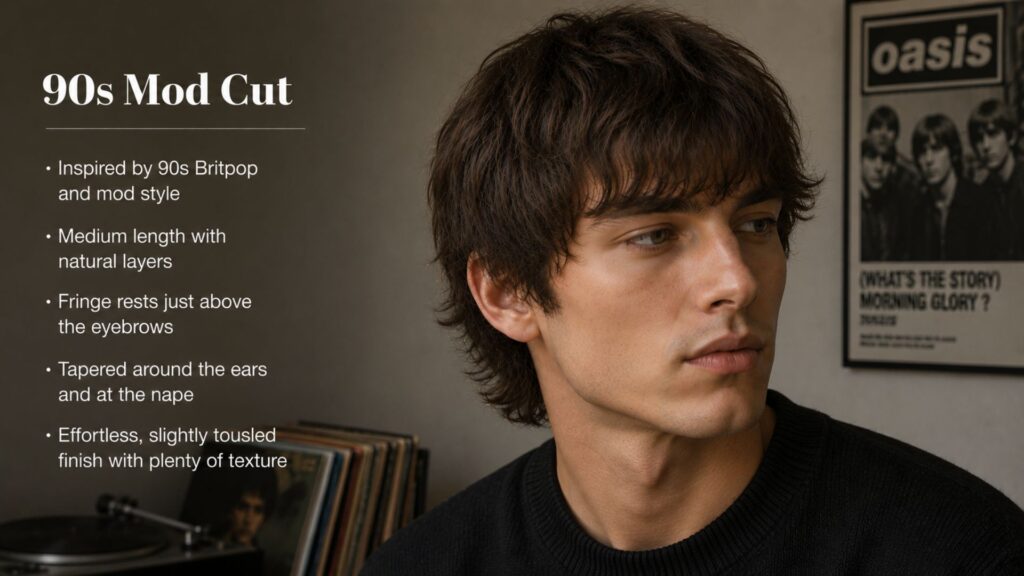
The 90s mod cut is the Britpop haircut generation’s interpretation of the classic structure, looser and more playful than the original 60s mod but still rooted in the same essential elements. Choppy layers with a soft fringe sit low on the forehead, the sides and back stay slightly longer to create a rounded shape, and the overall feel is sharp but relaxed in a way that feels unmistakably British and unmistakably cool.
This variation draws from the same cultural well that produced the shaggy mod look of bands like Blur and Pulp, and it carries that same effortless energy today. It is one of the strongest arguments for why mod haircut history continues to feel relevant rather than dated. Blow dry lightly and shape with your fingers for texture, then finish with a matte cream applied sparingly so the layers stay soft rather than set.
Classy Mod with Beard
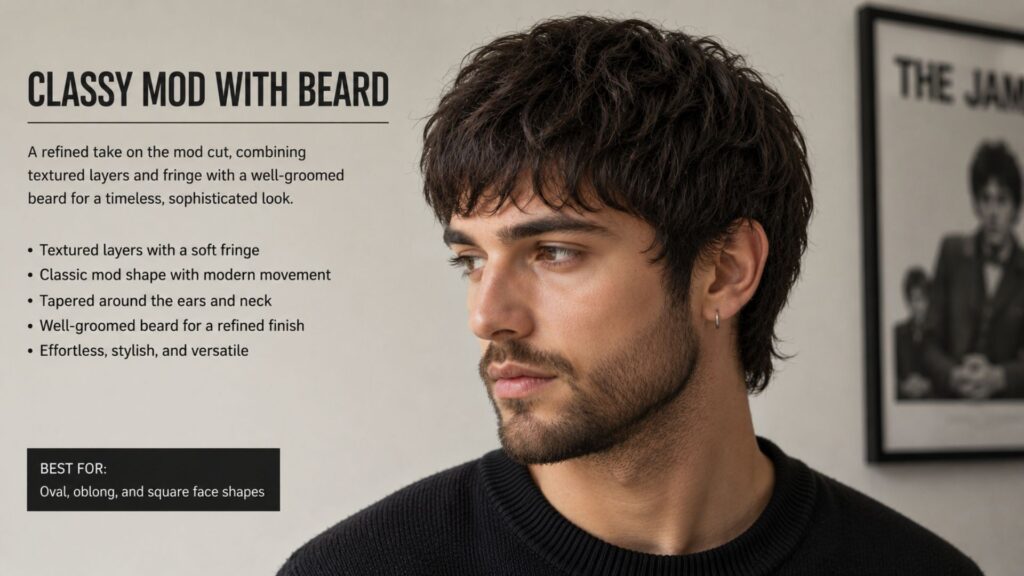
The classy mod with beard is a contemporary variation that pairs longer layers on top with shorter ones at the back and sides for a polished, low-maintenance finish. A thick fringe landing just above the brow complements a beard that is fuller in the goatee area than at the cheek and jaw, creating a balanced frame around the face that feels both modern and intentional.
This is one of the most versatile mod haircuts for men with facial hair, as the contrast between the structured fringe and the beard creates a visual anchor that works across face shapes and hair textures. It leans into the mod haircut for square face and mod haircut for oval face categories equally well because the beard adjusts the proportions naturally. Keep the sides scissor-cut short and the fringe well-maintained, and trim the beard every week or two to preserve the balance.
Indie Mod
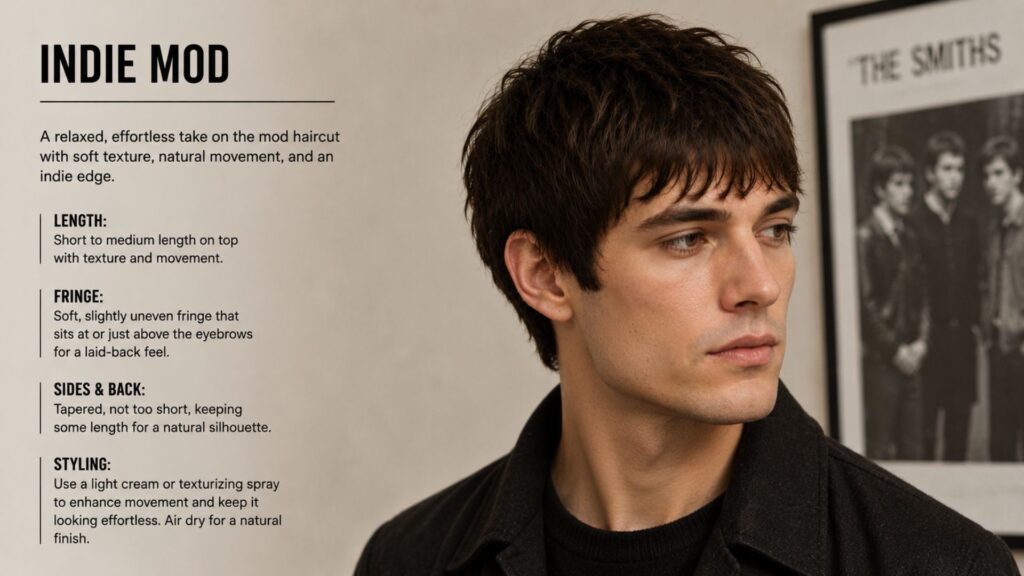
The indie mod takes the classic cut back to its roots while layering in a touch of contemporary creative expression. Unlike a traditional mod, this variation features more pronounced layers styled into soft spikes, giving it a personality that references both the original mod subculture hairstyle and the art school energy of musicians who have kept the tradition alive. The sides and back are short and relatively clean, and the sideburns are long and thick, creating a sharp contrast with the voluminous top and wispy fringe.
This is the mod haircut for artists and musicians who want something that communicates cultural awareness without looking like a costume. The indie mod sits comfortably in the space between the rocker mod cut and the classic 60s mod cut, drawing from both without committing entirely to either. A small amount of matte clay worked through the layers gives the spikes their definition without making the style feel overworked.
Mod Cut Fringe
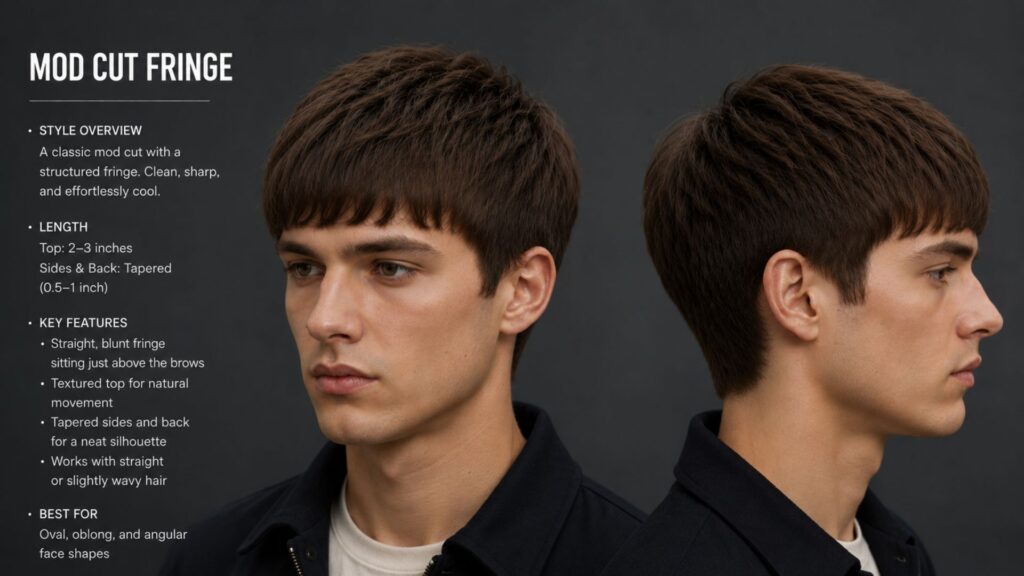
The mod cut fringe variation puts the fringe itself at the center of the design, treating it as the primary feature around which everything else is built. A layered shape with a soft fringe rests across the forehead while the top stays slightly longer to create natural movement. The sides and back are trimmed neat but not too short, keeping the overall look relaxed and modern rather than severe.
When you walk into the barbershop and ask how to ask the barber for a mod cut, the most important conversation you will have is about the fringe. Blunt or pointed? Brow-length or longer? Falling forward or sweeping to one side as a side swept mod? The fringe is the cut, and every other decision follows from it. A small amount of texture clay applied after blow drying holds the shape and highlights the layers without stiffness.
Mod Cut Perm

The mod cut perm is a variation for men who want the rounded mod silhouette but whose naturally straight hair does not provide the movement and texture the style needs. Soft layers are shaped into a rounded form with clear, defined curls from the perm treatment, the top stays longer to hold volume, and the sides sit closer to the head without looking tight. The back follows the natural curl pattern for a smooth, cohesive finish.
This option has been growing steadily in popularity as a mod cut perm option, particularly in East Asian markets where the Korean mod cut and Asian mod cut aesthetics have driven renewed interest in permed mod styles. Blow dry gently using fingers to lift the hair, then apply a small amount of styling cream to keep curls neat, soft, and easy to manage through the day. Book a touch-up perm every three to four months to keep the curl pattern fresh.
Wolfy Mod Cut
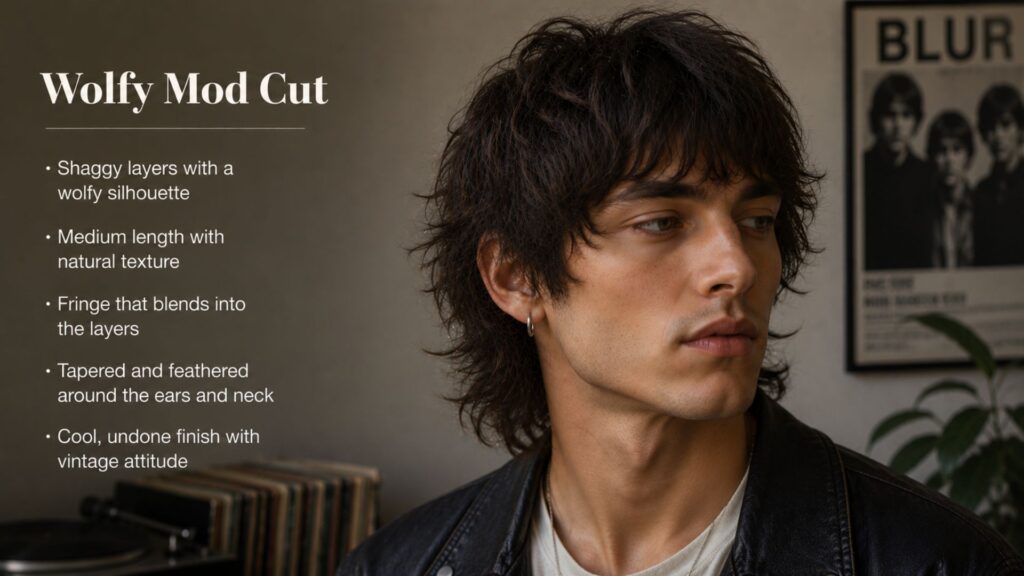
The wolfy mod cut is the result of combining the mod cut and wolf cut into a single style that takes the best qualities of both. The wolf cut contributes its heavy layers, longer back, and loose shaggy texture, while the mod contributes its structured fringe, scissor-cut approach, and essentially rounded silhouette. The result is a heavily textured mid-length cut with shorter layers on top, a choppy fringe, and a longer back that has both presence and movement.
This haircut resolves the mod vs wolf cut debate in a single style, and it works particularly well for men with wavy or naturally textured hair because the cut lets movement do the structural work naturally. It leans into the mod mullet territory at the back without fully committing to it, which gives it a flexibility that suits a wide range of personal aesthetics. Use a small amount of styling cream and let the hair air dry for the most natural finish, adding a touch of sea salt spray for extra definition if needed.
The Spiky Mod Cut
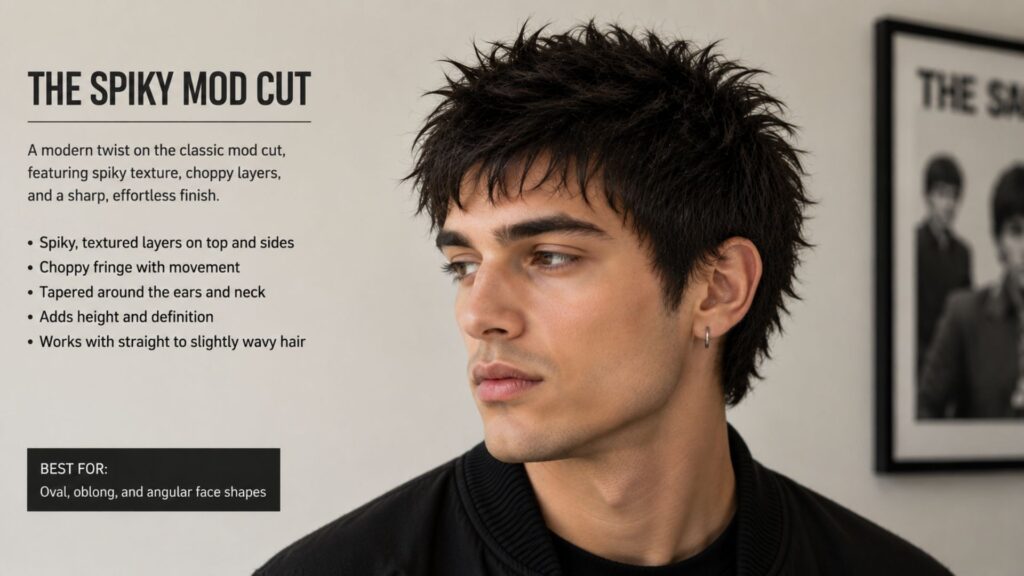
The spiky mod cut mixes short, choppy layers with sharp, lifted tips that give the hair a bold and edgy look without losing the fundamental mod structure. The top stays full with rough texture above a defined fringe, while the sides and back remain neat and scissor-cut rather than faded or graduated. The cut creates natural movement and height that reads energetic rather than severe.
This is the variation that sits closest to the punk-influenced end of the mod spectrum, channeling some of the same energy as the mod haircut history’s late 1970s revival without going full punk aesthetic. Blow dry while lifting sections with your fingers, then build the spikes from the roots outward using a strong-hold clay in small sections. The result should look deliberate but not laboured, energetic but still rooted in the mod tradition.
The Mod French Crop
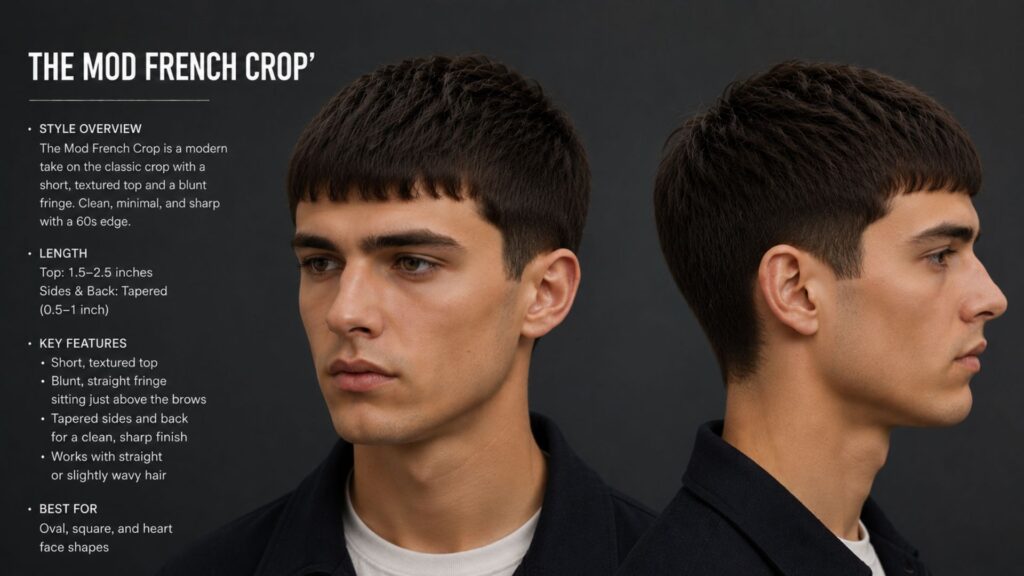
The mod French crop pairs a blunt fringe at the brow with a short, layered top and clean scissor-cut sides in a combination that manages to feel both ancient and completely current. The French crop influence gives the fringe its particular weight and authority, sitting straight across the forehead as the single most visible design choice in the haircut, while the mod influence keeps the sides scissor-cut and the overall proportions deliberate.
This variation works exceptionally well for men with mod cut for round face concerns, as the horizontal fringe line adds width and the shorter sides keep the proportions balanced. It is also one of the cleanest options for men who want a low-maintenance mod haircut maintenance routine, as the shorter length means less daily styling time. Blow dry gently and push the hair forward with your fingers. Matte clay works best here, as shine softens the sharp fringe line the cut depends on.
The Mod Bowl Cut
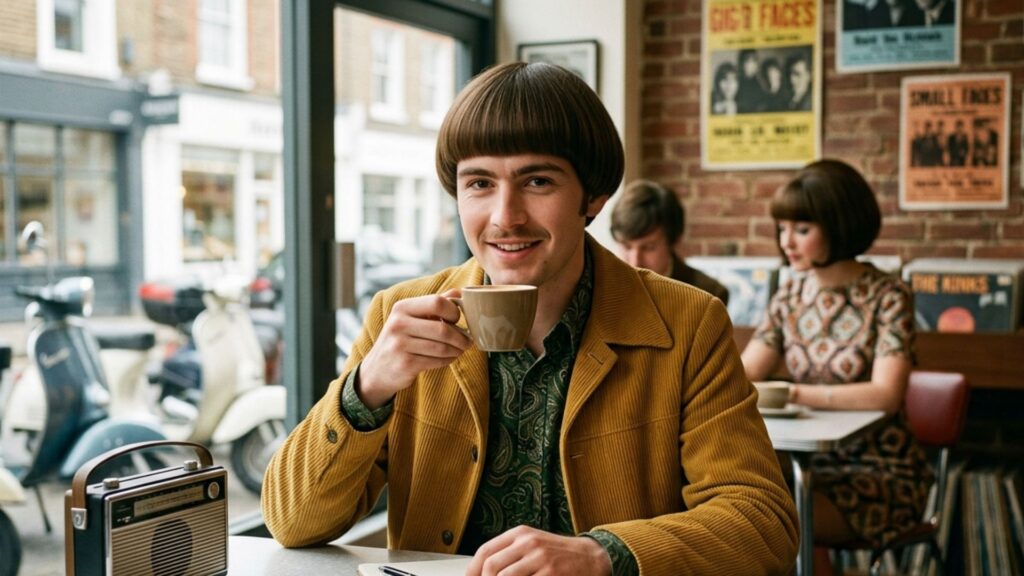
The mod bowl cut shapes the hair into a deliberate geometric dome with a perfectly horizontal fringe and a single defined length running all the way around the head. It is bold, retro, and unapologetically confident, with a clean outline that reads intentional from every angle. The bowl cut connection to mod history runs deep, as the original 1960s mod cuts often featured this kind of geometric precision, particularly among the more fashion-forward members of the London mod scene.
The distinction between a generic bowl cut and a mod bowl cut is in the execution and the intent. A mod bowl cut is scissor-cut throughout, with sideburns that are allowed to exist rather than being erased, and a fringe that sits at brow level rather than dropping further toward the eyes. Blow dry downward and guide the hair into place with your fingers. Keep the product minimal so the shape stays soft and natural rather than helmet-like. This is a cut that needs confidence to wear, but worn well, it is one of the most striking mod haircuts men can choose today.
Conclusion
Mod haircuts men have worn for decades continue to prove that great style never goes out of fashion. The classic 60s mod cut delivers a sharp defined fringe, the messy mod cut offers relaxed texture, and the mod bowl cut brings bold geometry, giving every man a version that suits his hair type and face shape perfectly. From the wavy mod cut to the wolfy mod cut, the mod cut adapts without ever losing its identity or cultural roots.
Before your next appointment, think about which variation speaks to you, bring a reference photo, and have an honest conversation with your barber about your hair type and face shape. Keep your mod haircut maintenance routine consistent with a trim every 4 to 6 weeks, use the right products whether that is matte clay, sea salt spray, or a light molding paste, and you will have a scissor cut hairstyle that is sharp, timeless, and completely your own.
Frequently Asked Questions(FAQs)
What is the difference between a mod cut and a regular haircut?
A mod cut is a scissor cut hairstyle built on specific elements including a blunt fringe, uniform scissor-cut sides, and a rounded silhouette. The intentionality and precision behind the cut is what sets it apart from a regular medium length haircut.
Is the mod haircut suitable for all face shapes?
Yes, the mod cut works across most face shapes with the right adjustments. The defined fringe and rounded silhouette naturally balance proportions for oval, square, and round face shapes equally well.
How often should I get a mod haircut trimmed?
Mod haircut maintenance requires a visit to your barber every 4 to 6 weeks. The defined fringe and scissor-cut sides lose their shape quickly so regular trims are essential to keeping the cut sharp and intentional.
What products work best for styling a mod cut?
Matte clay for mod cut gives texture and hold without shine, while sea salt spray for mod adds natural movement for wavy styles. For a softer finish a light molding paste applied sparingly through damp hair works perfectly.
Can I get a mod cut if I have curly or wavy hair?
Absolutely. The curly mod cut and wavy mod cut are both well established variations of the style. The right barber will adapt the scissor cut technique to work with your natural texture rather than against it.
