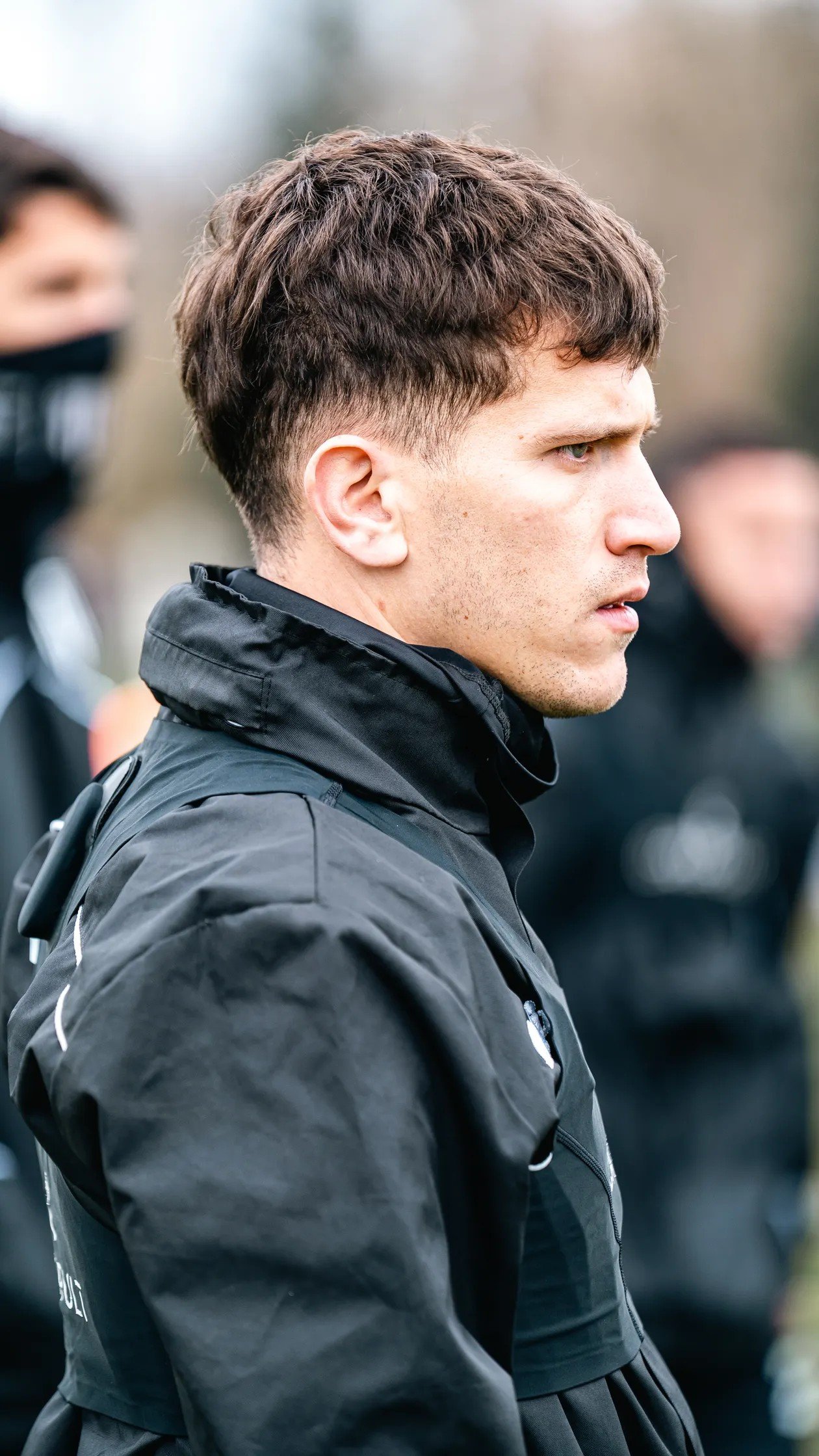
The textured crop is the haircut for men who want their hair to look like it has a shape without looking like it took an hour to build. The top is cut with choppy, piece-y layers instead of one blunt length, the sides are kept clean with a fade or taper, and the finish is matte — no wet shine, no stiff hold. The result looks lived-in on day one and still looks intentional on day ten.
That easy look is why the textured crop has become one of the most asked-for cuts of 2026. It works on straight, wavy, and curly hair. It works when you have thick hair that needs weight taken out, and it works when you have fine hair that needs to look fuller. It suits the office, the gym, and a night out, because the same cut can be worn neat with a little product or messy with almost none.
This guide covers 15 textured crop styles, how to ask your barber for each one, how to style it at home in under five minutes, and the honest limits — including where texture helps, where it does not, and how it differs from the French crop it is often confused with.
Key Takeaways
- A textured crop is choppy, piece-y layers on top with clean faded or tapered sides — texture everywhere, not one blunt length.
- The finish is matte and natural; a pea-sized amount of matte clay or paste is usually enough.
- Low fades are the safest first version; skin fades are the sharpest and need trims every 2 to 3 weeks.
- Texture can make fine hair look fuller and thick hair feel lighter, but it cannot create curl where there is none.
- A French crop is a blunt fringe with a defined front; a textured crop is broken-up layers across the whole top. They are different cuts.
What Is a Textured Crop?
A textured crop is a short-to-medium haircut where the top is point-cut or cut with texturizing shears so the ends break apart instead of sitting in a straight line. The barber removes weight and creates separation, so individual pieces of hair show instead of one solid block. The sides are usually faded or tapered, which gives the choppy top a clean frame. The fringe, if there is one, is also textured — short, broken pieces rather than a heavy straight line across the forehead.
That is the difference between a textured crop and a regular short haircut. A regular short cut sets one length on top and leaves it flat. A textured crop sets several lengths and lets them move. It is the same idea as the difference between a flat plank of wood and a plank with grain showing: the texture is what makes it look alive.
A textured crop is also different from a messy haircut with no plan. The mess in a good textured crop is controlled. The layers are placed so the hair falls in a shape even when you do nothing to it, and the product only sharpens what is already there. If you wake up, run your fingers through it, and it still looks like a haircut, the texture was cut well.
Who suits a textured crop?
Most men with short to medium hair can wear a textured crop. It suits men who want low-maintenance hair that still looks styled, men whose hair grows straight out and needs weight removed, and men who already like fades but want the top to look less stiff. It is less useful if your hair is very long and you want to keep the length — texture works best when the top is short enough for the layers to show — and it needs more upkeep if you pair it with a skin fade, because the fade grows out faster than the top.
15 Textured Crop Styles
1. Classic Textured Crop

The classic textured crop is the baseline: short, piece-y layers all over the top, tapered sides, and a soft textured fringe that sits just above the eyebrows. Nothing extreme, nothing fussy. Ask your barber for point-cutting on top, not a blunt cut, and a taper on the sides that blends into the top without a hard line. This is the version to start with if you have never had texture before, because it shows you what the cut does without committing you to a skin fade or a bold fringe. It suits almost every face shape and every workplace, and it is the easiest version to style because the layers already do most of the work.
2. Textured Crop + Low Fade
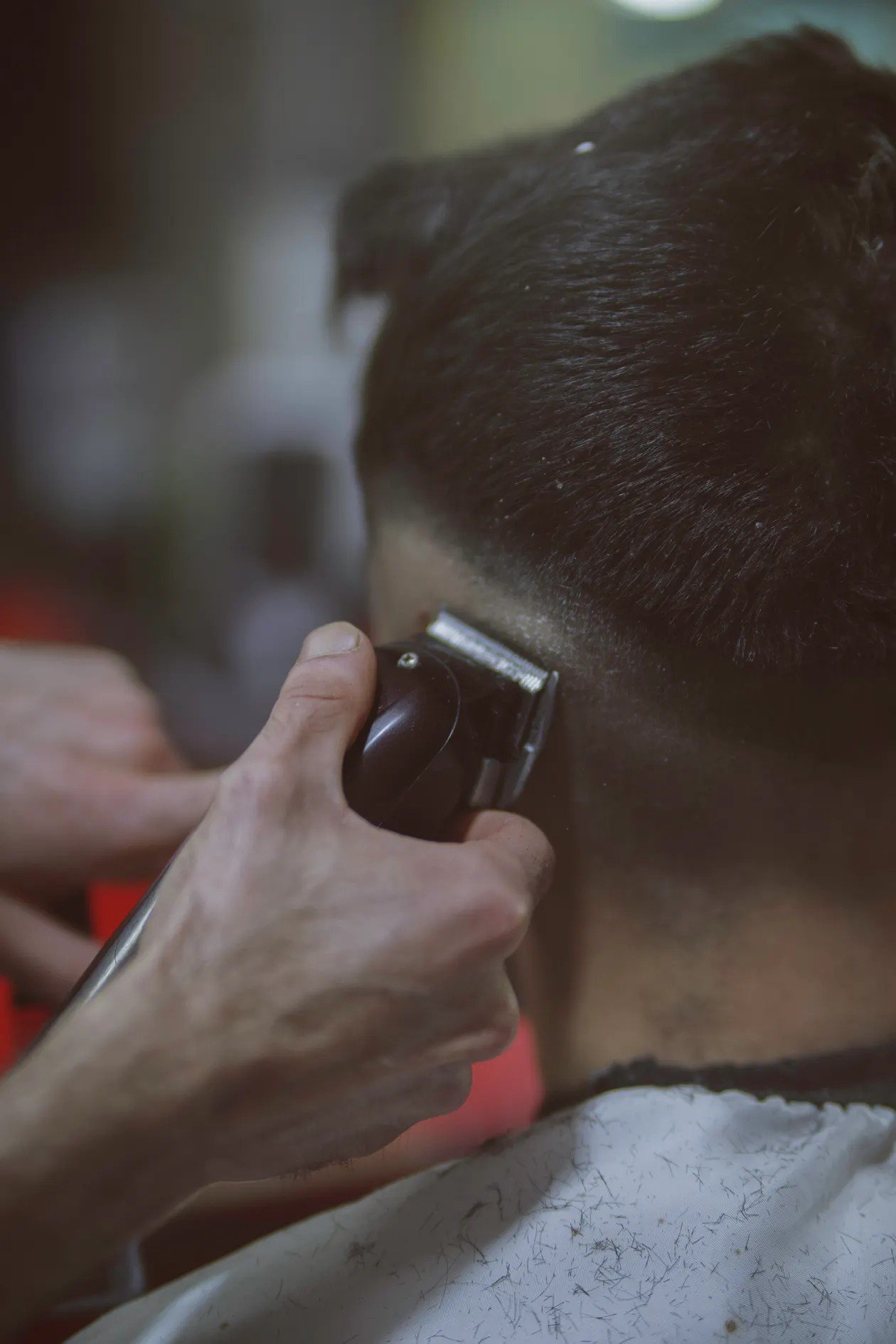
The low fade keeps the blend down near the ears and the neckline, so the top stays the star and the sides just look tidy. The fade starts low, close to the jawline, and the change from short to shorter is gradual. This is the safest fade pairing for a first textured crop, because it keeps the cut looking full while cleaning up the edges. Ask your barber to keep the fade low and to blend it into the textured top without a visible step. It works well with medium-length tops and with beards, because the low fade meets the beard at roughly the same height.
3. Textured Crop + Mid Fade

The mid fade starts higher, around the middle of the side of the head, and gives a clearer contrast between the textured top and the clean sides. You can see the blend, but it still looks natural rather than dramatic. This is the version most barbers recommend when a man says he wants a fade that people notice but does not want it to be the first thing they see. It sharpens the outline of the cut without thinning the top. It works well with taper haircuts in general, and it pairs cleanly with a short beard or a clean-shaven jaw.
4. Textured Crop + Skin Fade
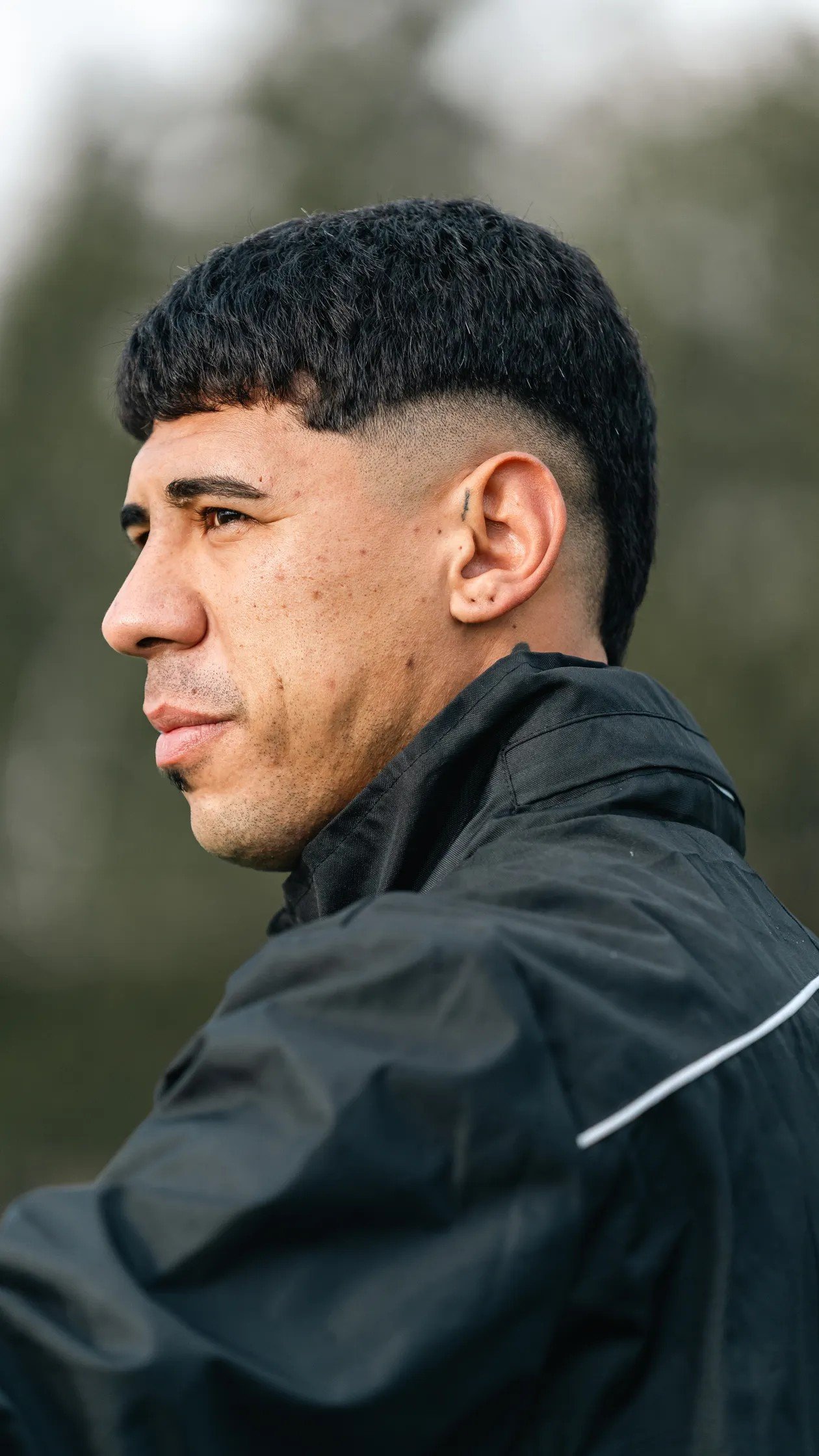
The skin fade takes the sides all the way down to skin, so the textured top stands out in full contrast. The blend goes from bare skin through stubble to the choppy top in a smooth gradient, with no hard line anywhere. This is the boldest fade pairing and the one that needs the most upkeep — a trim every 2 to 3 weeks to keep the fade sharp, because stubble shows fast against skin. Ask your barber for a skin fade with a blended transition, not a disconnected undercut. It suits men who like a sharp, high-contrast look and who do not mind regular barber visits.
5. Messy Textured Crop

The messy version leans into the texture: the layers are left a little longer, the product is worked in with fingers instead of a comb, and the finish is deliberately uneven. The hair looks like it was styled by running your hands through it, because that is more or less how it was styled. Ask your barber for extra point-cutting and a little more length on top so the pieces have room to move. This version suits wavy hair especially well, and it suits men who do not want to stand in front of a mirror for ten minutes. The trade-off is control — on very windy days, the mess can turn into chaos without a touch of product.
6. Textured Crop with Forward Fringe

The forward fringe brings short, broken pieces down onto the forehead instead of sweeping them to the side or pushing them back. The fringe is textured, not blunt, so light shows through the gaps and the forehead does not look covered by a solid wall of hair. Ask your barber for a short textured fringe that sits above the eyebrows and can be worn forward without looking heavy. This version suits men with larger foreheads or a high hairline, because the fringe softens the forehead without hiding it. It needs a light hand with product — too much hold makes the fringe clump together and look like one piece.
7. Side-Swept Textured Crop
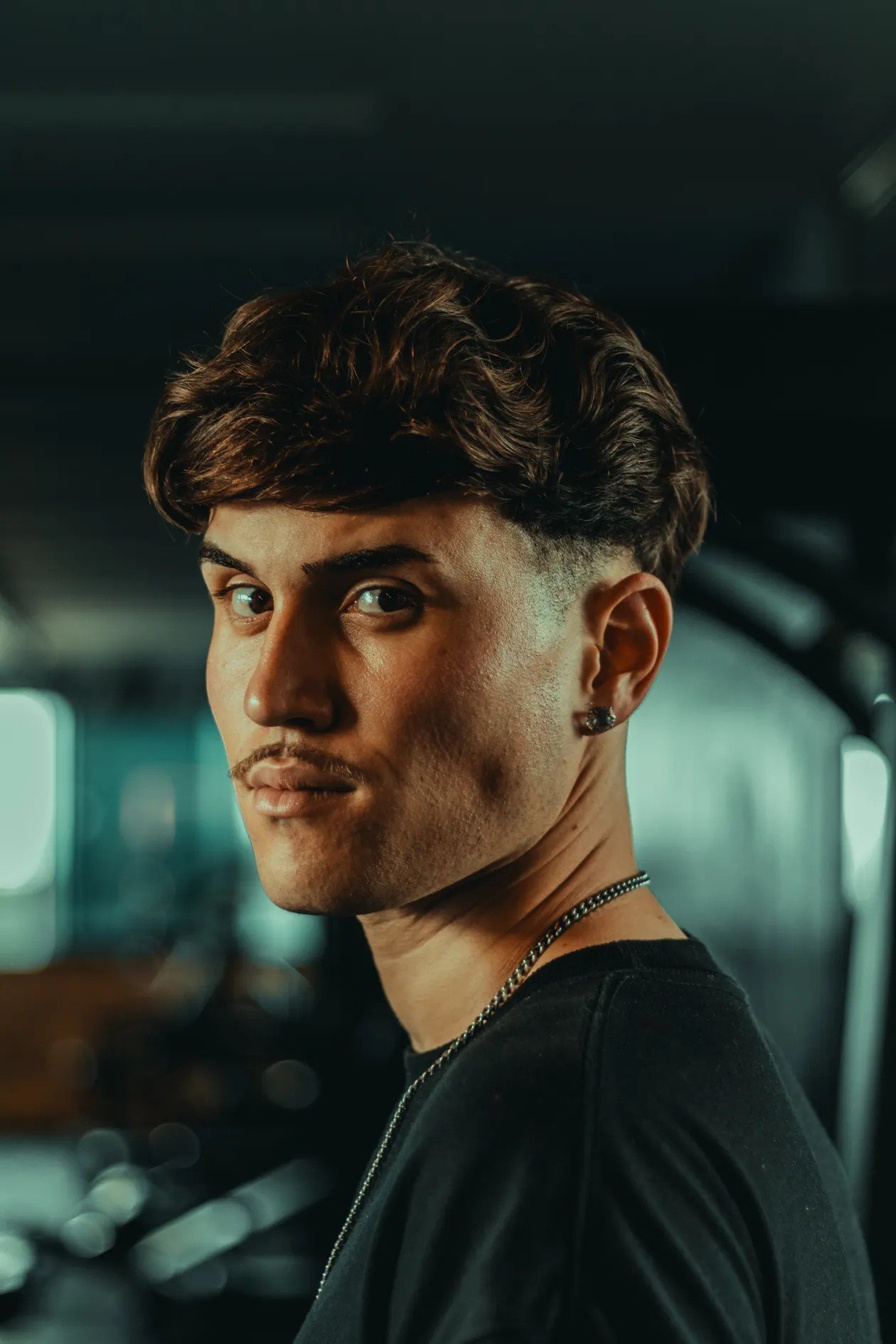
The side-swept version takes the same choppy layers and directs them to one side, so the top has a clear direction without looking combed flat. The sweep is soft, not a hard side part, and the texture keeps it from looking like a schoolboy side part. Ask your barber to cut the top with a natural fall to one side in mind, and to leave the fringe long enough to sweep. This version suits men who like a neater look but still want movement, and it works well for the office because it reads as tidy from a distance and textured up close.
8. Curly Textured Crop
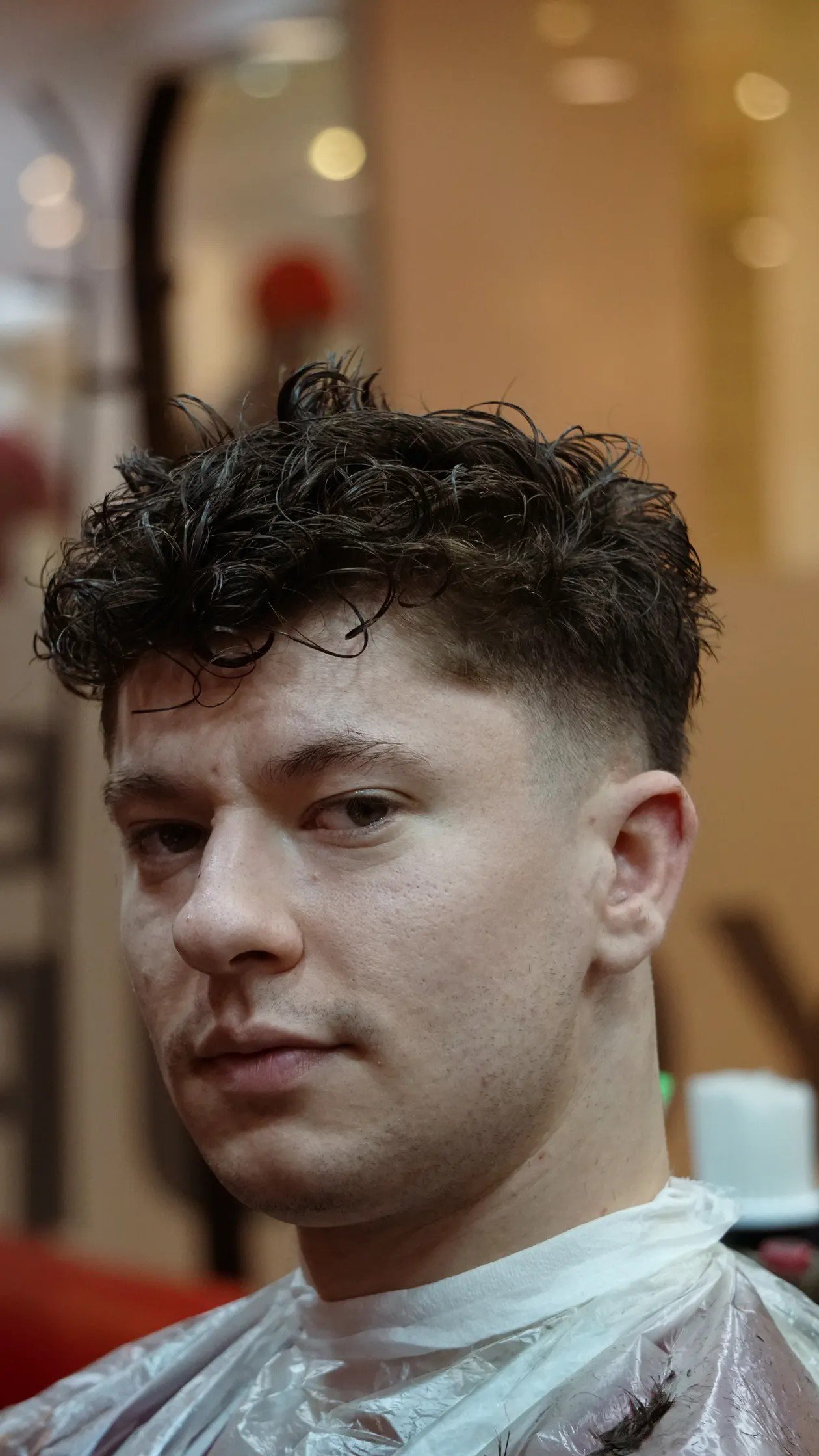
The curly version uses texture to shape curls instead of fighting them. The barber cuts the curls so they sit in defined pieces rather than one solid block, and the sides are faded so the curls on top get the attention. Ask your barber for texture that follows the curl pattern, not against it, and for a fade that blends into the curls without a hard line. This version suits men with naturally curly or coily hair who want a short cut that still shows curl. It needs curl-friendly product — a light cream or a curl-defining paste, not a heavy wax that flattens the curls.
9. Wavy Textured Crop
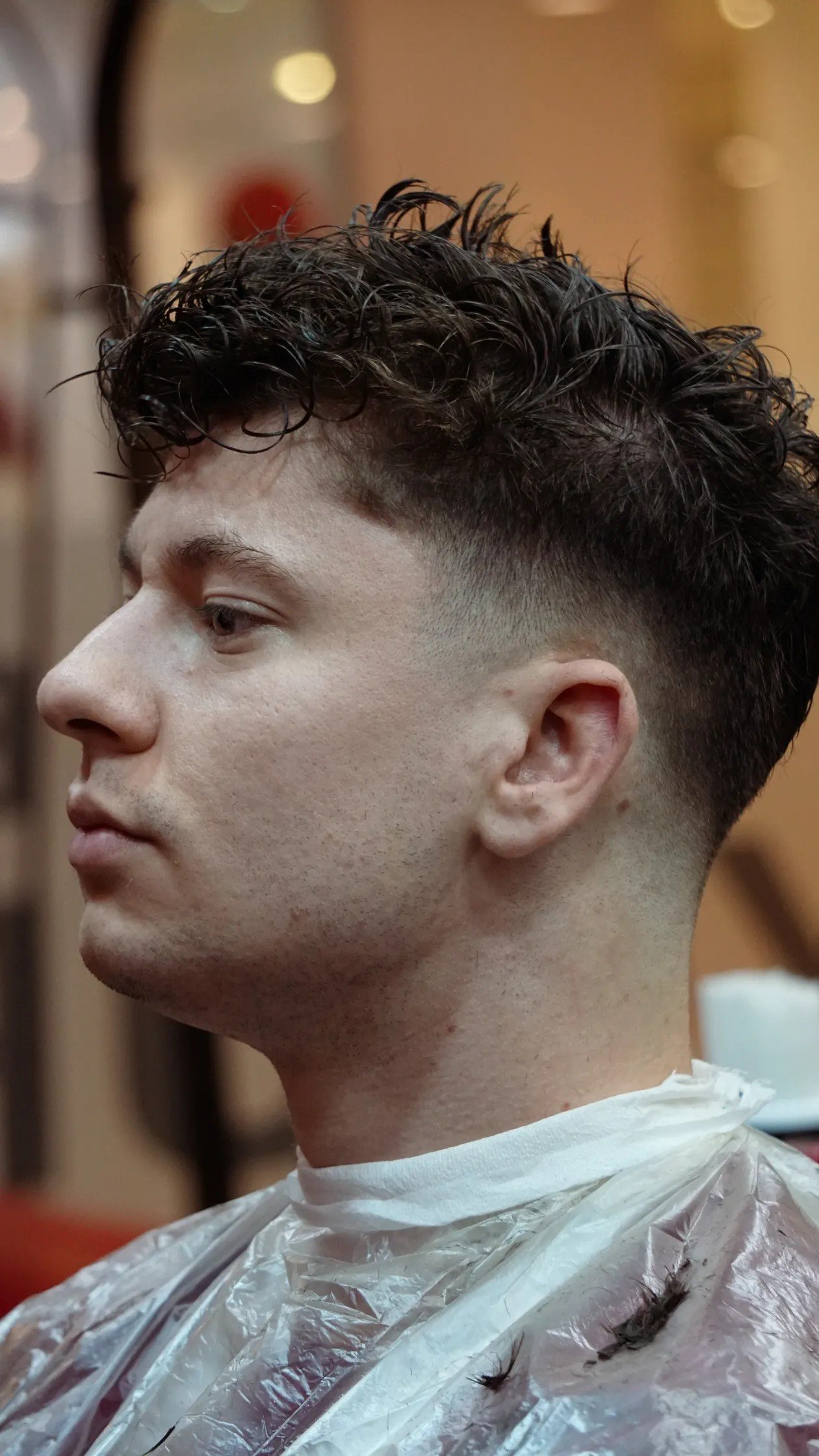
The wavy version is where the textured crop looks most effortless, because waves already have the movement that texture is trying to create. The layers follow the wave pattern, so the hair falls in soft, broken waves instead of one flat sheet. Ask your barber for layers that work with the waves and a taper that keeps the sides clean. This version suits men with naturally wavy hair who have been told their hair is hard to style — in a textured crop, the wave is the style. A little sea-salt spray or matte paste is usually enough to bring the waves out.
10. Textured Crop for Thick Hair

Thick hair can look heavy and blocky in a short cut, and texture is the fix. The barber uses texturizing shears to remove weight from inside the top without shortening the outside, so the hair feels lighter and sits flatter instead of growing straight out. Ask your barber to thin the bulk from the inside and to keep the top long enough that the layers show. This version suits men whose hair grows outward in a mushroom shape when it gets long. The warning is not to over-thin — too much texturizing makes the ends wispy and the top look thin instead of full.
11. Textured Crop for Thin / Fine Hair

Fine hair needs the opposite trick: texture that creates the illusion of fullness without removing too much hair. Short, choppy layers give fine hair more lift and more shadow between pieces, so the top looks denser than it is. Ask your barber for light texture — short layers, not deep thinning — and for a matte product that adds grip without weighing the hair down. This version suits men with fine or thinning hair who want a fuller look without a comb-over. It will not create hair where there is none, and very thin areas will still show through if the top is cut too short.
12. Textured Crop for a Receding Hairline
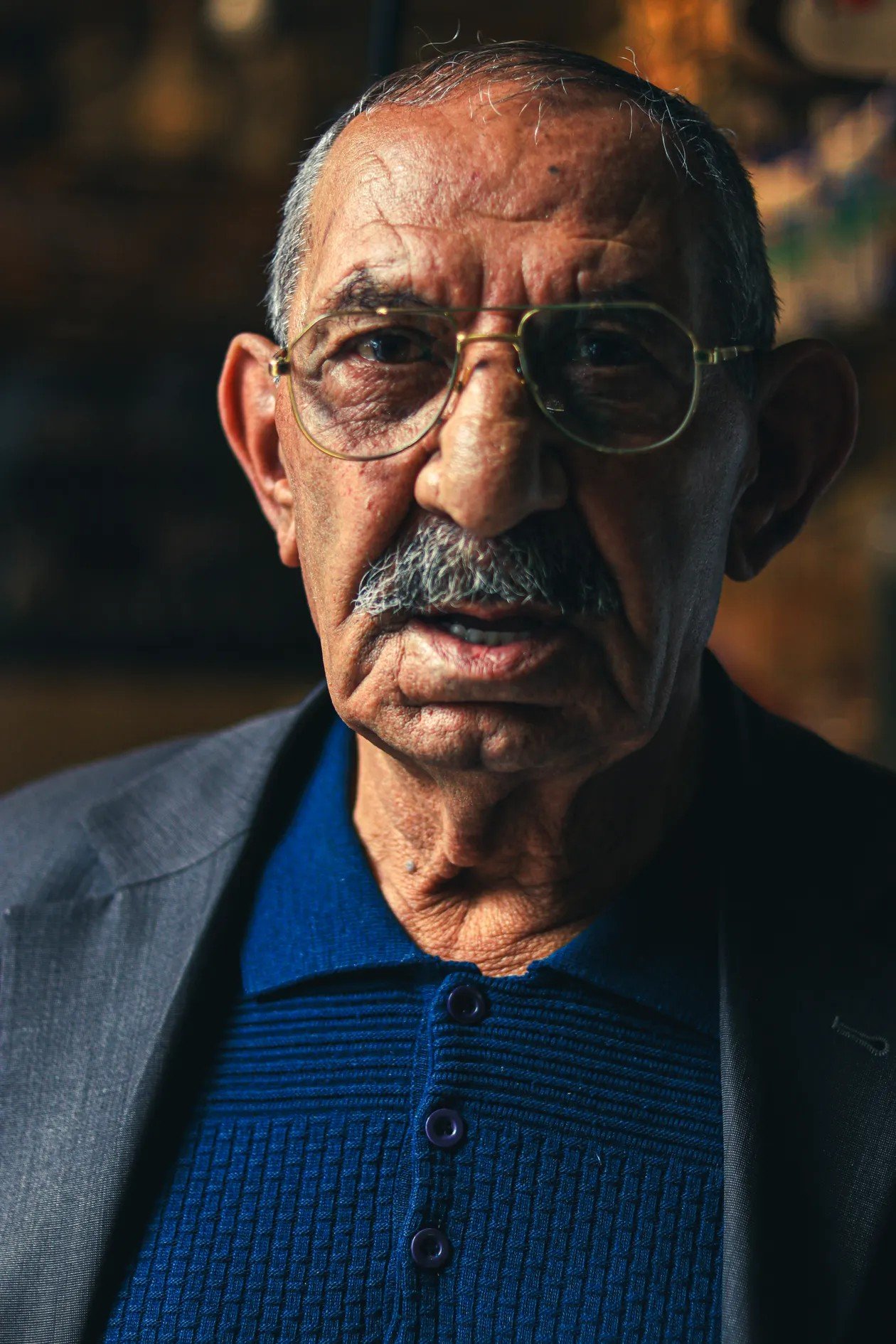
A receding hairline is not a reason to avoid a textured crop, but it is a reason to cut it with the hairline in mind. The top is kept a little longer and textured so the hairline reads as a natural edge, not a hard line, and the fringe is kept soft so it does not draw a straight line across the forehead. Ask your barber to keep the front textured and natural, and to avoid a blunt fringe that frames the hairline. This version suits men with early recession who want a modern cut without hiding anything. If the recession is advanced, a shorter textured crop with a fade often looks cleaner than a longer top trying to cover it.
13. Textured Crop + Beard Fade

The beard-fade pairing connects the haircut fade to the beard fade at the sideburn, so the side of the head reads as one continuous blend instead of two separate fades. The haircut fades down, the beard fades up, and they meet in the middle without a visible step. Ask your barber to connect the two fades and to keep the beard fade at the same height as the haircut fade. This version suits men who already wear a beard and want the whole look to feel like one haircut, not a haircut plus a beard. The full beard-fade guide is in the Beard Fade post — the key point here is the connection, not the beard on its own.
14. Grown-Out Textured Crop
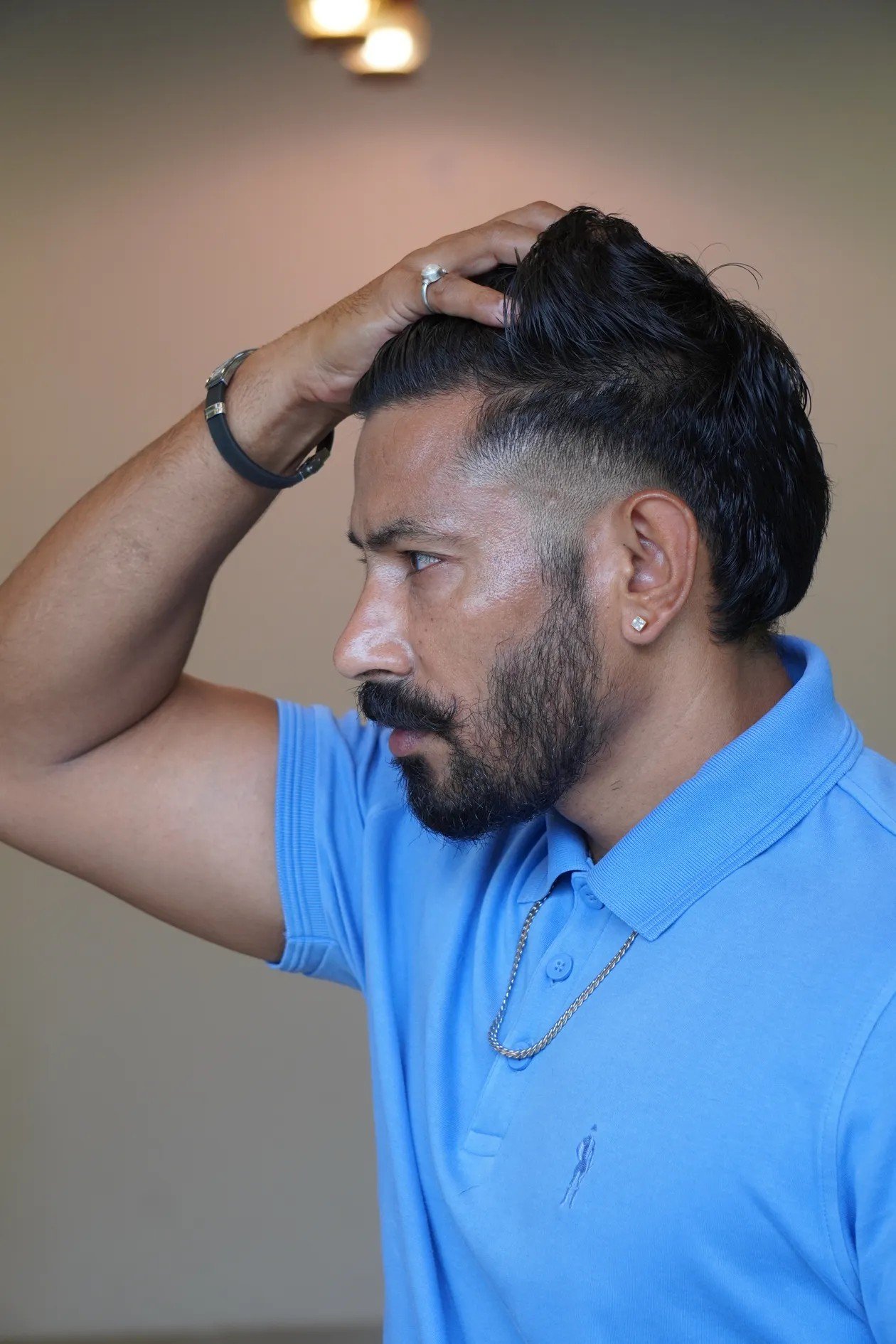
The grown-out version is what happens when you let a textured crop go 4 to 6 weeks without a trim: the top gets longer, the fade softens, and the texture becomes more visible because the layers have room to move. It still looks like a haircut, not like neglected hair, because the layers were placed to grow out in a shape. Ask your barber for a cut that grows out well — a taper rather than a skin fade, and layers that stay separated as they lengthen. This version suits men who cannot get to the barber every 2 weeks. The trade-off is that the sides will need a tidy-up before the top does, so a quick sides-only trim between full cuts keeps it looking sharp.
15. Textured Crop + Undercut

The undercut pairing keeps the top longer and the sides short with a clear, disconnected line between them, instead of a blended fade. The contrast is sharper than any fade, and the top has more length to show texture. Ask your barber for a disconnected undercut with the top left long enough to style forward, swept, or messy. This version suits men who like a bold, high-contrast look and who are happy to style the top every morning, because a longer top needs more work than a short crop. It is the least low-maintenance version on this list, and it grows out less gracefully than a fade, so it needs trims on schedule.
How to Ask Your Barber for a Textured Crop
Use this script so you get the same cut twice. Say: “Textured crop, point-cut on top, not blunt. I want choppy, piece-y layers, matte finish. Sides — [low / mid / skin fade / taper / undercut]. Fringe — [forward / side-swept / short].” Then add one detail about your hair: “My hair is [thick / fine / wavy / curly], so take weight out [from inside / lightly / following the curl].”
Three things to say that prevent the most common mistake: first, say “point-cut, not blunt” — a blunt cut kills texture. Second, say “matte finish” — a shiny product makes a textured crop look wet and flat. Third, bring a photo of the exact version you want, not just the words “textured crop”, because one phrase covers 15 different cuts. A photo plus the script above leaves very little room for misunderstanding.
Styling a Textured Crop (Under 5 Minutes)
Start with towel-dried, almost-dry hair. Take a pea-sized amount of matte clay or matte paste, rub it between your palms until it is invisible, then work it through the top with your fingers — not a comb. Push the hair in the direction you want it to sit, then pinch a few pieces apart with your fingertips to sharpen the separation. That pinching step is what turns a flat top into a textured top.
Do not use a fine comb, do not use a wet-look gel, and do not use more product than a pea-sized amount to start — you can always add a little more, but too much product clumps the layers together and hides the texture. If your hair is wavy or curly, swap the clay for a light curl cream and scrunch rather than pinch. If your hair is fine, use a matte paste with grip and skip anything oily or heavy.
Maintenance: How Often to Trim
A textured crop with a taper or low fade needs a trim every 3 to 4 weeks. A textured crop with a skin fade or mid fade needs a trim every 2 to 3 weeks, because the fade shows growth faster than the top. A grown-out version can stretch to 5 to 6 weeks if the sides are tidied in between. Between visits, wash 2 to 3 times a week with a gentle shampoo, use conditioner on the top if the hair feels dry, and re-style with a small amount of product each morning rather than piling on more product day after day.
Textured Crop vs French Crop
These two cuts are often confused because both are short on the sides with a fringe. The difference is the top. A French crop has a blunt, defined fringe — one straight, heavy line across the front — with the top cut to a more uniform length. A textured crop has broken-up, choppy layers across the whole top, with a fringe that is also broken up. If you want a sharp, graphic front edge, you want a French crop. If you want movement, separation, and a matte, lived-in finish all over the top, you want a textured crop. Neither is better; they solve different problems.
| Textured Crop | French Crop | |
|---|---|---|
| Top | Choppy, piece-y layers | More uniform length |
| Fringe | Broken, textured pieces | Blunt, defined line |
| Finish | Matte, lived-in | Can be matte or slightly neat |
| Best for | Movement, low-maintenance styling | A sharp, graphic front edge |
| Upkeep | Trim every 3–4 weeks (taper) | Trim every 3–4 weeks to keep fringe blunt |
FAQs
How long should the top be for a textured crop?
Long enough for layers to show — usually 2 to 4 inches on top. Shorter than that, and there is not enough length for the choppy pieces to separate. Longer than that, and the cut starts to read as a longer textured style rather than a crop.
Does a textured crop work on straight hair?
Yes, and straight hair is where point-cutting matters most, because straight hair shows blunt lines more clearly than wavy or curly hair. The texture has to be cut in — straight hair will not create it on its own.
Can I get a textured crop if my hair is thinning?
Yes, with light texture and a top that is not cut too short. Short, choppy layers can make fine hair look fuller. Deep thinning or a very short top will do the opposite, so tell your barber to keep the texture light.
How do I style a textured crop without product?
You can — the layers will still show — but a small amount of matte product sharpens the separation and holds it through the day. Without product, the cut looks softer and more natural, which suits the messy and grown-out versions best.
What product is best for a textured crop?
A matte clay or matte paste for most hair types. A light curl cream for curly hair. A sea-salt spray can add grip to wavy hair. Avoid wet-look gels and heavy waxes — they flatten texture.
How often should I wash a textured crop?
Two to three times a week is enough for most men. Washing every day strips the natural oils that help texture hold, and it can make fine hair look flat. If you use product daily, a gentle shampoo on wash days removes build-up without over-drying.
Conclusion
The textured crop works because it is built on a simple idea: cut the top so it has shape on its own, keep the sides clean, and finish matte. Pick the version that fits your hair — low fade for a safe start, skin fade for contrast, curly or wavy for natural movement, a beard fade pairing if you wear a beard — bring a photo, use the barber script, and style it with a pea-sized amount of matte product and your fingers. That is the whole cut: texture in, fuss out.

2 thoughts on “15 Textured Crop Haircuts for Men (2026 Styling Guide)”