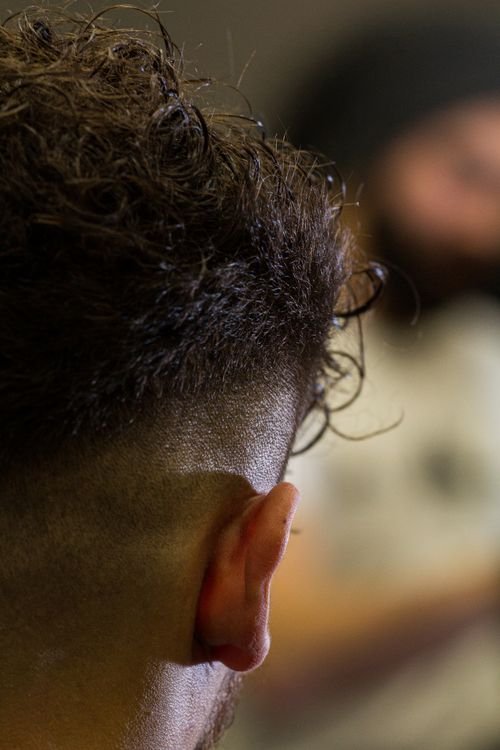
Most fades run in a straight line around the head. The drop fade does not. Instead of holding one height all the way round, the fade line arcs downward as it travels back from the temple, dips behind the ear, and settles low at the back of the head — following the natural curve of the skull. That single change in geometry is the whole cut, and it is why the drop fade keeps showing up in 2026 round-ups of the best fade haircuts for men.
The effect is subtle from the front and obvious from the side and back. From the front, a drop fade looks like any clean fade: short, sharp sides, a neat hairline. Turn the head, and the arc appears — the fade falls away behind the ear instead of running flat across it, which makes the head look longer and leaner and gives the top more visual weight. It is a small technical choice with a big visual payoff, and it works with almost any top: curly, wavy, textured, pompadour, afro, or short and sharp.
This guide covers 13 drop fade styles for men, who each one suits, the exact words to use at the barber so the drop actually lands where it should, a home styling routine, and how the drop fade compares with the low taper and the mid fade — the two cuts it is most often confused with.
Quick Answer — Key Takeaways
- A drop fade = a fade whose line arcs down behind the ear and sits lower at the back, following the curve of the head — not a flat, level fade line.
- From the front it looks like a normal clean fade; the drop is visible from the side and back. Ask your barber to show you the back with a hand mirror.
- It suits almost every hair type — curly, wavy, textured, thick, afro — because the drop is a property of the fade, not the top.
- It grows out more gracefully than a level fade, because the lowest point of the fade is already low — but it still needs a touch-up every 2 to 3 weeks to keep the arc sharp.
- The most common mistake is asking for a drop fade and getting a low taper instead: a taper is a gradual blend; a drop fade is a fade line that falls. Say the word ‘drop’ and point behind your ear.
What Is a Drop Fade?
Picture the fade line — the boundary where the hair goes from long to short — as a line drawn around your head. On a mid fade, that line runs roughly level, at the same height all the way round. On a low fade, it runs level but lower. On a drop fade, the line starts at the usual height near the temple and then curves downward as it goes back, dipping behind the ear and ending low at the nape. The fade ‘drops’. That is the entire definition, and everything else about the cut — the top, the texture, the beard — is a choice layered on top of it.
Why does it matter? Two reasons. First, shape: the arc follows the skull, so the cut looks carved rather than stamped on, and it makes the head look longer from the side. Second, practicality: because the fade already sits low at the back, the grow-out is less obvious than on a high or mid fade — the line has further to climb before it looks messy. Barbers like it because it flatters the natural head shape; clients like it because it looks intentional from every angle, including the back, which is the angle most people actually see when you walk past them.
Who it suits: almost everyone. The drop works on straight, wavy, curly, and coily hair; on thick hair and fine hair; on round, oval, square, and long faces. It is especially good on men with curly or afro-textured hair, because the drop keeps the sides clean while the top keeps its volume, and on men who want a fade but find a mid or high fade too aggressive — the drop keeps the front looking conservative while the back carries the detail. The one case to be careful about: if your head has a very pronounced bump or flat spot at the back, the drop will draw the eye there, so ask your barber to keep the arc gentle rather than dramatic.
A quick word on the burst fade, because the two get mixed up: a burst fade curves around the ear in a semi-circle, leaving length behind the ear. A drop fade does the opposite — the fade line falls behind the ear and stays low at the back. Different arc, different result. If your barber starts curving the fade around your ear, you are getting a burst, not a drop.
13 Best Drop Fade Styles for Men
1. Classic Drop Fade

The benchmark version, and the one to ask for if you have never had a drop fade before. Short on top, clean skin fade on the sides, and the fade line visibly arcing down behind the ear. Nothing on top competes with the fade — the cut is the star. Who it suits: every hair type, and first-timers who want to see the drop clearly before trying a fancier version. Maintenance: low on styling, real on upkeep — a touch-up every 2 to 3 weeks. Styling tip: a matte paste, worked through the top with your fingers, is all it needs. If the fade line looks level from the side, it is not a drop — ask the barber to take the back lower next time.
2. Low Drop Fade

The quietest drop of all. The fade starts low and drops lower, so the whole cut sits close to the skin at the bottom and the arc is gentle rather than dramatic. From the front, it barely reads as a fade at all — it reads as a tidy, grown-up haircut that happens to be immaculate from the side. Who it suits: men who want a fade without announcing it — office settings, formal occasions, anyone who found a mid fade too loud. Maintenance: low. Styling tip: keep the top neat and the beard tidy, because at this subtlety the cut lives or dies on the details. Pair it with a clean beard line and the whole thing sharpens up.
3. Mid Drop Fade

The middle ground: the fade starts at mid height near the temple, then drops behind the ear to a low finish at the back. You get the presence of a mid fade from the front and the arc of a drop fade from the side — the best of both. Who it suits: men who like a mid fade’s boldness but want the drop’s flattering shape. Maintenance: medium — the higher start point shows growth sooner than the low version. Styling tip: a little texture on top keeps the cut from looking too severe; a sea salt spray and a rough finger-comb is enough.
4. Textured Drop Fade
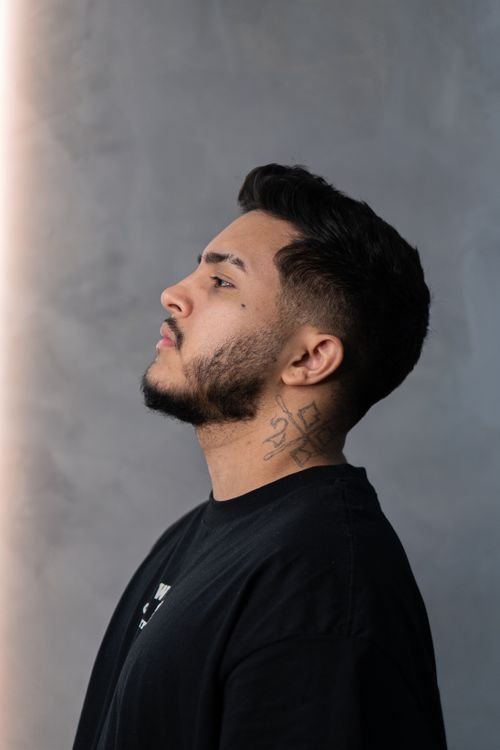
The drop fade with a lived-in top: short, choppy texture, pieces pointing in different directions, and the fade dropping cleanly underneath. The contrast is the point — messy on top, surgical on the sides. Who it suits: straight to wavy hair, and men who want a fade but hate the helmet look of a perfectly combed top. Maintenance: medium — texture needs product to show. Styling tip: a matte clay, pinched through the top in small sections, gives the separation. For a shorter, fully textured contrast, the textured crop guide on this site covers the crop version of the same idea.
5. Curly Drop Fade

Curls on top, drop fade on the sides — one of the best pairings in the whole fade family. The curls keep their volume and shape, the fade drops behind the ear and keeps the silhouette clean, and the two textures make each other look better. Who it suits: loose to medium curls; very tight coils need the barber to shape the top curl by curl. Maintenance: medium — curl cream and a wide-tooth comb, never a brush. Styling tip: apply curl cream to damp hair, scrunch, and leave it alone while it dries. The curly wolf cut guide covers a wilder, more layered cousin of this cut if you want more length up top.
6. Drop Fade with Waves
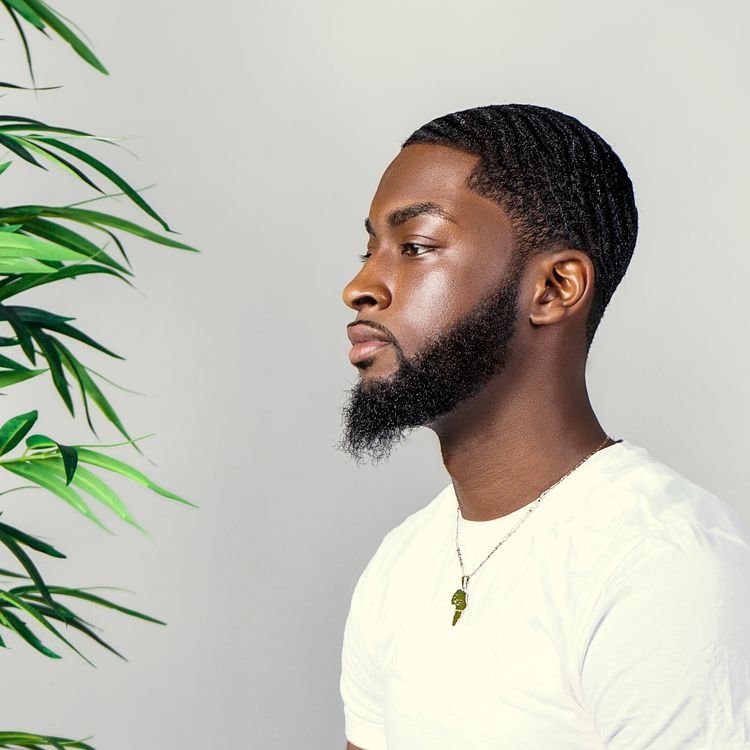
360 waves on top, drop fade underneath — the waves give the top its pattern, the fade gives the sides their shape, and the drop keeps the whole thing from looking boxy. The wave pattern needs to be established before the cut, so this is a style you grow into, not one you walk out of the barber with on day one. Who it suits: men with wavy or coily hair who already brush-train their waves. Maintenance: high on the waves, low on the fade — durag at night, brush sessions, and a fade touch-up every 2 to 3 weeks. Styling tip: a wave pomade and a soft brush, always in the direction of the pattern. Do not skip the durag; the waves will tell on you.
7. Drop Fade Pompadour

The formal version: a tall, swept-up pompadour on top and a drop fade on the sides, so the height of the pomp is balanced by the low arc of the fade. It is the most dressed-up style in this guide, and it photographs beautifully. Who it suits: thick, straight hair that holds height, and men who want a fade that works at a wedding as well as on a weekend. Maintenance: medium to high — the pomp needs a blow-dry and a strong-hold product every morning. Styling tip: blow-dry the front up and back with a round brush, then set it with a water-based pomade. If the pomp collapses by lunchtime, the front is too long for the product — shorten it slightly next cut.
8. Drop Fade with Afro

An afro on top with a drop fade on the sides is one of the cleanest silhouettes a man can wear: the round volume of the afro, the sharp arc of the fade dropping behind the ear, and a crisp line where the two meet. The drop is what keeps the afro from looking like a single block — it gives the shape a base. Who it suits: afro-textured and coily hair, and men who want the afro’s presence with the fade’s precision. Maintenance: medium — pick the afro out, moisturise, and keep the fade line fresh. Styling tip: shape the afro with a pick, not a brush, and ask the barber to keep the fade line low at the back so the arc stays visible under the afro’s weight.
9. Drop Fade for Thick Hair

Thick hair is the drop fade’s natural ally: the bulk on top gives the fade something to contrast with, and the drop keeps the sides from puffing out as the hair grows. The barber’s job here is to remove weight from the sides without touching the top’s volume. Who it suits: thick, dense hair of any texture — the thicker, the better the contrast. Maintenance: medium — thick hair grows fast, so the fade will need touching up on schedule. Styling tip: a thinning shear pass through the top’s bulk (not the length) keeps the cut from going triangular between appointments. Ask for it by name — ‘thin the bulk, keep the length.’
10. High Top Drop Fade
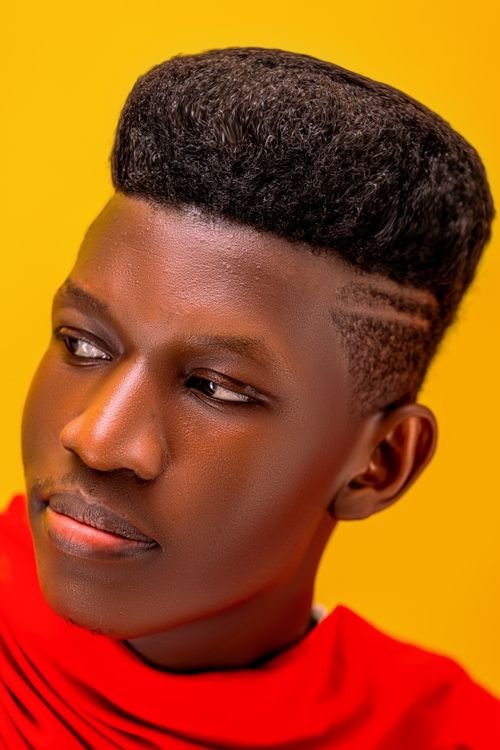
The boldest version in this guide: a high, sculpted top — afro or textured, worn tall — with a drop fade underneath. The height of the top and the low arc of the fade pull in opposite directions, and that tension is what makes the cut striking. Who it suits: men with afro-textured or very curly hair who want a statement cut, and anyone confident enough to carry height. Maintenance: high — the top needs shaping, the fade needs its 2-to-3-week rhythm. Styling tip: keep the top’s shape with regular trims and a light moisturiser, and do not let the sides grow into the top — the line between them is the whole design.
11. Drop Fade with Beard

The drop fade and a beard are a natural pair, and this is the version that shows why: the fade drops behind the ear and blends into the beard’s top edge, so the haircut and the beard read as one continuous shape instead of two separate ones. The key is the blend — the fade should melt into the beard, not stop dead at the sideburn. Who it suits: men with a full beard who want the cut and the beard to work together. Maintenance: medium — the beard needs its own line-up on the same schedule as the fade. Styling tip: keep the beard’s cheek line clean and the neckline defined, and use beard oil so the beard’s texture does not fight the top’s. The beard fade guide on this site goes deeper on the beard side of this pairing.
12. Short Drop Fade

The low-effort drop: short all over, a sharp lineup at the front, and the fade dropping behind the ear. It takes almost no styling — wash, towel-dry, done — and it still looks deliberate, because the drop gives a short cut a shape that a plain buzz cut does not have. Who it suits: men who want a fade but not a routine, and anyone growing out a buzz cut who wants structure without length. Maintenance: low on styling, real on upkeep — short fades show growth fastest. Styling tip: there is barely one — a drop of matte paste if the top needs taming, otherwise nothing. This is the cut to ask for when you want to look sharp with zero morning effort.
13. Wavy Drop Fade

Natural wave on top, drop fade on the sides — the easiest version in this guide to live with, because the wave does the styling for you. The layers keep the wave from bunching into a triangle, and the drop keeps the sides tight while the wave moves freely on top. Who it suits: naturally wavy hair — if your hair waves when it gets long, start here. Maintenance: low. Styling tip: scrunch in sea salt spray while damp, then leave it alone. Touching wavy hair while it dries is what creates frizz, and frizz is what kills the wave’s shape.
How to Ask Your Barber for a Drop Fade
Walk in with a photo — one photo, of a man with your hair type, taken from the side or the back, because the drop is a side-and-back feature and a front photo will not show it — and use these exact words: ‘I want a drop fade. The fade line should start around here’ — point at your temple — ‘and drop down behind my ear, finishing low at the back. Keep the top [short / textured / curly / long — pick your version], and blend the fade into the beard if I’m keeping one.’ Then add the height: ‘low drop’ for the subtle version, ‘mid drop’ for the middle ground.
What to show: a side photo and a back photo, so the barber can see the arc. What to avoid saying: ‘just fade it’ — that is how you get a level fade and no drop at all. And when the cut is done, ask for the hand mirror and check the back yourself: the fade line should curve down behind your ear, not run straight across. If it runs straight, say so before you leave the chair — a barber can lower the back in two minutes, but only while you are still in it.
How to Style a Drop Fade at Home
The styling depends on the top, but the routine is the same for all of them. Wash with a light shampoo and condition the lengths. Towel-dry gently, then apply product to damp hair — a pea-sized amount of matte clay for textured tops, curl cream for curly tops, pomade for a pompadour, sea salt spray for wavy tops. Style the top first, then check the fade: the sides need nothing, but they do need to stay clean, so keep a trimmer at home for the stray hairs at the nape between appointments.
Common mistakes: too much product on top (the fade is the sharp part; the top should move), asking for the drop and then blow-drying the sides flat (the sides are already faded — leave them alone), and letting the fade grow out for five weeks and then wondering why the arc is gone. The drop fade’s whole design is the line, and the line is the first thing growth erases. Book the touch-up before the line blurs, not after.
Drop Fade vs Low Taper Fade vs Mid Fade
| Cut | Fade line | Where it sits | Best for |
|---|---|---|---|
| Drop fade | Arcs down behind the ear, low at the back | Starts at temple height, drops low | Men who want a fade with shape — visible arc from the side and back |
| Low taper fade | Level, gradual blend | Low all the way round | Men who want the subtlest fade, or a fringe-forward cut |
| Mid fade | Level, sharper contrast | Mid height all the way round | Men who want a bold, even fade line visible from the front |
The drop fade is the only one of the three with a direction: down. If you want a fade that looks the same from every angle, the mid fade is your cut. If you want the subtlest possible fade, the low taper is yours. If you want the fade itself to have a shape — an arc that follows your head — the drop fade is the one.
Maintenance
Touch up the fade every 2 to 3 weeks. That is the single rule that matters: the drop’s arc is a line, and lines blur. The top can go 4 to 6 weeks between proper cuts if the fade is kept fresh, but the fade cannot. Between appointments, keep the nape tidy with a trimmer and keep the top’s product light — heavy product on the top makes the whole cut look top-heavy and hides the drop’s clean line. A drop fade that is never touched up does not become a longer drop fade; it becomes a grown-out fade with no arc at all.
FAQs
What is a drop fade?
A drop fade is a fade whose line arcs downward as it travels from the temple to the back of the head, dipping behind the ear and finishing low at the nape, following the natural curve of the skull. From the front it looks like a normal clean fade; the drop is visible from the side and back.
How is a drop fade different from a low taper fade?
Two differences. A low taper is a gradual blend that runs level and low all the way round, and it is usually paired with a longer top or a fringe. A drop fade is a fade line that physically drops — it starts higher at the temple and arcs down behind the ear. A taper blends; a drop falls.
Does a drop fade suit curly hair?
Yes — it is one of the best fade choices for curly hair. The curls keep their volume on top while the fade drops behind the ear and keeps the silhouette clean. Ask the barber to shape the curls rather than cutting them short, and use curl cream, not wax.
How often do I need a drop fade touched up?
Every 2 to 3 weeks for the fade line. The top can wait 4 to 6 weeks, but the arc blurs fast as the hair grows, and once the line is gone the cut stops being a drop fade.
Can I get a drop fade with a beard?
Easily — it is one of the best beard pairings. The fade drops behind the ear and blends into the beard’s top edge, so the cut and the beard read as one shape. Ask the barber to blend the fade into the beard rather than stopping it at the sideburn.
What should I ask my barber for a drop fade?
Show a side or back photo of a man with your hair type and say: ‘Drop fade — start at the temple, drop it down behind my ear, finish low at the back.’ Then name the top: short, textured, curly, pompadour, or afro. Check the back in the hand mirror before you leave.
Conclusion
The drop fade is a small technical idea with an outsized result: one arc, drawn behind the ear, that turns an ordinary fade into a cut with shape. It works with almost any top, it suits almost any face, and it grows out more gracefully than a level fade — as long as you keep the line fresh every couple of weeks. Start with the classic if you have never had one, try the low drop if you want it quiet, and go for the curly or the high top version when you want the cut to make a statement. And when you sit in the chair, remember the one sentence that matters: start at the temple, drop it behind the ear, finish low at the back. For a shorter, textured contrast, the textured crop guide is the natural next read — and if you want the beard side of this cut explored properly, the beard fade guide is where it lives.
