
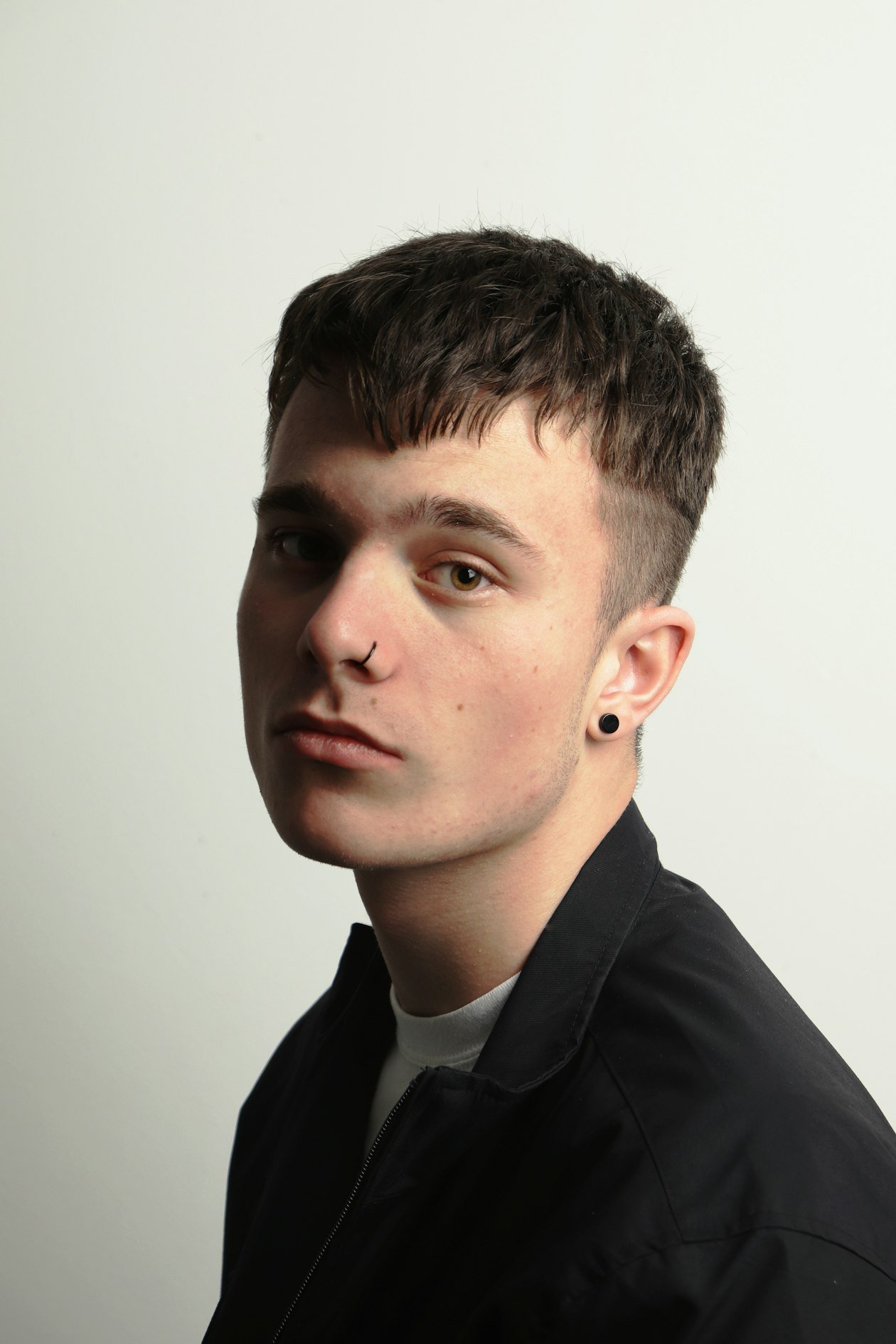
The Edgar cut is the haircut that does not blend in. The top is short, the sides are faded, and the front is a straight, blunt fringe cut in a clean line across the forehead. There is no soft sweep, no feathered edge, no hiding the line. That sharp front edge is the whole point — it gives the cut a graphic, deliberate look that reads as confident rather than careful.
That boldness is why the Edgar has become one of the most talked-about cuts of 2026. It suits men who want a short cut with a strong outline, men with straight or wavy hair that can hold a clean line, and men who are happy to keep the fringe trimmed so the line stays sharp. It is not a low-maintenance cut pretending to be one: the fringe needs regular trims, and the fade needs upkeep. What you get in return is a cut that looks finished from every angle, with almost no daily styling.
This guide covers 12 Edgar cut styles, how to ask your barber for each one, who the cut suits and who should skip it, and how to keep the fringe sharp between visits.
Key Takeaways
- An Edgar cut is a short top + faded sides + a straight, blunt fringe cut in a clean line across the forehead.
- The fringe is the feature: it must stay sharp, so trims every 2 to 3 weeks are not optional.
- Low taper Edgar is the safest first version; skin fade Edgar is the sharpest and needs the most upkeep.
- It suits straight and wavy hair best; very curly or very fine hair needs a modified version.
- A blunt fringe draws attention to the forehead and hairline — that is the look, not a side effect.
What Is an Edgar Cut?
An Edgar cut has three parts that work together. The top is kept short, usually 1 to 3 inches, and cut so it lies fairly flat. The sides are faded — low, mid, or skin — so the top stands out against clean sides. And the front is a blunt fringe: the hair across the forehead is cut straight across in one defined line, with no layering or feathering to soften it.
That blunt line is the difference between an Edgar and the cuts it is often confused with. A Caesar cut also has a short fringe, but the Caesar fringe is softer and shorter, and the whole cut is more uniform. A French crop also has a defined front, but the French crop fringe is usually heavier and the top has more length and shape. A textured crop is the opposite of an Edgar: choppy, broken-up layers everywhere, no straight line anywhere. If you want movement, pick the textured crop. If you want one clean graphic line, pick the Edgar.
Who suits an Edgar cut?
The Edgar suits men with straight or wavy hair, a forehead they are comfortable showing off, and a willingness to visit the barber every 2 to 3 weeks. It suits oval, square, and round faces well, because the straight fringe gives the face a clear horizontal line. It is less useful if your hair is very curly — the fringe will not sit in a straight line without a lot of work — and less flattering if you want to soften a high hairline, because a blunt fringe frames the hairline rather than hiding it. It also needs a barber who can cut a straight line cleanly; a wobbly fringe line is the one mistake this cut cannot hide.
12 Edgar Cut Styles
1. Classic Edgar Cut

The classic Edgar is the baseline: short top, faded sides, and a blunt fringe cut straight across the forehead at roughly eyebrow level. Nothing added, nothing softened. Ask your barber for a straight fringe line, faded sides, and a short top that lies flat. This is the version to start with if you have never had an Edgar before, because it shows you what the cut does without committing you to a skin fade or a design. It suits almost every workplace that allows a short, neat cut, and it needs almost no daily styling — the line does the work.
2. Low Taper Edgar
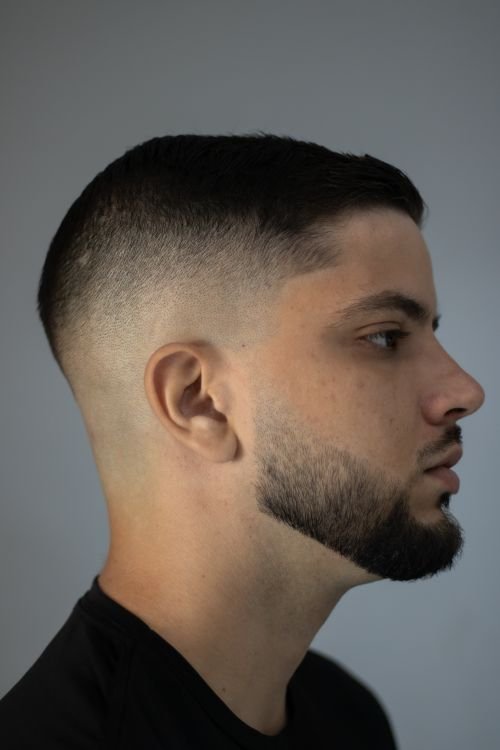
The low taper Edgar keeps the fade down near the ears and the neckline, so the fringe stays the star and the sides just look tidy. The blend starts low and the change is gradual. This is the safest Edgar pairing for a first cut, because it keeps the look full while cleaning up the edges. Ask your barber to keep the fade low and to keep the fringe line sharp. It works well with medium-length tops and with beards, because the low fade meets the beard at roughly the same height.
3. Edgar + Skin Fade
The skin fade version is the sharpest Edgar. The sides go all the way down to skin, so the blunt fringe and the short top stand out in full contrast. The blend goes from bare skin through stubble to the top in a smooth gradient, with no hard line on the sides — all the graphic weight is in the fringe. This is the boldest version and the one that needs the most upkeep, with a trim every 2 to 3 weeks to keep both the fade and the fringe sharp. Ask for a skin fade with a blended transition, not a disconnected undercut.
4. Edgar + Mid Fade

The mid fade starts around the middle of the side of the head and gives a clearer contrast between the top and the clean sides than the low taper version. You can see the blend, but it still looks natural rather than dramatic. This is the version most barbers recommend when a man wants a fade that people notice but does not want it to be the first thing they see. It sharpens the outline of the cut without thinning the top, and it pairs cleanly with a short beard or a clean-shaven jaw.
5. Textured Edgar
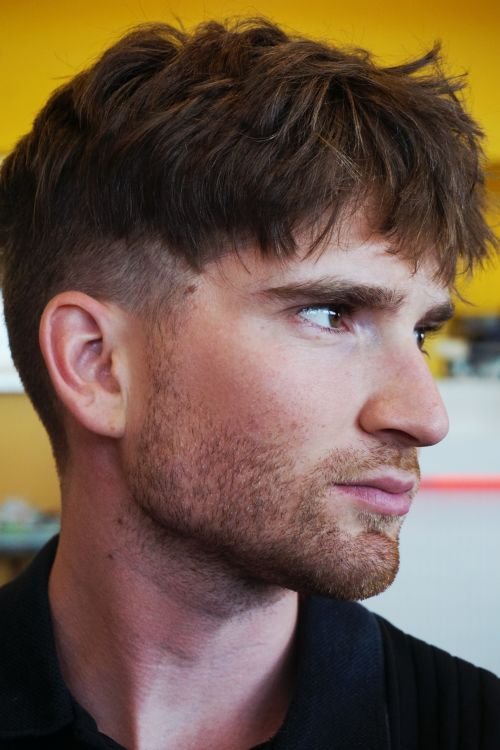
The textured Edgar keeps the blunt fringe line but adds light texture to the top behind it, so the top has a little movement instead of lying completely flat. The fringe itself stays straight — the texture is in the top, not the front edge. Ask your barber for light point-cutting on the top only, and to keep the fringe blunt. This version suits men whose hair looks too flat in the classic Edgar, and men who want a slightly softer version without giving up the graphic fringe.
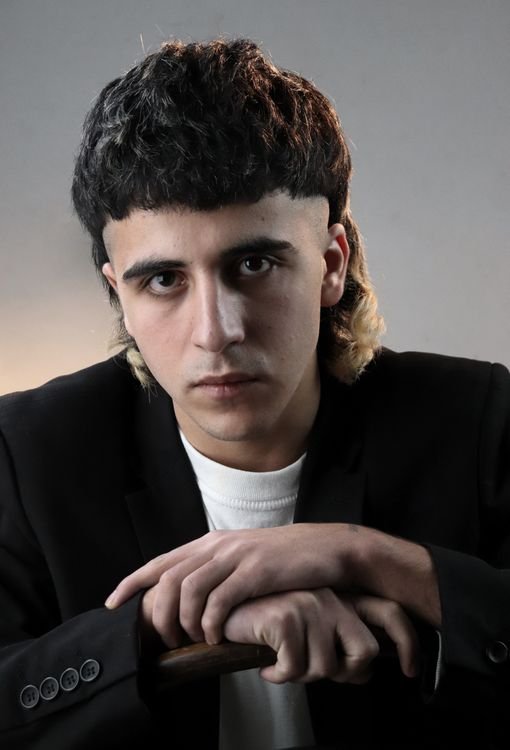
6. Edgar Mullet
The Edgar mullet pairs the blunt front fringe with longer hair at the back, so the cut reads as sharp from the front and longer from behind. The sides are faded, the front is a clean Edgar line, and the back is left long enough to show length. Ask your barber to keep the front Edgar-sharp and to leave the back long, with faded sides connecting the two. This version suits men who like the Edgar front but want more length overall, and it grows out more gracefully than the classic Edgar because the back carries the length.
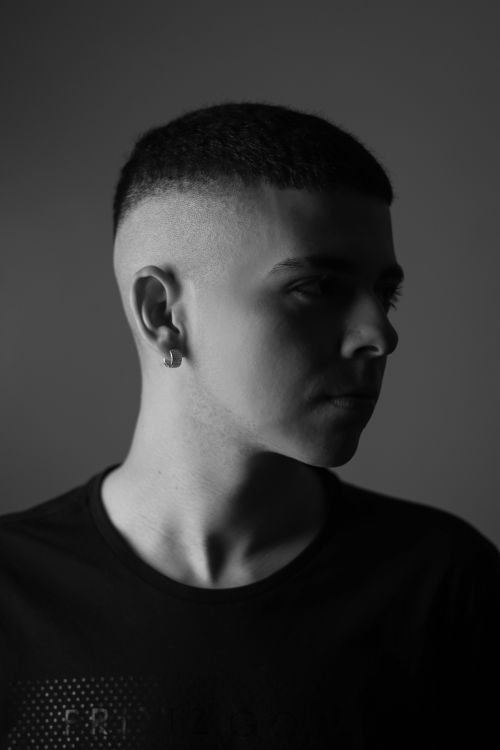
7. Edgar Buzz
The Edgar buzz is the shortest version: the top is buzzed close, the sides are faded, and the fringe is still cut in a straight line. The line is shorter and subtler than in the classic Edgar, but it is still there — the front edge is defined rather than fading into nothing. Ask your barber for a buzzed top with a defined front edge and faded sides. This version suits men who want the lowest-maintenance Edgar, men who like buzz cuts but want a front edge, and men testing whether the Edgar shape suits them before growing the top out.
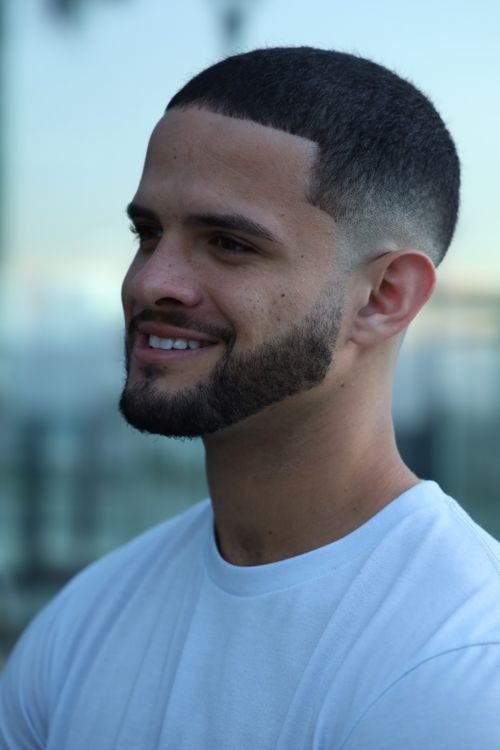
8. Edgar + Caesar Fringe
The Caesar-Edgar blend shortens the whole cut: a very short top, a short blunt fringe, and faded sides. It reads as a Caesar from the top and an Edgar from the front, because the fringe line is sharper than a classic Caesar. Ask your barber for a short, blunt fringe with a Caesar-length top. This version suits men who want the shortest wearable Edgar, and men with fine hair, because the very short top does not need volume to look intentional.
9. Edgar for Thick Hair

Thick hair can make an Edgar look heavy, because the blunt fringe sits as a solid block. The fix is to remove a little weight from inside the top without touching the fringe line, so the hair sits flatter and the fringe does not push outward. Ask your barber to thin the bulk from the inside and to keep the fringe line clean. This version suits men whose hair grows outward when it gets long. The warning is not to over-thin — too much texturizing makes the fringe wispy and the line disappears.
10. Edgar for Wavy Hair

Wavy hair needs the fringe cut with the wave in mind, because a wave will not sit in a perfectly straight line on its own. The barber cuts the fringe slightly longer than the target line so the wave settles into it, and the top is kept short so the waves do not overpower the line. Ask your barber to cut the fringe for your wave pattern, not against it. This version suits men with naturally wavy hair who want the Edgar shape without fighting their hair every morning. A little matte product helps the fringe sit flat.
11. Edgar + Beard Fade

The beard-fade pairing connects the haircut fade to the beard fade at the sideburn, so the side of the head reads as one continuous blend. The haircut fades down, the beard fades up, and they meet in the middle without a visible step, while the blunt fringe stays the focal point at the front. Ask your barber to connect the two fades. This version suits men who already wear a beard and want the whole look to feel like one haircut. The full beard-fade guide is in the Beard Fade post.
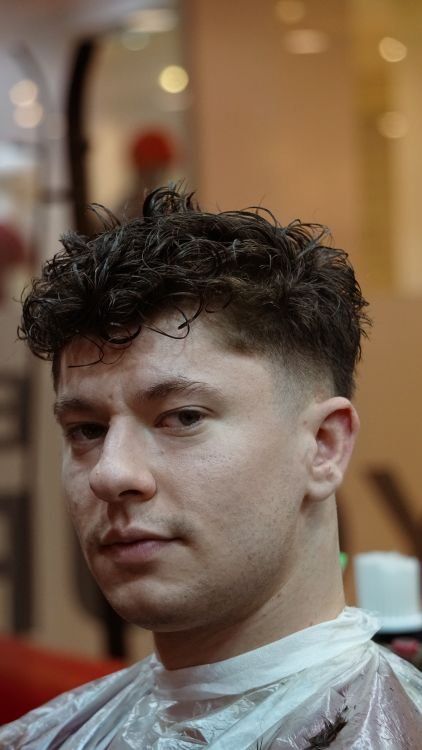
12. Grown-Out Edgar
The grown-out Edgar is what happens when you let the cut go 4 to 5 weeks without a trim: the fringe gets longer and softer, the fade softens, and the graphic line becomes a softer edge. It still looks like a haircut, not neglected hair, because the shape was placed to grow out in a line. Ask your barber for a cut that grows out well — a taper rather than a skin fade, and a fringe that can grow into a soft forward fringe. This version suits men who cannot get to the barber every 2 weeks. The trade-off is that the sharp Edgar look is gone until the next trim, so a quick fringe tidy between full cuts keeps it looking sharp.
How to Ask Your Barber for an Edgar Cut
Use this script so you get the same cut twice. Say: “Edgar cut — short top, faded sides, blunt fringe straight across the forehead, no feathering.” Then add the fade: “Sides — [low taper / mid / skin fade].” Then add one detail about your hair: “My hair is [straight / wavy / thick], so cut the fringe [for my wave / with weight removed from inside / clean and flat].”
Three things to say that prevent the most common mistake: first, say “blunt, straight line” — a feathered or layered fringe is not an Edgar. Second, say “no feathering on the fringe” — feathering softens the line that makes the cut. Third, bring a photo of the exact version you want, not just the words “Edgar cut”, because one phrase covers 12 different cuts. A photo plus the script above leaves very little room for misunderstanding.
Maintenance: How Often to Trim
A classic or low taper Edgar needs a trim every 3 weeks. An Edgar with a skin fade or mid fade needs a trim every 2 to 3 weeks, because the fade shows growth faster than the top. Between visits, you can tidy the fringe line lightly at home with clippers or scissors, but take off less than you think — a fringe cut too short cannot be put back, and a crooked home trim is harder to fix than a grown-out fringe. Wash 2 to 3 times a week with a gentle shampoo, and style with a small amount of matte product if the top needs to sit flat.
Who Should Skip the Edgar?
Be honest about three cases. If your hair is very curly or coily, the fringe will not sit in a straight line without straightening, and the cut will fight your hair every day — a curly crop or a textured cut will suit you better. If you want to hide a receding hairline, a blunt fringe frames the hairline rather than hiding it, so a softer forward fringe or a textured crop is a better choice. And if you cannot get to the barber every 2 to 3 weeks, the Edgar will spend most of its life grown out — a lower-maintenance cut that still looks good at week four will serve you better than a sharp cut that only looks sharp at week one.
Edgar Cut vs French Crop vs Caesar
| Edgar Cut | French Crop | Caesar Cut | |
|---|---|---|---|
| Fringe | Blunt, straight line, graphic | Blunt, heavier, defined front | Short, softer, more uniform |
| Top | Short, fairly flat | More length and shape | Very short, uniform |
| Sides | Faded (low / mid / skin) | Faded or tapered | Short, often uniform |
| Best for | A sharp, graphic front edge | A defined front with more top shape | The shortest, simplest version |
| Upkeep | Trim every 2–3 weeks | Trim every 3–4 weeks | Trim every 3–4 weeks |
FAQs
How long should the top be for an Edgar cut?
Usually 1 to 3 inches on top — long enough for the fringe line to read, short enough to lie flat. Longer than that, and the cut starts to read as a longer fringe style rather than an Edgar.
Does an Edgar cut work on curly hair?
Not in its classic form. Curly hair will not sit in a straight blunt line without straightening. If your hair is curly, ask your barber about a modified version with a softer fringe, or pick a curly crop instead.
Can I get an Edgar cut if my hair is thinning?
Yes, with care. A short top and a blunt fringe can look clean on thinning hair, but a very short fringe will show the scalp more clearly. Keep the fringe a little longer and avoid a skin fade that draws contrast to the top.
How do I style an Edgar cut?
Mostly, you do not. Wash, towel-dry, and let it sit. If the top needs help lying flat, use a pea-sized amount of matte clay or paste, worked through with your fingers. Avoid wet-look gel — shine softens the graphic line.
How often should I wash an Edgar cut?
Two to three times a week is enough for most men. Washing every day strips the natural oils and can make the fringe look dry and flyaway.
Will the Edgar cut suit a round face?
Yes — the straight fringe gives a round face a clear horizontal line, and faded sides keep the outline clean. The key is keeping the fringe line straight, not curved, so it reads as deliberate.
Conclusion
The Edgar cut works because it is built on one clear idea: one straight line at the front, clean faded sides, and a short top that does not compete with either. Pick the version that fits your hair — low taper for a safe start, skin fade for contrast, textured for a little movement, a beard fade pairing if you wear a beard — bring a photo, use the barber script, and keep the fringe trimmed on schedule. That is the whole cut: one line, kept sharp.
